Signs of Terrorism-Related Suspicious Activity-New Jersey Office of Homeland Security and Preparedness
Recognize and Report: Signs of Terrorism-Related Suspicious Activity
*Expressed or Implied Threat:
Threatening to commit a crime that could harm or kill people or damage a facility, infrastructure or secured site.
*Surveillance:
A prolonged interest in or taking pictures/videos of personnel, facilities, security features or infrastructure in an unusual or covert manner.
*Theft/Loss/Diversion:
Stealing or diverting items-such as equipment, uniforms or badges-that belong to a facility or secured site.
* Testing Security:
Probing or testing a facility’s security or IT systems to assess the strength or weakness of the target.
*Aviation Activity:
Operating or interfering with the operation of an aircraft that poses a threat of harm to people and property.
*Breach/Attempted Instrusion/Trespassing:
Unauthorized people trying to enter a restricted area or impersonating authorized personnel.
*Acquiring Expertise:
Gaining skills or knowledge on a specific topic: such as facility security, military tactics or flying an aircraft.
*Eliciting Information:
Questioning personnel beyond mere curiosity about an event, facility or operations.
*Misrepresentation:
Presenting false information or misusing documents to conceal possible illegal activity.
*Cyber Attack:
Disrupting or compromising an organization’s information technology systems.
*Recruiting:
Attempting to recruit or radicalize others by providing tradecraft advice or distributing propaganda materials.
*Financing:
Providing direct financial support to operations teams and contacts often through suspicious banking/financial transactions.
*Sabotage/Tampering/Vandalism:
Damaging or destroying part of a facility, infrastructure or secured site.
*Material Acquisition/Storage:
Acquisition and/or storage of unusual quantities of materials, such as cell phones, radio controllers or toxic materials.
*Weapon Collection/Storage:
Collection or discovery of unusual amounts of weapons, including explosives, chemicals or other destructive materials.
“Terrorism-related suspicious activity is any observed behavior reasonably indicative of pre-operational planning related to terrorism or terrorism-related crime.”-US Department of Homeland Security.
The Five W’s-What to remember when reporting suspicious activity:
What is happening?
Who is doing it?
Where is it taking place?
When did you observe it?
Why are you suspicious?
Learn more about Terrorism Indicators and Resources.
*Bloggers Note: this information comes directly from the New Jersey Office of Homeland Security and Preparedness and I give them full credit for the information. If you suspect anything, please contact the office immediately.
If you receive SNAP benefits, you may be eligible to buy prepared meals at some restaurants with your Electronic Benefits Transfer (EBT) card.
The Restaurant Meals Program (RMP) serves SNAP recipients who:
May not have access to food preparation
May not have storage resources
Are unable to prepare meals for themselves
You can’t apply for RMP. If you meet one or more of the eligibility requirements, your SNAP case is automatically updated as eligible for the program.
Overview
The Restaurant Meals Program (RMP) allows some Supplemental Nutrition Assistance Program (SNAP) households the option to purchase prepared meals at participating restaurants with their SNAP benefits using their Electronic Benefit Transfer (EBT) card.
This program is designed to serve SNAP recipients who may not have access to food preparation or storage resources or may be unable to prepare meals for themselves.
Households using SNAP benefits to purchase meals at participating restaurants receive a 10% discount on the cost of their meal. When purchasing prepared meals at participating restaurants, households will be responsible for covering the entire, discounted cost of their meals.
To be eligible for the RMP, all members of the SNAP household must be either:
Older adults, aged 60 or older and their spouses;
People with disabilities and their spouses; or
People experiencing homelessness.
You cannot apply for RMP. If you meet one or more of the requirements above your SNAP case will be automatically updated as RMP eligible. Households can check their own RMP eligibility status by visiting www.ebtEDGE.com and creating or logging into their account. If the household is creating a new ebtEDGE account, they will need their EBT card number, PIN, and an email address.
Clients can also check for the eligibility message for RMP on the ebtEDGE Mobile App.
Benefits
Those eligible for RMP receive a 10% discount when using their SNAP benefits to purchase meals at participating restaurants.
Restaurant Meals Program Frequently Asked Questions for SNAP Households
The following information provides answers to SNAP households’ most frequently asked questions.
What is the Restaurant Meals Program?
The Restaurant Meals Program (RMP) allows some people aged 60 or older, and their spouses; individuals with disabilities, and their spouses; as well as those experiencing homelessness to purchase prepared meals at participating restaurants with their Supplemental Nutrition Assistance Program (SNAP) benefits using their Electronic Benefit Transfer (EBT) card.
The New York State Office of Temporary and Disability Assistance (OTDA), along with the United States Department of Agriculture (USDA) Food and Nutrition Service (FNS) manage the program in New York State. Local departments of social services are responsible for identifying eligible households and updating their SNAP cases.
Am I eligible for RMP?
If you, or your spouse, are age 60 or older, have a disability, or are experiencing homelessness, you may be eligible to purchase meals at participating restaurants using your SNAP benefits.
You can check if you have been identified as RMP eligible by logging into your ebtEDGE account at www.ebtEDGE.com or through the ebtEDGE mobile app. If you have not already set up an ebtEDGE account, one can be created using your EBT card number, PIN, and an email address. Once logged into the home page, in the “Account Information” section, you will see a thumbs up icon with “Account is Restaurant Meal Program Eligible” if you are eligible for the RMP. If you are not eligible for the RMP, the “Account is Restaurant Meal Program Eligible” message will not appear in the “Account Information” section. You can also see the eligibility message for RMP on the ebtEDGE Mobile App.
If you don’t see “Restaurant Meals Program Eligible” in the “Cardholder Information” section, and believe you are eligible for RMP, you may contact your local department of social services to check if you are eligible.
Please note, if you are not eligible for RMP, you are responsible to pay the cost of any meal purchased at a restaurant.
Do I need to apply for RMP?
No, you do not need to apply for RMP. If eligible, your SNAP case will automatically be updated so you may use your SNAP EBT card to purchase meals at participating restaurants.
Will I receive more SNAP benefits each month because I am eligible for RMP?
No, your monthly SNAP benefit allotment will not change because you participate in RMP. You should carefully budget your SNAP benefits each month if you decide to use some benefits to purchase meals at a participating restaurant.
How do I find out if a restaurant is participating in RMP?
You do not have enough available SNAP benefits to cover the cost of your meal. It is important that you make sure you have enough available SNAP benefits before purchasing a meal at a participating restaurant.
If your SNAP EBT transaction is declined after placing your order, please be prepared to pay for the meal using a different payment method (e.g., cash, credit or debit card).
How do I check my EBT card balance before ordering a meal at a RMP participating restaurant?
You can check your EBT balance by visiting www.ebtEDGE.com, using the ebtEDGE app, or by calling 1-888-328-6399.
Will I be charged tax or tip when I purchase a meal at a RMP participating restaurant?
No, restaurants should not charge tax or tip for meals purchased using SNAP benefits through RMP. You will also receive a 10% discount when using your SNAP benefits to purchase a meal at a participating restaurant.
Are there any restrictions on what I can buy at a RMP participating restaurant?
Yes, you can only use your SNAP benefits to purchase food, and non-alcoholic beverages.
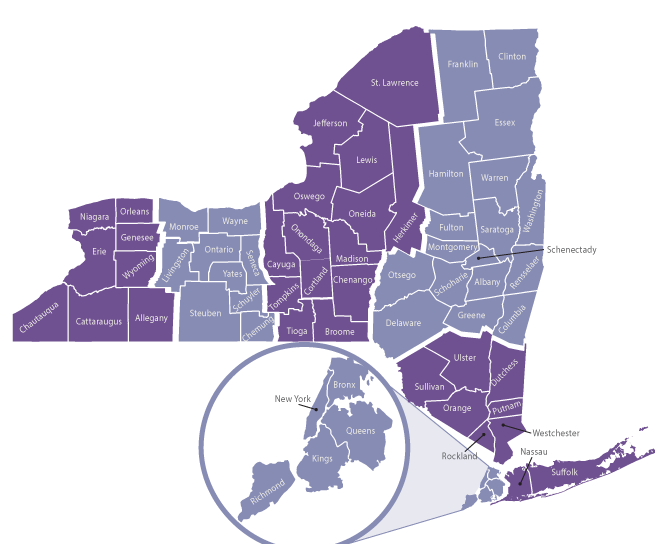
Participating Restaurants
This webpage is regularly updated as new restaurants are added to the program. Please check back to see if restaurants have been added to your county.
Information for Restaurant Owners
Overview
The Restaurant Meals Program (RMP) allows some Supplemental Nutrition Assistance Program (SNAP) households to use their Electronic Benefits Transfer (EBT) card to buy prepared meals at participating restaurants. This program is designed to serve SNAP recipients who may not have access to food preparation or storage resources or may be unable to prepare meals for themselves.
Restaurants with more than 50% of total gross retail sales that come from the sale of hot or cold prepared foods intended for immediate consumption may apply. If your restaurant is interested in participating in RMP, complete the RMP interest form. Upon submitting a completed interest form, restaurants will be contacted by the New York State Office of Temporary and Disability Assistance (OTDA) and receive an agreement document.
What is the Restaurant Meals Program?
RMP allows some SNAP households to use their EBT card to buy prepared meals at participating restaurants. The program is available to people aged 60 or older, and their spouses; individuals with disabilities, and their spouses; as well as those experiencing homelessness.
OTDA, along with the United States Department of Agriculture (USDA) Food and Nutrition Service (FNS) manage the program in New York State. Local departments of social services offices identify and designate eligible households.
Can my restaurant participate in RMP?
For the purpose of RMP, restaurants are businesses in which more than 50% of total gross retail sales come from the sale of hot or cold prepared foods intended for immediate consumption. Restaurants wanting to participate in RMP will need to enter into an agreement with OTDA and acquire federal authorization to accept SNAP benefits. In addition, participating restaurants must:
Abide by the rules and regulations of USDA regarding SNAP benefit acceptance and redemption.
Comply with all applicable federal, state, and local laws, regulations, and/or orders throughout the duration of participation in the program.
Have a current public health operating permit and general liability insurance.
Provide a 10% discount off all eligible menu items for SNAP EBT customers.
Collect payment from customers via their SNAP EBT cards.
Not include a service gratuity in the cost of the meals or accept SNAP benefits as payment of a gratuity.
Not charge a sales or meals tax to any eligible customer who uses SNAP benefits to purchase a meal.
Not accept SNAP benefits for the purchase of alcoholic beverages or any nonfood item.
Install EBT equipment and/or software from an EBT certified processor. Restaurants must be available to service RMP customers within 60 calendar days of notification from OTDA acknowledging USDA-FNS authorization.
Must be handicap accessible.
Display RMP decal, provided by OTDA, on the restaurant’s door or window to inform of the business’s participation in the program.
Surrender immediately all EBT equipment, software and/or hardware to the appropriate EBT vendor upon termination of the agreement with OTDA, or the revocation of authorization by USDA-FNS.
What steps must I take for my restaurant to participate in RMP?
Restaurants interested in participating in RMP must:
Complete an online RMP interest form. Upon submitting a completed interest form, restaurants will be contacted by OTDA and receive an agreement document.
Complete, sign and return the agreement to OTDA. When finalized, OTDA will return fully executed agreement to the applying restaurant. Upon receipt of the agreement, restaurants must request federal authorization to accept SNAP benefits.
Submit the form and a copy of the signed OTDA agreement to USDA FNS. Restaurants should mail their complete application package to:
Retailer Service Center USDA Food and Nutrition Services PO Box 7228 Falls Church, VA 22040
Once federal approval is granted, submit a copy of the USDA FNS approval letter to OTDA.
Obtain the necessary equipment to process EBT card transactions. Upon notifying OTDA that the necessary equipment has been purchased and in place, restaurants will be provided with a participating restaurant RMP window decal.
Display the RMP window decal in a publicly visible location (e.g., door or window).
How long does it take to become a participating RMP restaurant?
The entire process to become a participating RMP restaurant takes approximately 60 to 90 days.
Are there any fees restaurants must pay to participate in RMP?
There are no fees associated with participation in RMP, however, participating restaurants are responsible for the cost of obtaining EBT compatible point-of-sale (POS) devices. If a restaurant already uses equipment that accepts credit/debit cards, they can contact their TPP to ask about adding EBT to their service. There may be additional expenses to integrate EBT into their current commercial POS equipment. See SNAP EBT TPP Information for Retailers to learn about acquiring the right EBT POS for a participating restaurant.
Can multiple restaurants with the same owner participate in RMP?
Yes, multiple restaurants (up to 10) owned by the same proprietor can participate in RMP. Only one agreement is required under the same ownership, however, all locations must be listed in the agreement. The USDA FNS 252-2 form, to request authorization to accept SNAP benefits, provides space to list three locations—additional sites must be attached separately, using the same format. Restaurants do not need to have the same name, just the same ownership.
What happens if a participating restaurant changes ownership or closes for business?
The restaurant owner must notify OTDA and USDA FNS when a restaurant changes ownership or closes. This ensures that the authorization is cancelled immediately because authorization to accept SNAP benefits is NOT transferable. If the new owner is interested in participating in RMP, they must sign an agreement with OTDA and request federal authorization to accept SNAP benefits.
Please send any questions regarding restaurant participation in RMP to: NYSRMP@otda.ny.gov.
How will RMP eligible SNAP customers know that our restaurant participates in the program?
Upon notifying OTDA that federal authorization to accept SNAP benefits was approved and the necessary POS equipment has been acquired, restaurants will be provided with a participating restaurant RMP window decal to display in a publicly visible location (e.g., door or window). In addition, RMP eligible SNAP recipients are directed to the OTDA RMP website for an up-to-date list of participating restaurants. In addition, RMP-eligible SNAP clients may receive information about their eligibility for RMP in their SNAP client notices.
How long does it take to be reimbursed for EBT card transactions?
Meals purchased with an EBT card are usually reimbursed within 48 hours. For more information about RMP related reimbursements, call the EBT Retailer Service Center number at (877) 823-4369.
How do restaurants know if a customer can purchase meals with SNAP benefits?
RMP eligible SNAP customers’ cases will be updated to allow their EBT cards to be accepted at participating restaurants. If the customer is eligible and has sufficient funds in their SNAP account, the transaction will be approved. If the customer is ineligible or there are not enough funds available, the transaction will be declined.
Please note, EBT compatible POS devices do not provide information about SNAP customers’ RMP eligibility. Households can check their own RMP eligibility status by visiting www.ebtEDGE.com and creating or logging into their account. If the household is creating a new ebtEDGE account, they will need their EBT card number, PIN, and an email address. Once logged into the home page, in the “Account Information” section, the cardholder will see a thumbs up icon with “Account is Restaurant Meal Program Eligible” if the household is eligible for the RMP. If the household is not eligible for the RMP, the “Account is Restaurant Meal Program Eligible” message will not appear in the “Account Information” section. Clients can also see the eligibility message for RMP on the ebtEDGE Mobile App.
Individuals who plan to use their EBT card to purchase a meal through RMP may receive a notice from their local department of social services informing them that they are eligible for RMP.
How can I assist a customer whose EBT card was declined?
SNAP EBT transactions will be declined for two reasons, (1) the household is not eligible for RMP, or (2) the household does not have enough available SNAP benefits to cover the cost of their meal. If a SNAP customer’s transaction is declined, they are expected to purchase the meal with another form of payment (e.g., credit card or cash). Restaurants may direct customers to contact their local department of social services with any questions relating to RMP eligibility.
Can participating restaurants accept mixed transactions?
Yes. POS equipment enabled to accept EBT transactions can process both EBT SNAP and cash assistance benefits, as well as credit card transactions. However, RMP eligible customers must notify the restaurant of their intention to pay for their meal using a mixed transaction (e.g., combining SNAP and EBT cash assistance benefits, a credit card and/or cash). Please note, EBT cardholders may also purchase their meal using just cash assistance benefits.
Restaurants should contact their TPP to ensure their POS devices are enabled for these transaction
Bloggers Note: This information on New York City’s Restaurant Meals Program for SNAP Recipients comes directly from their website and I give them full copyright credit on this blog. I do not know about this program as I have never used it so I have no opinion on it. I believe though this is a win-win both for restaurants and patrons offering a much needed service.
Please call the above numbers and check their website for more information.
I came across this flyer from the the NJSecurties.gov website and I feel this is important to spread the word. I have heard and read about more people being scammed out of their life savings and don’t want to stand on a line at the check out stand and watch people buying multiple gift cards. I thought the site and what the State of New Jersey published will help all of us from predators.
Romance Scams: Is your new Romance an Investment Scam?
New romances can be exciting but if that person starts asking for money, BEWARE!
What is a Romance Scam?
Romance scammers lure victims into false or misleading relationships, often with the intention of stealing money or committing other types of fraud. In a romance scam, a swindler pretends to have a romantic interest in the target. After a relationship is established, the scammer attempts to obtain money or sensitive information from the target under false pretenses.
Romance scams account for the highest amounts of financial losses when compared to other internet-facilitated crimes. Moreover, an increasing number of Americans are becoming victims of romance scams originating from outside the US.
Romance fraudsters lure people with phony online profiles, typically creating attractive and impressive personas. Using made-up names or falsely assuming identities of real people, these fraudsters use many types of social media platforms including but not exclusively, dating apps, to make a personal connection.
Romance scams may involve fraudsters asking that money be sent to help with a tragedy. They may, however, also be more subtle. To attract the may, however, also be more subtle. To attract the attention of their victims, scammers may claim to make huge profits from investing on trading platforms, often by trading cryptocurrencies, foreign currencies, binary options or other investment products. The fraudster will then typically encourage the victim to do the same.
How does the scam usually work?
The fraudster begins with an attractive online profile, typically false and usually including photos of other people or stock photos. The scammer may begin actively searching for a victim or may sit back and wait for a victim to ‘match’ one of the several false profiles they have created. They then let the victim begin the conversation. Scams have started with dating apps, Facebook, LinkedIn, Instagram and other internet social networking forums. Once the contact is made, the scammer begins to build the trust, relying on finding ‘common’ interests, beliefs or activities. As with most cons, the scammer is relying on the victim to provide the right ‘hook’ of commonality to begin building trust. As rapidly as possible, the scammer then displays an affection interest in the victim and attempts to initiate a similar response from the victim. At or near this stage, the scammer tries to take the relationships away from the social media site and guides the victim into a direct communication channel, typically a messaging platform.
Eventually and inevitably, the conversation will turn to finances. The scammer may reveal an incredibly profitable investment opportunity, one that they can only share with a limited group of close friends. Or the scammer may disclose a recent financial setback, illness or family tragedy that requires urgent assistance. OR it can be as simple as needing money for a plane ticket to come and meet the ‘beloved’ victim in person.
What are some of the red flags of a scam?
Typically, the scammer will quickly profess a deep affection for and connection with the victim. Despite this purported bond, the scammer will never be able to meet up in person. There are numerous unsuccessful attempts and many obstacles and excuses to avoid an in person meeting. The same is true of video chats. Despite being technologically proficient in the use of social media and knowledgeable in international financial money transfer methods, they will always avoid a video chat, lacing either the time or ability to participate. Finally the conversation inevitably will turn to money, somehow in some form. This is when the scammer will request that the victim provide some financial benefit to them or send their money to some other website or company.
How can you protect yourself?
Do not send money to online strangers. Never transfer money from your bank account, buy gift cards or wire money to an online connection or on the advice of an online connection. True online romantic connections will not request that money be sent.
Do not invest based solely on the recommendation of a new online relationship.
Research the information you are being provided and speak to a register investment professional.
Keep the conversation on the dating site or the social media platform.
It can be a flag when someone you meet on a social media platform wants to leave the website in order to chat on a different messaging platform. Many scammers like to use messaging platforms such as WhatsApp, Kik or Viber.
Meet in person in a safe public place.
If the romance is real, meet in a safe public place. If a person keeps giving excuses, he or she may be hiding their true motives.
Never share personal or financial information.
Never share sensitive personal or financial information with purely online relationships.
Talk to your trusted friends or family members about your love interest.
Without the same emotional connection, trusted friends or family members may more easily see possible warning signs of fraud. Emotions may cloud your judgement.
Check the photos of your connections.
Google Reverse Image Search is a free site where you can tell if photos have appeared elsewhere online. You can see if a photo was used by someone with a different name or has been reported to a scam listing.
Investigate what your connections tell you about themselves.
Check online to verify information about what they may tell you. Google the person and see what information appears online about that person. If no online profile appears about the person, that should cause you to ask more questions.
See if the text of their messages appears elsewhere.
Google the text message your new connection has sent you. You may see that same message on other sites. Clearly that is an issue.
Invite your new friend to video chat with you.
Scammers do not want to talk ‘live’ while showing their faces. Video chat will help you determine if the online profile is accurate and the person is who they say they are.
Beware of members of the military asking for money.
Fraudsters will often try to impersonate US Military members. Members of the US Military has no need to ask for money for service related transportation, medical care or administrative fees.
Check where the emails came from.
Every email has an IP address which will reveal the IP address of the device, which sent it. There are websites online where you can check IP addresses.
Best Practices for every Investor:
Always verify the identity of anyone who offers to sell you an investment.
Your state securities regulator is always a good place to start to identify, if the individual offering you investment is properly registered.
Do not jump at investments promising outsized returns at no risk.
No legitimately registered salesperson will offer a spectacular profit or promise a guaranteed rate of return. Every reasonable investment involves risk. Typically a higher rate of return equates to greater risk.
Never be rushed into an investment by the threat of a ‘limited time only’ offer.
If you cannot research the investment product and understand the nature of the investment, it is not the appropriate investment for you.
Be especially careful about joining in with family members, church groups, clubs and other groups, whether online or in person.
When you are unable to verify that a registered person is selling the investment and unable to research the product in a public forum, the opportunity to get caught in an affinity fraud is greatly increased.
If you have been scammed, REPORT IT!!
Stop communicating with the scammer immediatly.
Report this scam to the online dating or social media site and to your bank. Contact the New Jersey Bureau of Securities at 1-866-446-8378. (1-866-I-INVEST).
You can also contact the Bureau via email at njbos@dca.lps.state.nj.us or file a complaint through the website NJSecurities.gov.
Bloggers Note: This information was taken directly form the NJSecurities.gov pamphlet and I give them full copyright credit for the information. I am providing this to readers because this is a VERY important topic and I want to share this with you.
If you have any questions, please call or email the department in New Jersey directly.
My After just finishing Turtle Bay and my next start of the walk in East Midtown, I took the night off and had been invited to a private members night at the Bronx Zoo. Having been occupied by my responsibilities on the fire department for the last six years and always being the night of our department meeting I always had to miss the event. Since I am no longer Secretary of the Department, I decided to attend this year.
The entrance of the zoo
On a rather overcast Thursday night I took the subway up to the Bronx for the event (I was smart in calling first to be sure it was still happening and Membership said it was).
I had not taken the subway this far up to the Bronx in years and was amazed at all the changes. The South Bronx has been on a building spree for the last twenty years and it shows with all the new apartment buildings springing up all over the place. I have not seen this much new construction since walking around West End Avenue in Manhattan.
I was not sure where to get off on the subway and forgot to ask when asking the best way to get to the zoo. I just took the Number 2 train up to the Bronx and got off at the Bronx Park stop. That was interesting. I thought that the subway would drop me off closer to the entrance but this took me to the other side of the park and I had to walk around. Did I feel like a fish out of water.
I was in the middle of an Arabic neighborhood where everyone totally ignored me. I guess that was the interesting part of it was feeling invisible. It was mostly made up of small businesses with lots of restaurants and bakeries in the area. Walking down 180th Street from the subway finally got me to the entrance to the zoo.
When you get off of the subway at West Farms Square/East Tremont stop for the zoo that leads to the Asian Gate, you are greeted by these beautiful and colorful glass murals of contemporary scenes of animals from the zoo by artist Naomi Campbell. These interesting panels show different points of the zoo.
Artist Naomi Campbell is as a Canadian born artist who graduated from the Champlain College in Quebec and from the Art Students League of New York. She is known for her paintings, drawings and print making. Her sculptures are known for action and movement (MTA NYC website).
Panel One
Panel Two
Panel Three
Panel Four
Panel Five
Panel Six
I had not been to the Bronx Zoo in about twenty years, not since the Congo Exhibit opened so it was a treat for me. The only problem with Member’s Night was the threat of rain as it had been cloudy all day but that did not damper the crowds that came into the zoo. For the most part, there have been many changes to the zoo over the years and the philosophy of raising animals in captivity has changed so the exhibits have changed with it.
The only problem I saw was that many of the animals looked bored or contained. Almost like a nursing home for the wild. The zoo does need to look at the displays more to see how the animals are reacting to it. I have to say though, the zoo really has done a nice job with the new displays and done a good job with keeping them well-feed and happy.
The Bronx Zoo Map
I started my night in the Jungle World exhibition. This glassed in exhibit is home to birds, insects and monkeys all of which are a tad bit small for the animals. There was a lot packed into a small space. It was an interesting to see the animals in a somewhat realistic environment but still I saw the looks on the monkeys faces and they looked bored. I think they should pair this exhibit down with less mammals and give the animals left more space. It is fascinating how they expect something to live in such small quarters.
The monkeys still do there own thing
It was more fun when I got to the monorail and got to see animals in a larger more realistic habitat. Here they had room to move around. Even so they way the animals looked at us passing by I don’t know who was looking at who. The ride was interesting as each animal lived in its own place to live and roam.
The pathways during the summer months
We had a guide who took us past herds of deer, a lion den, two rhinos who were playing amongst each other and bison who were going about their business. I liked this exhibition because it gives these animals a realistic home with room to move around.
The Grevy’s Zebra
We got to make stops at each of the habitats and the speaker gave us a little talk about each animal, how it has adapted to New York weather and you get to see how each animal interact with each other.
The Zebras were dining when I got there
Once I was off the monorail, I took the path down to the Treetop Adventure exhibition where you get to climb all through the obstacles of rope bridges and ladders. That was a lot of fun keeping up with the teenagers who were racing through the maze. I climbed up rope ladders, crossed rope bridges and climbed through barrels to the top of every stop.
Walking the paths of the Congo Jungle
It was fun to see how the age groups handled each section of it. The toughest part was climbing through the last circular tube because it is meant for little kids and I had to crawl on all four to get through but I went through the whole thing like a pro. It seemed to impress the little kids.
The Treetop Maze was a lot of fun to climb
From the Treetop Adventure I traveled east down the path to the World of Birds exhibition and got to see many different species of birds. There was a nice assortment of exotic birds from all over the world in their jungle habitat. Each section of the exhibit was dedicated to a different species from all corners of the globe.
The World of Birds
After the World of Birds, I passed Tiger Mountain and looked at the tiger that looked at all of us and the poor thing looked bored. I think the humidity was getting to him but unlike the other visitors I did not want to arouse him because by the end of the day he looked tired.
The next part of the pathway took me to the Bear exhibition in which all the bears looked very playful and they looked like they were ignoring us and were have a good time amongst themselves. What I liked about this exhibit was that there was plenty of room for the bears to move around and engage with nature. The mother bear looked like she was having fun with the cubs.
The Congo Village
I then walked through Samba Village which I guess was the zoo’s take on an African village. Everything was closed that evening maybe because of the crowd or because the weather was not that nice and the zoo figured that the weather might keep people away. As I passed the buildings I did not realize that it was a gift shop and a snack shop.
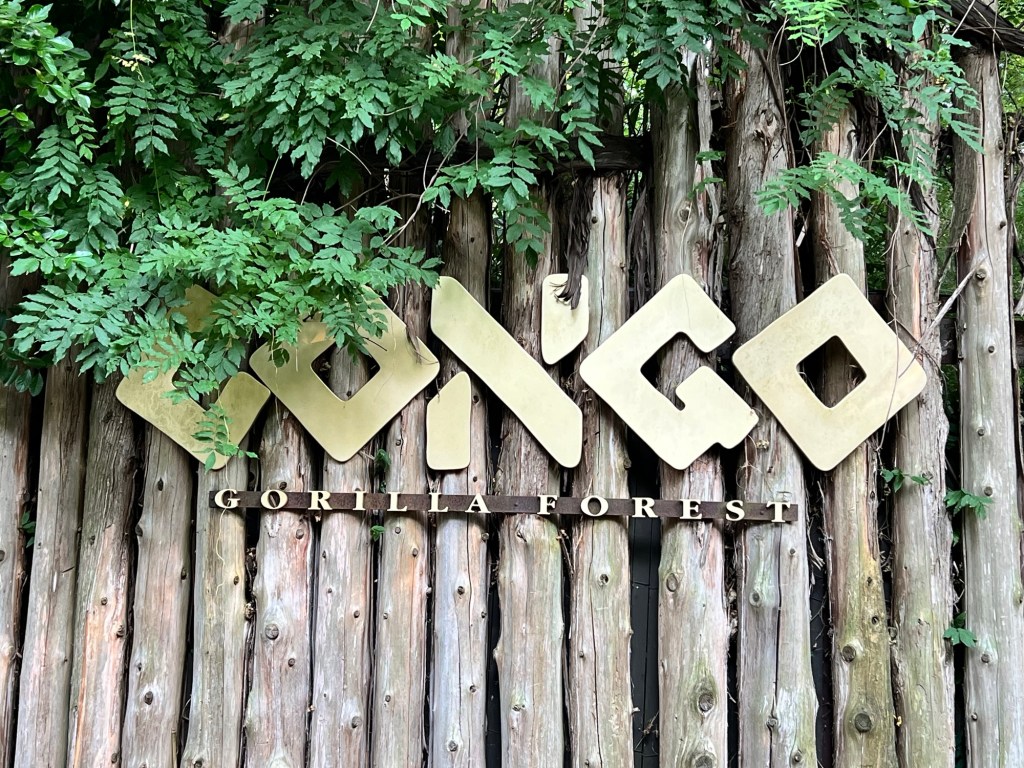
Congo Gorilla Forest
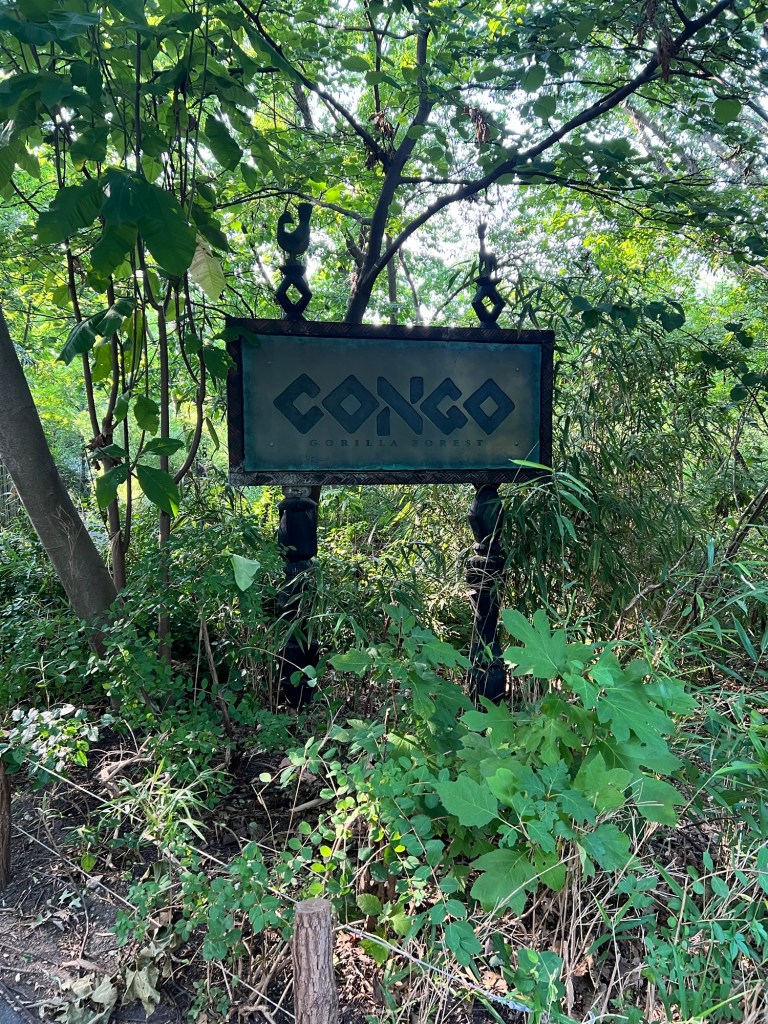
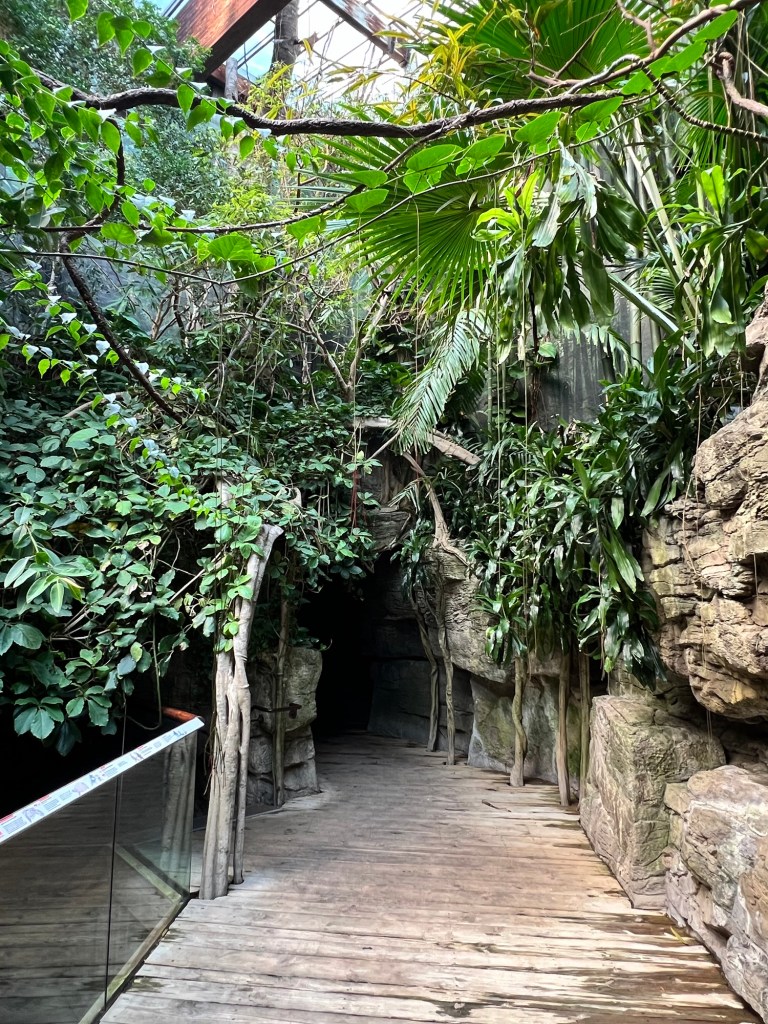
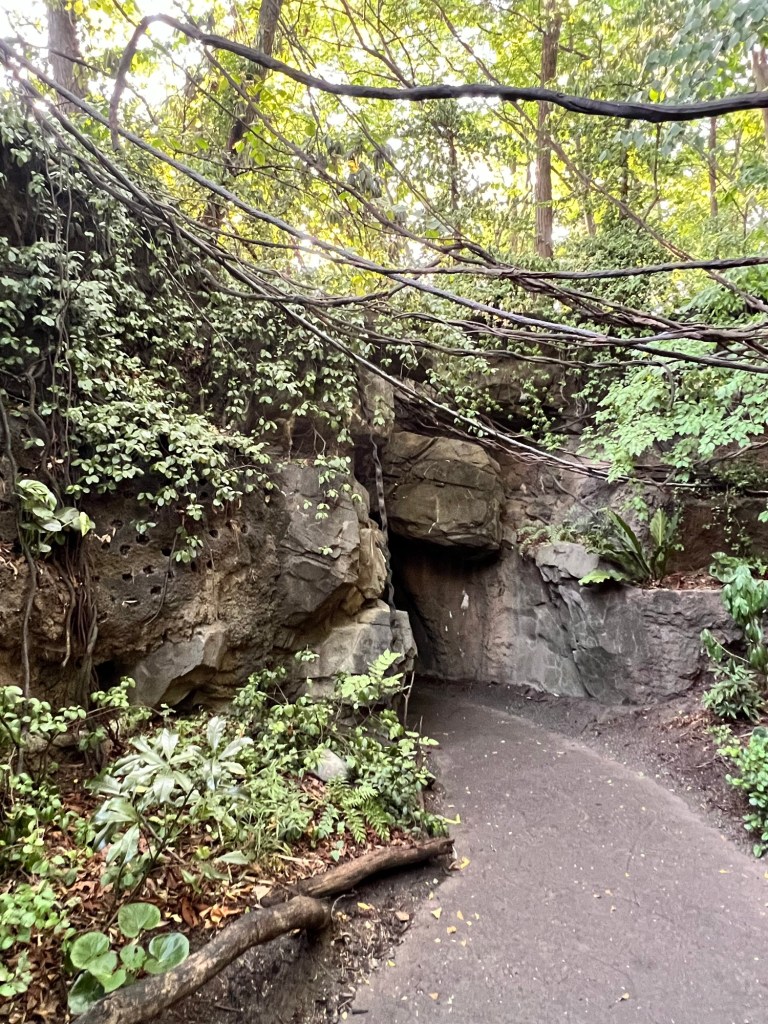
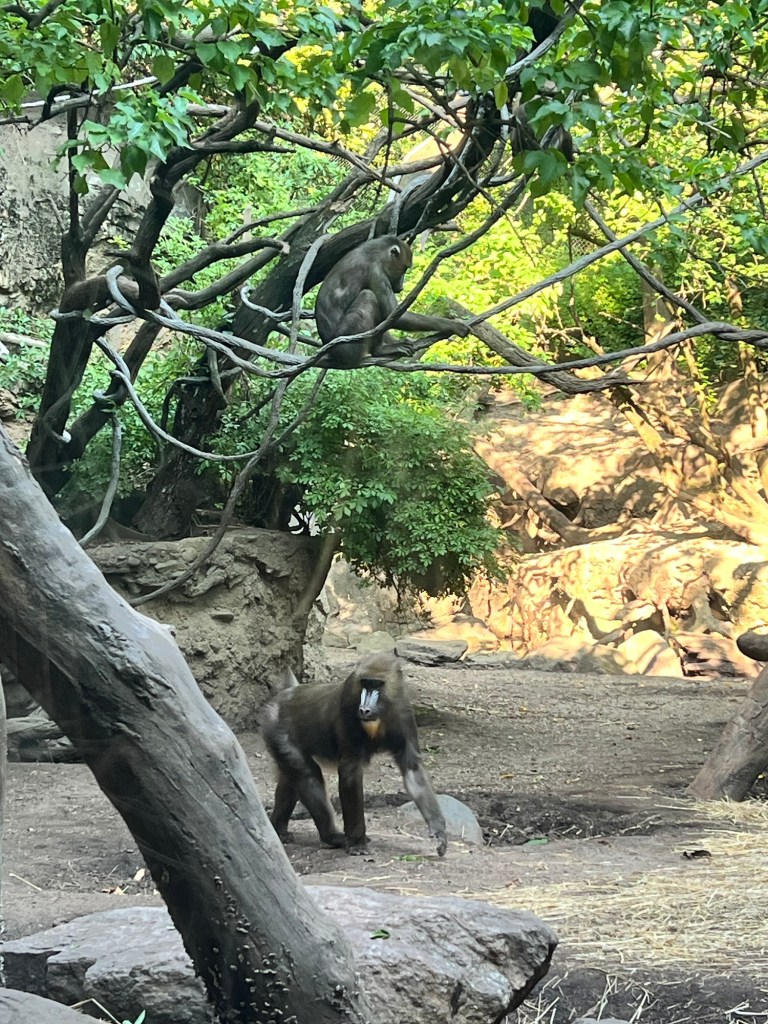
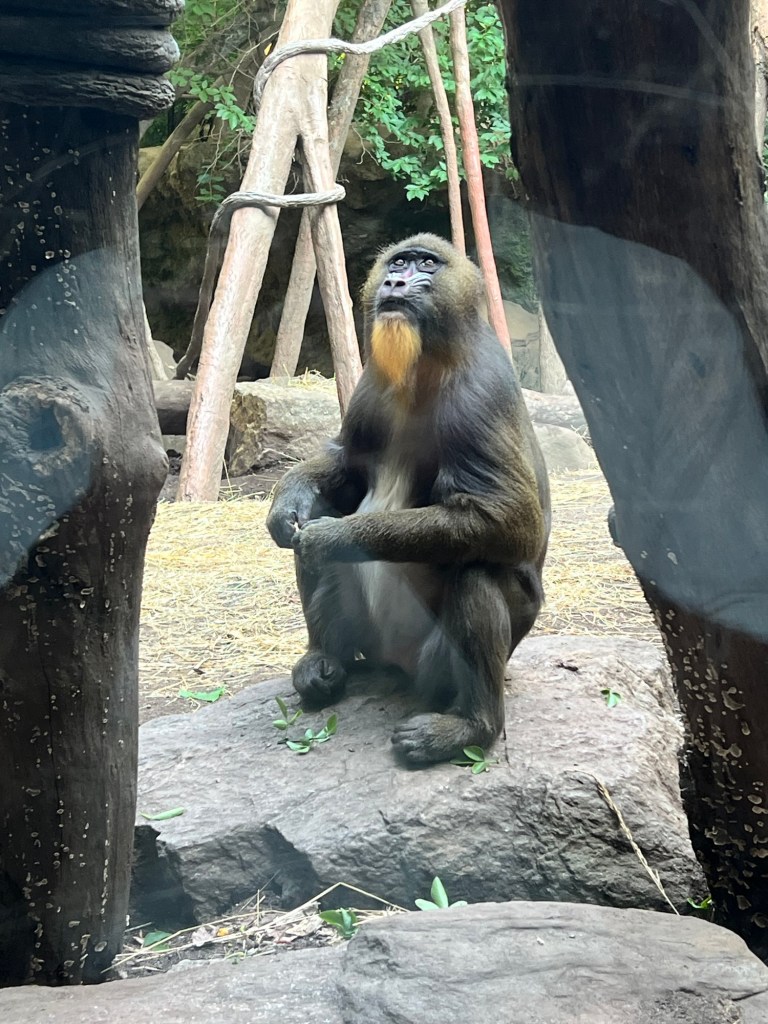
I next visited the Congo Gorilla Forest for the first time since it opened over twenty years earlier. The exhibit has several different species of gorilla and monkey each in their own encampments. The area is large and is furnished with all sorts of trees, rocks and water placements that make the habitat more real for the mammals. For the most part I saw the gorillas just go about their day walking with each other and taking care of each other. It was nice that the zoo created an environment where the mammals felt right at home. There was lots of room to move around.
Congo Gorilla Forest
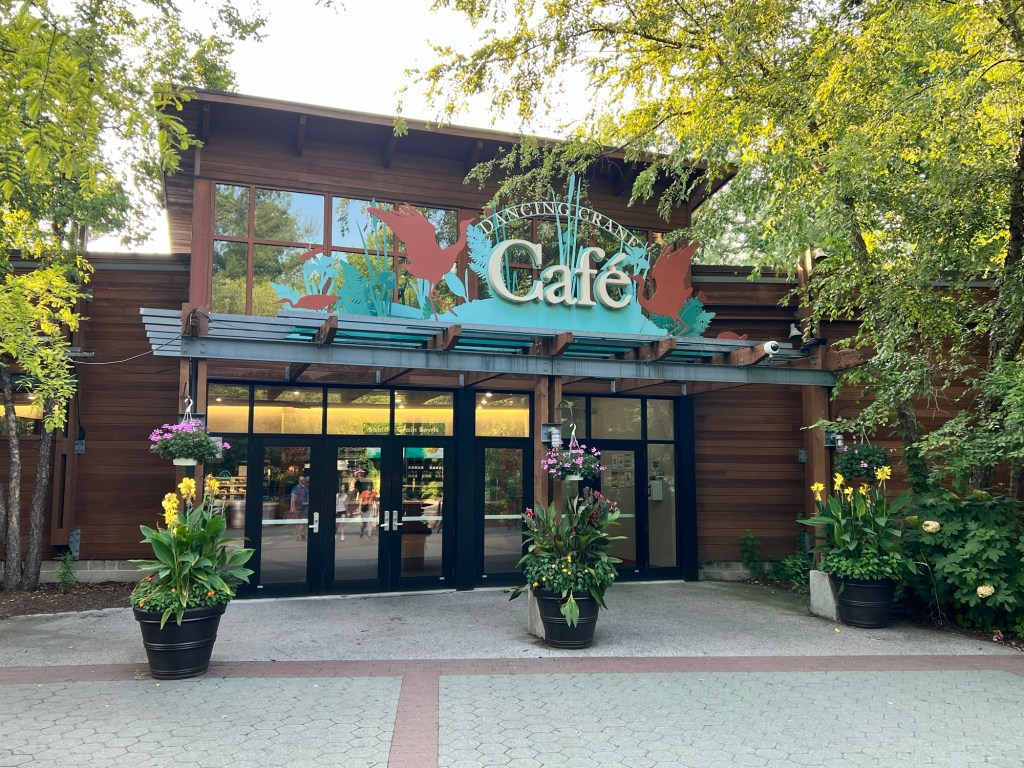
After visiting the Congo Gorilla Forest, I went to see what was open for dinner. The Dancing Crane Cafe that was located in the older section of the zoo. The restaurant was packed with families that I did not want to bother eating then and since it was getting late wanted to see the Dinosaur Walk and the Sea Lion Tank before the end of the evening.
The Dancing Crane courtyard
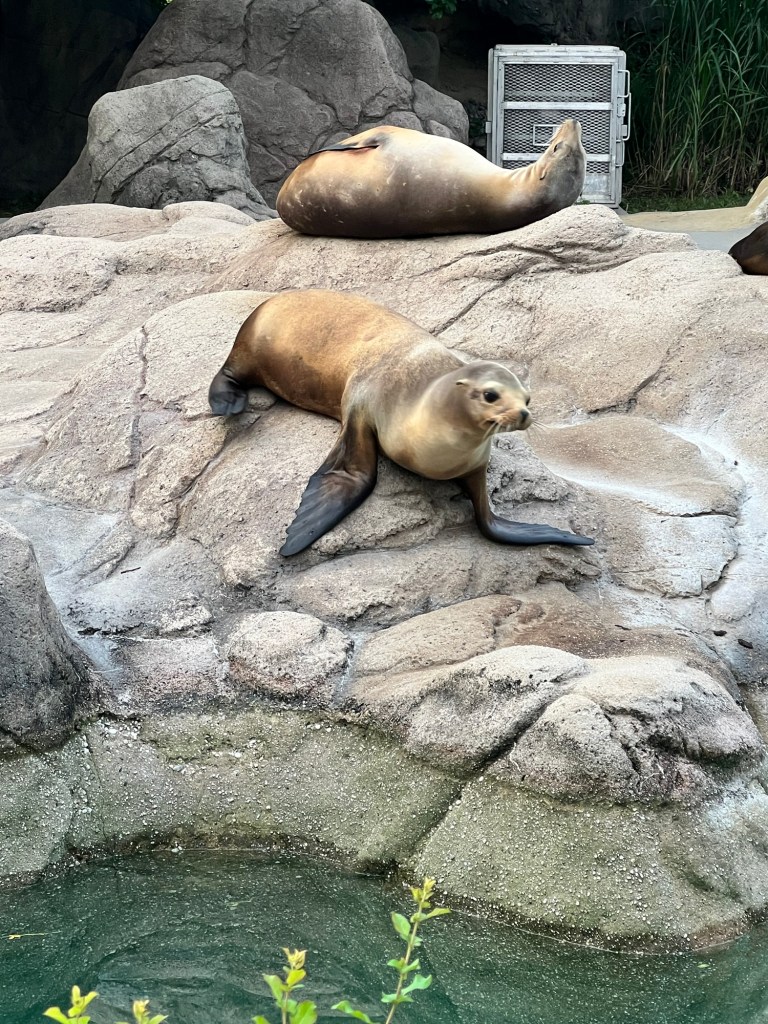
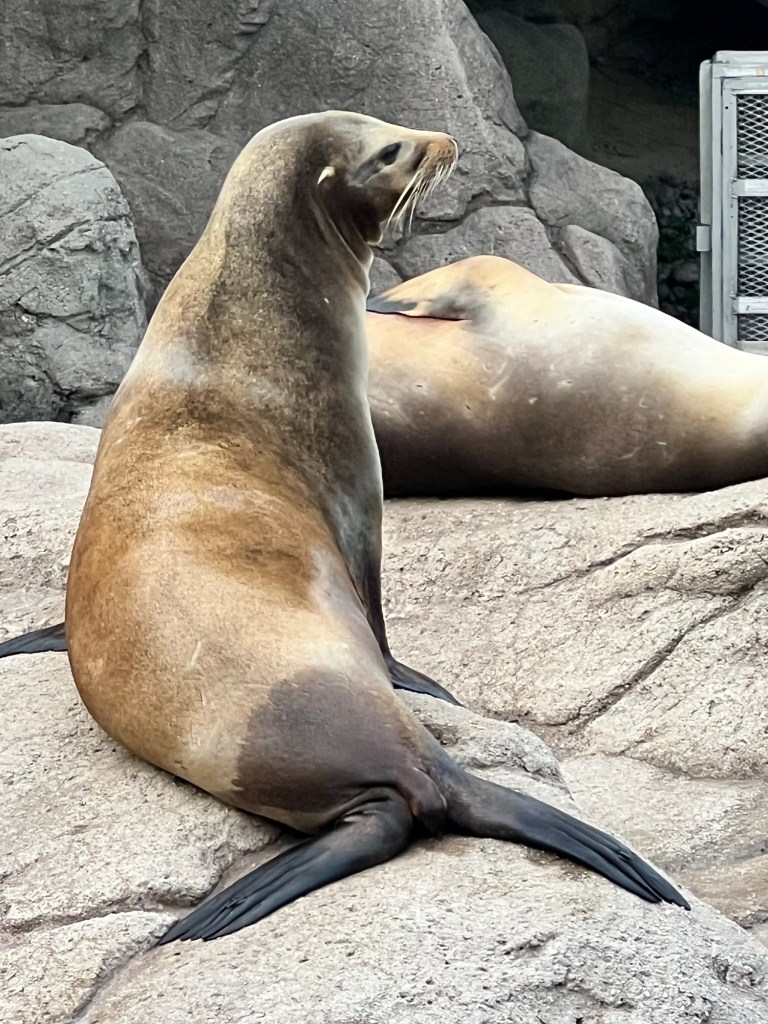
When I got to the Sea Lion Tank at the Astor Court, the sea lions were in the pool splashing around showing off to all the patrons who were watching them swim. They are so used to people watching them they just swam and dove around us. I thought they waved to us.
The seals taking a rest by the end of the evening
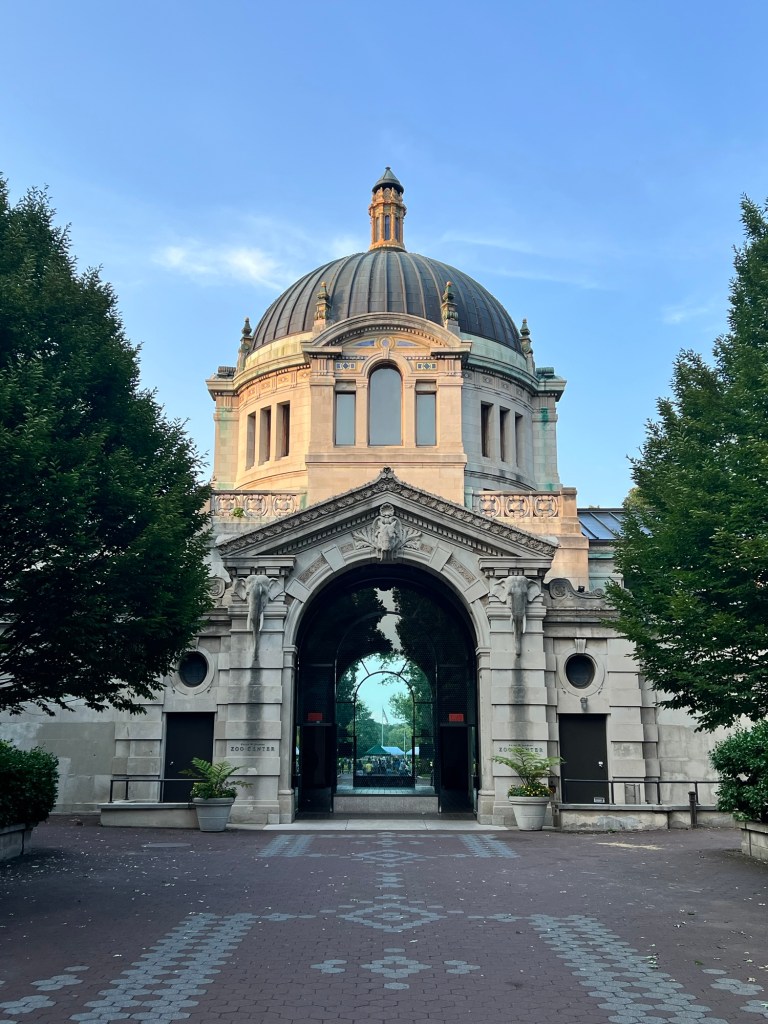
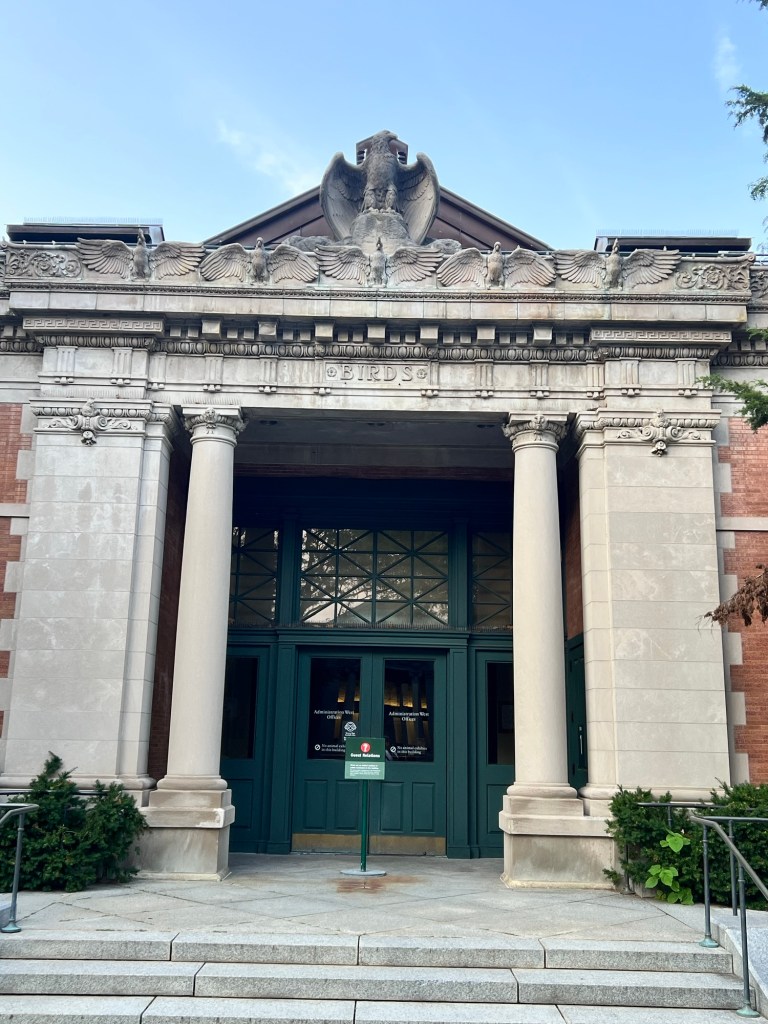
The main entrance of the zoo facing the Fordham Road entrance is the original zoo that was built in 1907. This is where the original animal buildings were located that are now used for administration purposes. These buildings are some of the original buildings when the park opened after 1899.
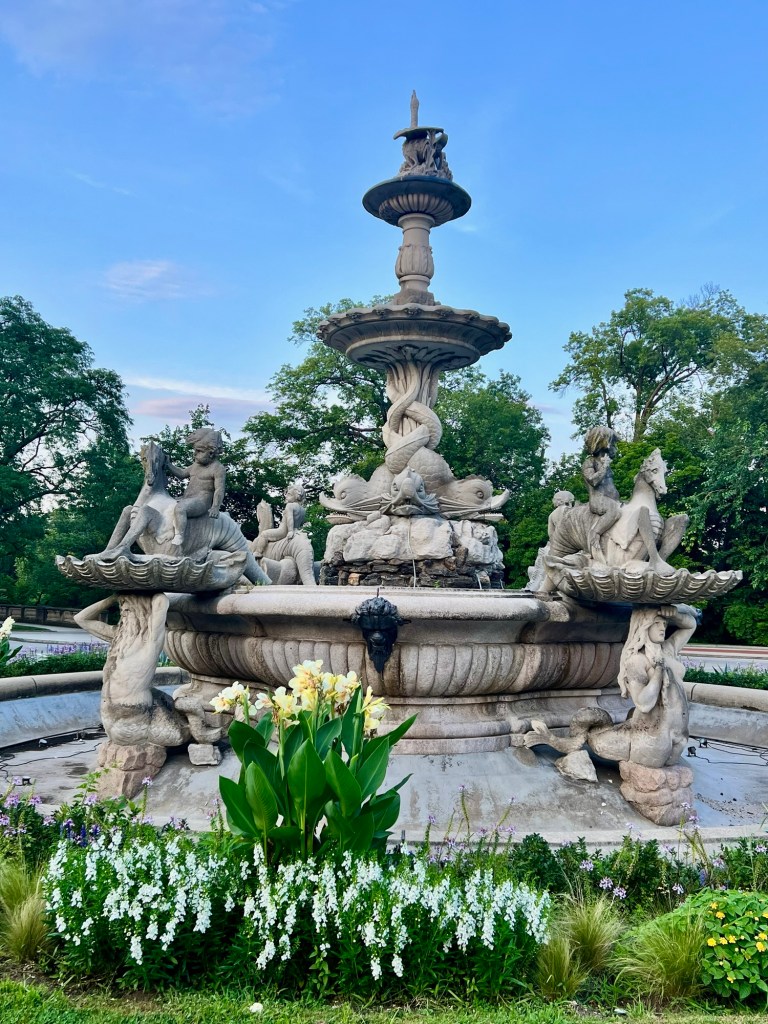
These graceful stone buildings were built by the firm of Heins & Lafarge and the Rockefeller Fountain was donated by William Rockefeller. It had been built by Biagio Catella in 1872 and moved to the park in 1903.
The entrance to the older section of the Zoo
The Rockefeller Fountain built by Biagio Catella
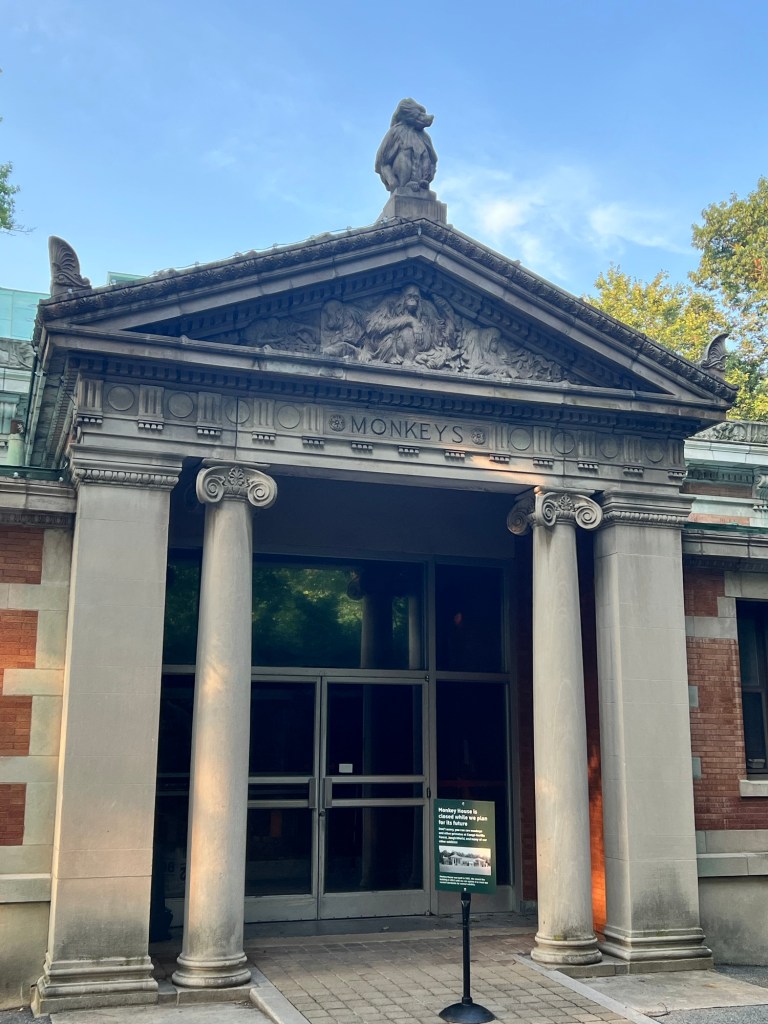
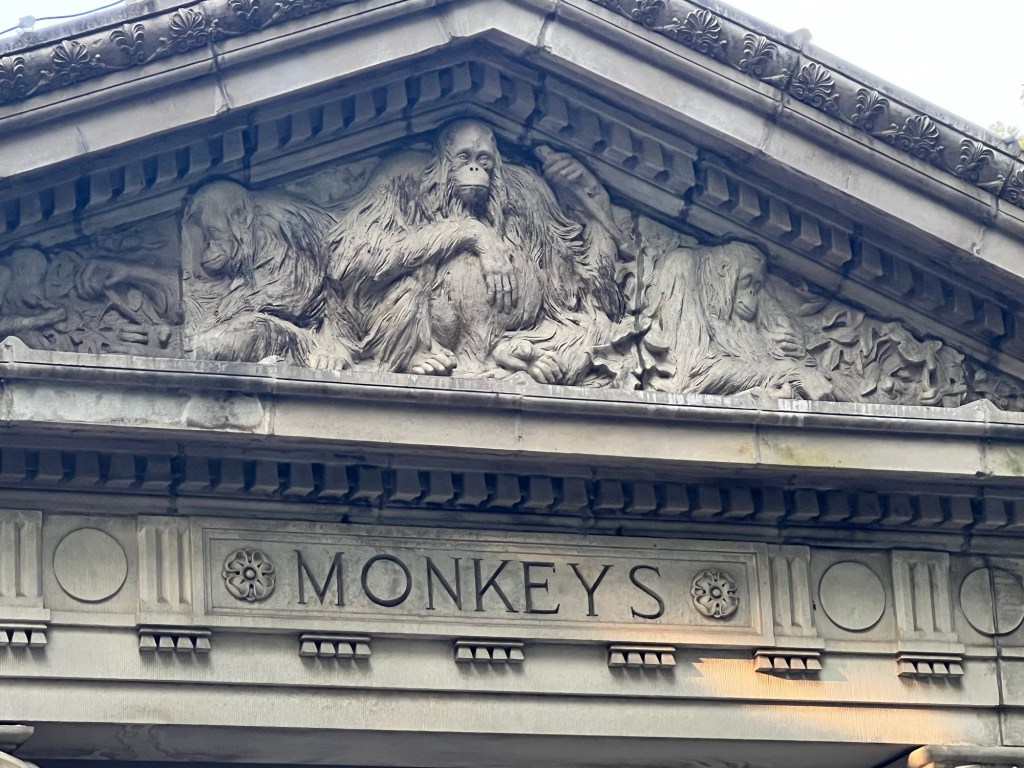
This is the Monkey House
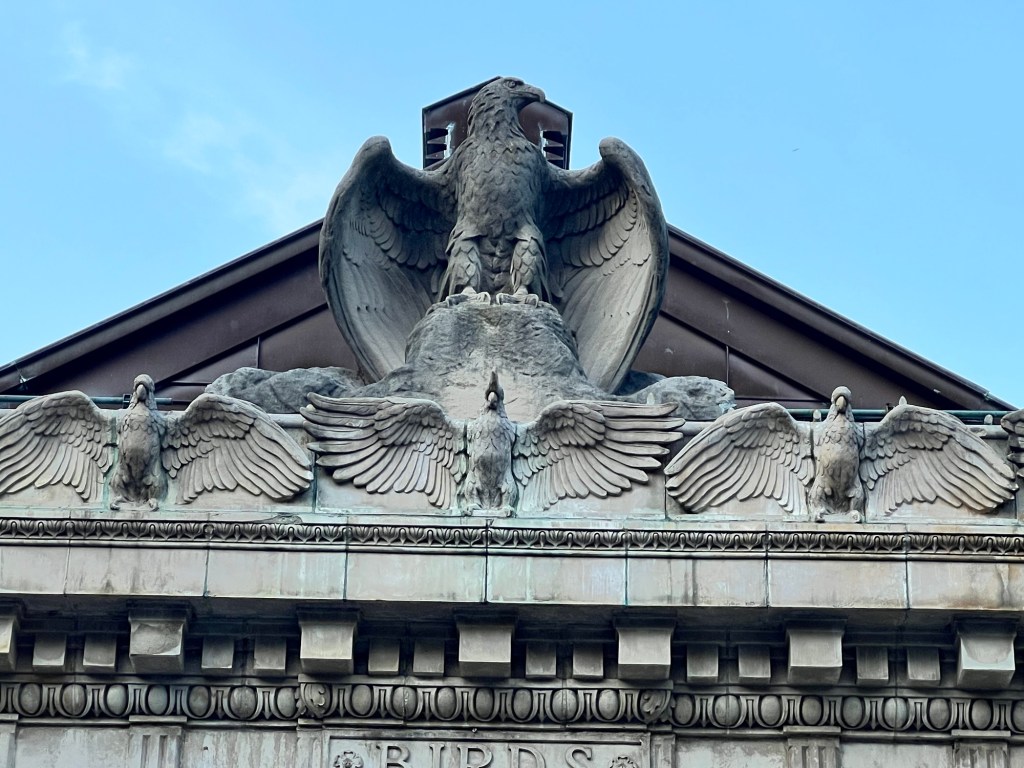
The Bird House
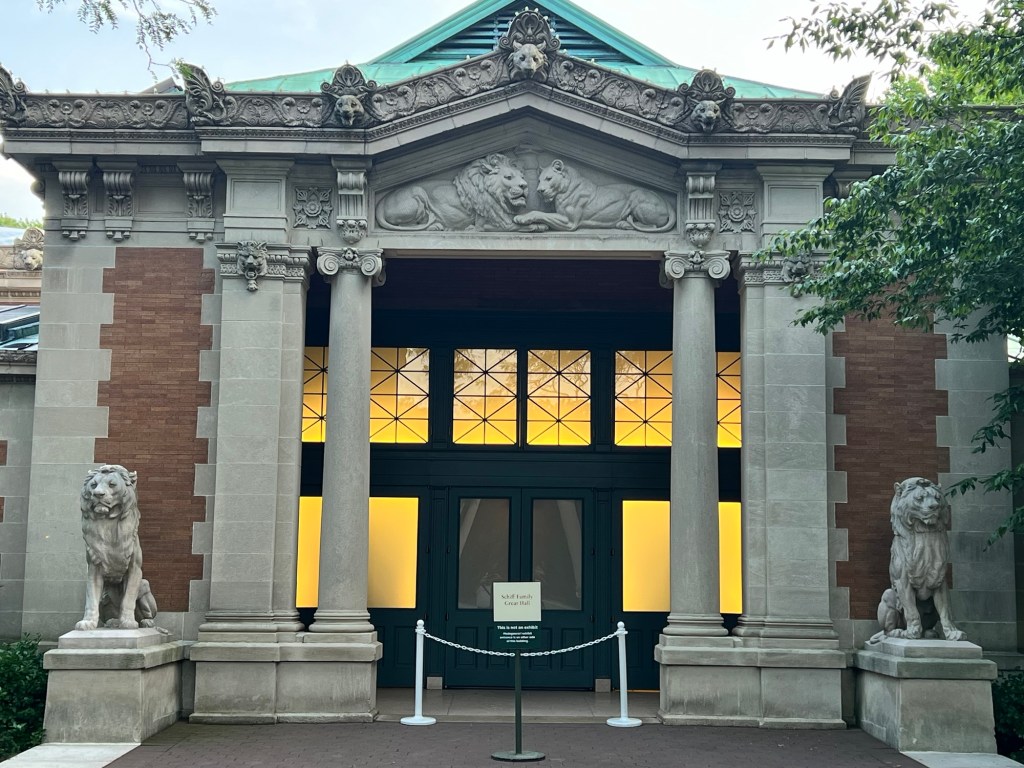
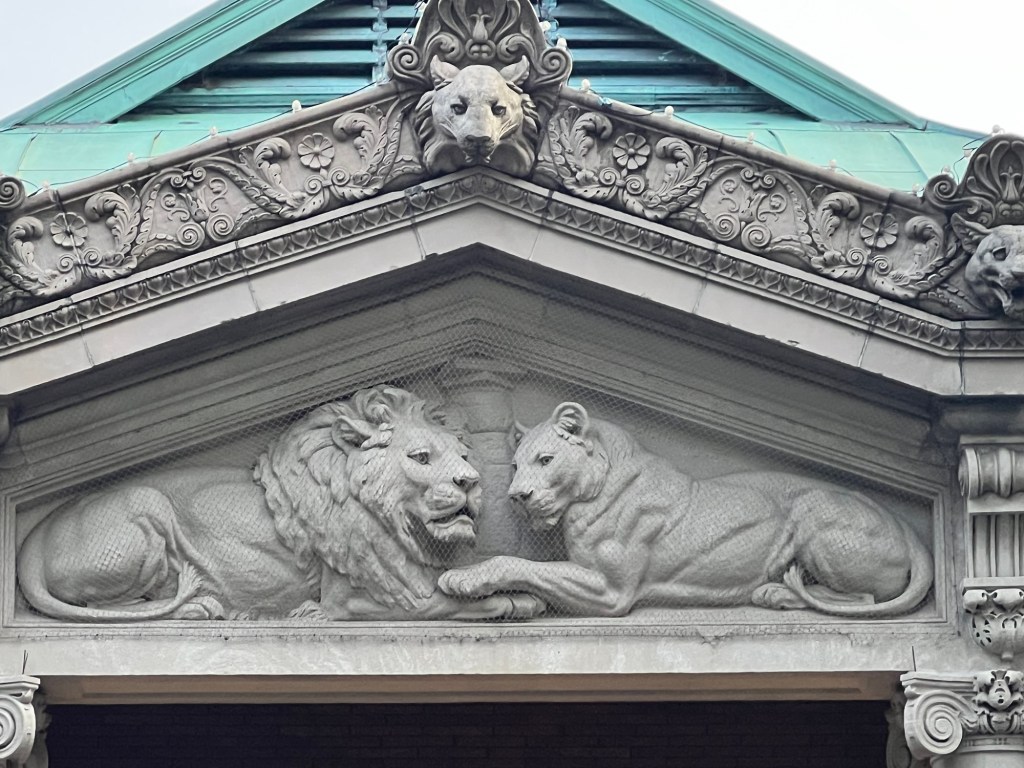
The Lion House
The Elephant House
The Elephant House
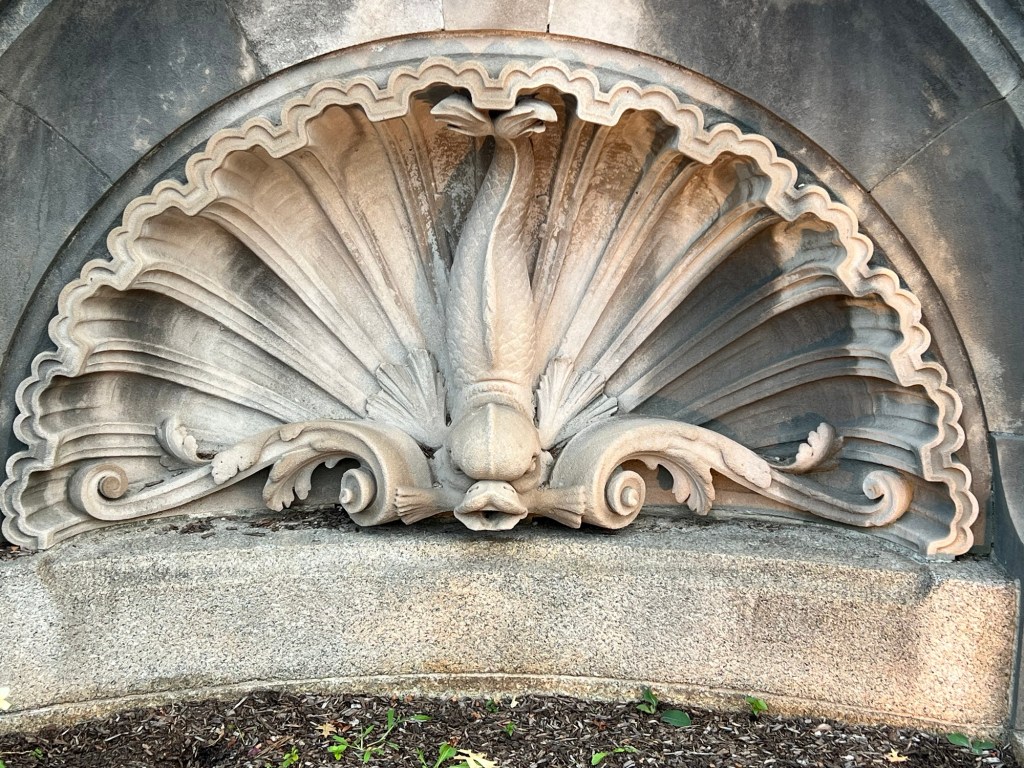
Don’t miss walking around Astor Court after visiting the sea lions. These buildings are a real treat if you love architecture and detailed stone work. Each building has its own unique look to it and the animals grace the buildings where they used to live at a time when animals were just an amusement instead of living breathing animals who needed living space. Still the Victorians knew how to design a building.
Astor Court
I walked along the gardens near the fountain and by Astor Court while the band set up for a family concert for the families. As the sky threatened, the families got ready for the concert. I decided to visit the Dinosaur Safari Walk before the park closed.
The Dinosaur exhibition
This was very interesting as they movable Dinosaurs in the natural habitat placed here and there along the walk by species.
These animals move and roar
The dinosaurs winked, moved and roared around us giving me the creepy feeling that I was in the movie ‘Jurassic Park’. As I walked through the exhibit, I watched as they moved around and lifted their heads up to look at us. I thought it was very clever and in our case Thank God they were not real.
Don’t miss the ‘Dinosaur Safari’ before it closes
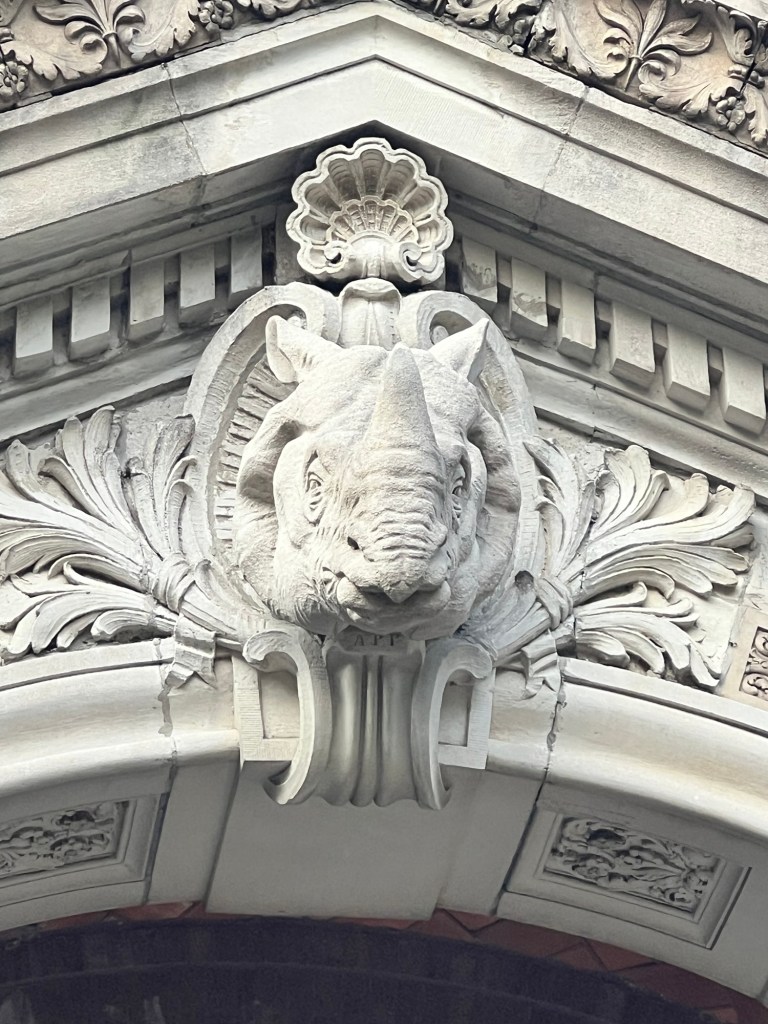
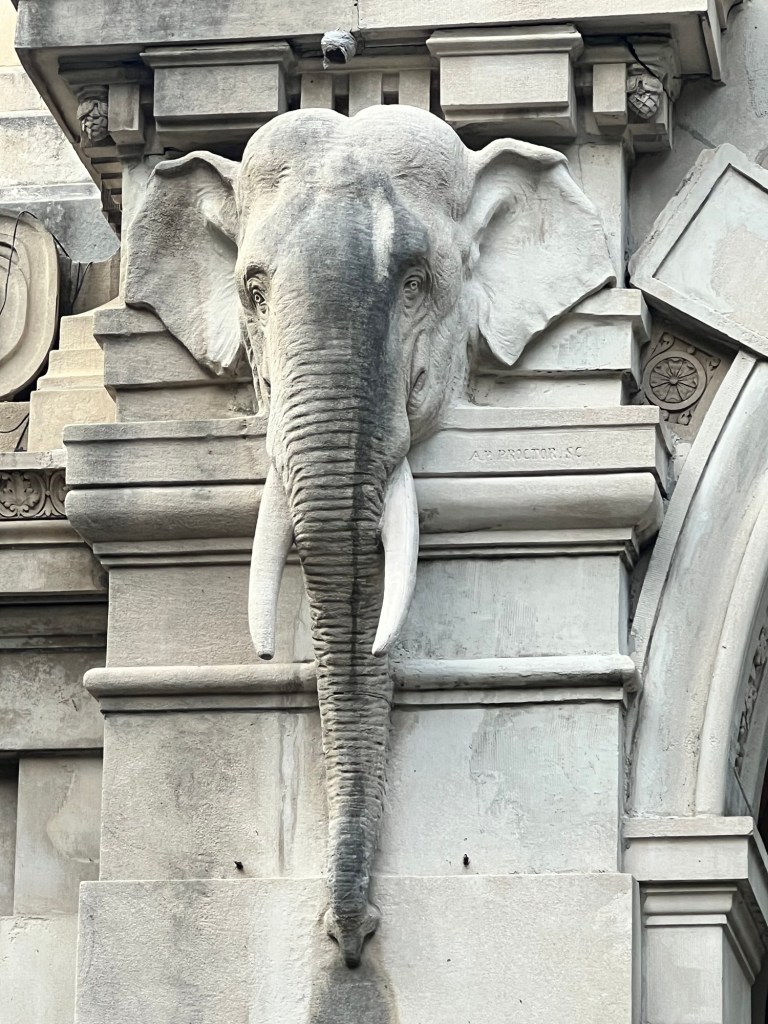
On the way back from the walk, I stopped to admire all the buildings once again that surrounded Astor Court. Really look up and see the detail work of the stone animals. The artisans did a wonderful job with the craftsmanship and the intricate details.
The Rhino Statute by Astor Court
While everyone else was enjoying the concert, I made the trip back to The Dancing Crane Cafe (See Review on TripAdvisor) for dinner. It was around 7:00 pm when I got to the restaurant and that and the gift shop were still busy.
I have to say for a zoo restaurant I was pretty impressed by the food. It is standard children’s menu with hamburgers, chicken fingers and individual pizza.
The Dancing Crane Cafe
I had the Chicken Fingers and French Fries combination dinner with a Coke ($11.99 with a 10% membership discount). They were delicious. Perfectly cooked with just the right amount of breading and perfectly deep fried where they crisp on the outside and moist and juicy on the inside.
Usually these things are sitting under a heat lamp dried out but here the restaurant was so busy that every thing was freshly cooked and delicious.
The second Membership Night I indulged in an Individual Pizza.
The pizza was pretty impressive. It just came out of the oven and the sauce had the perfect spiced taste.
The pizza at Dancing Crane Cafe is really good
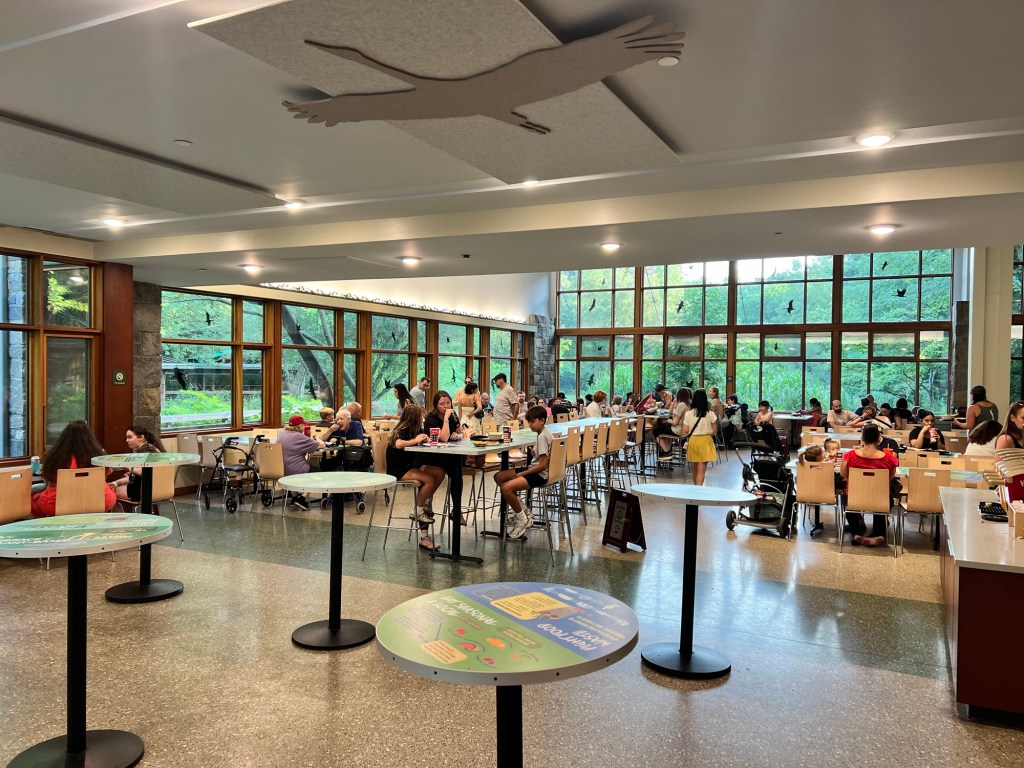
It was fun to sit by the window and watch the flamingos in the pool next to the restaurant or just watch the other members trying to calm their kids down before the zoo closed for the evening.
The Dining Room at the Dancing Crane Cafe
As the last of members and their families came into the restaurant for dinner, the Bug Carousel was going in full force and packed with kids and their parents trying to get one last ride in before the park closed. I could not believe the prices of everything and how much was extra when you visit the zoo but that is the nice part of being a member of the Wildlife Conservatory. Everyone once in a while there is a nice member perk.
The waterfall at the jungle site
Even though it was a somewhat gloomy night, I had a ball walking around the zoo and enjoying the company of other members who were also having a good time with their families. It is nice to see that my membership is making a difference.
The pools at the zoo
It was a great day at the zoo both times. I took the Number 2 subway at the 180th Street stop this time back to Manhattan.
The Bronx Zoo Members Night 2026:
On August 13th, 2026, the Wildlife Conservatory and the Bronx Zoo held their Annual Members Night at the Zoo. It was a warm and sunny evening, perfect for touring the zoo. The park was in full bloom and the animals seemed very happy to see us. The zoo opened for members at 4:00pm and I arrived at 5:00pm ready to really tour the park. The best part was that since it was during the week, most people did not arrive until after 6:00pm, so I was able to go on the Tree Top Trail and the Monorail around the zoo when the crowds were small. It was really nice to experience the zoo when there no crowds of people.
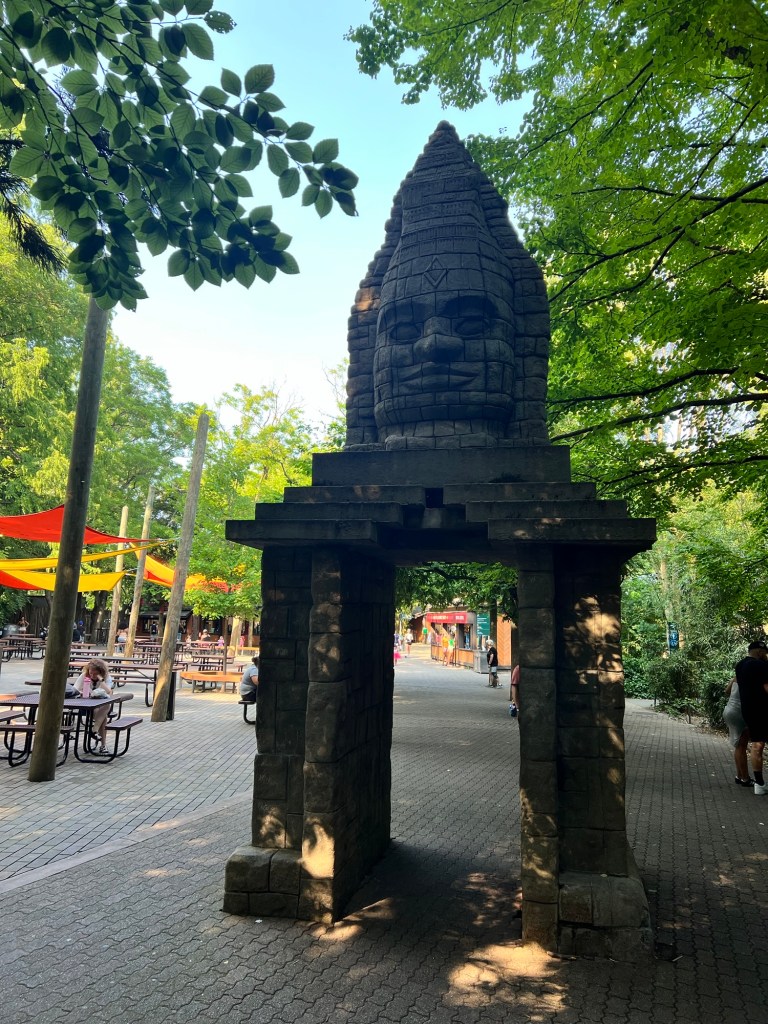
The Asian Entrance to the Zoo
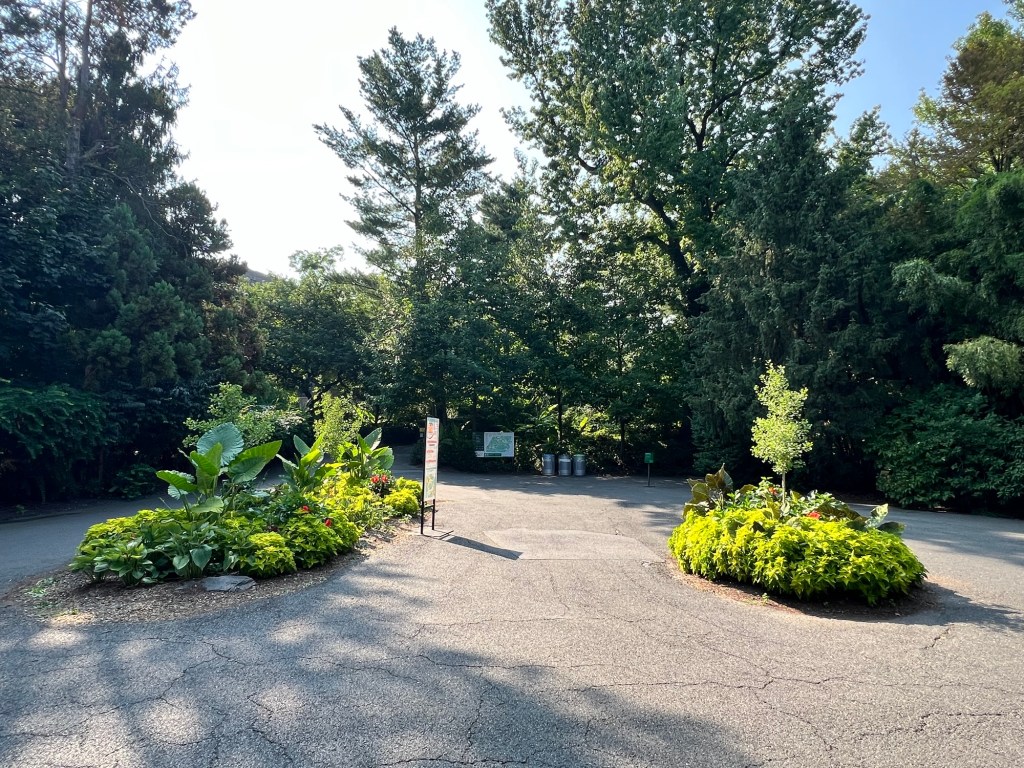
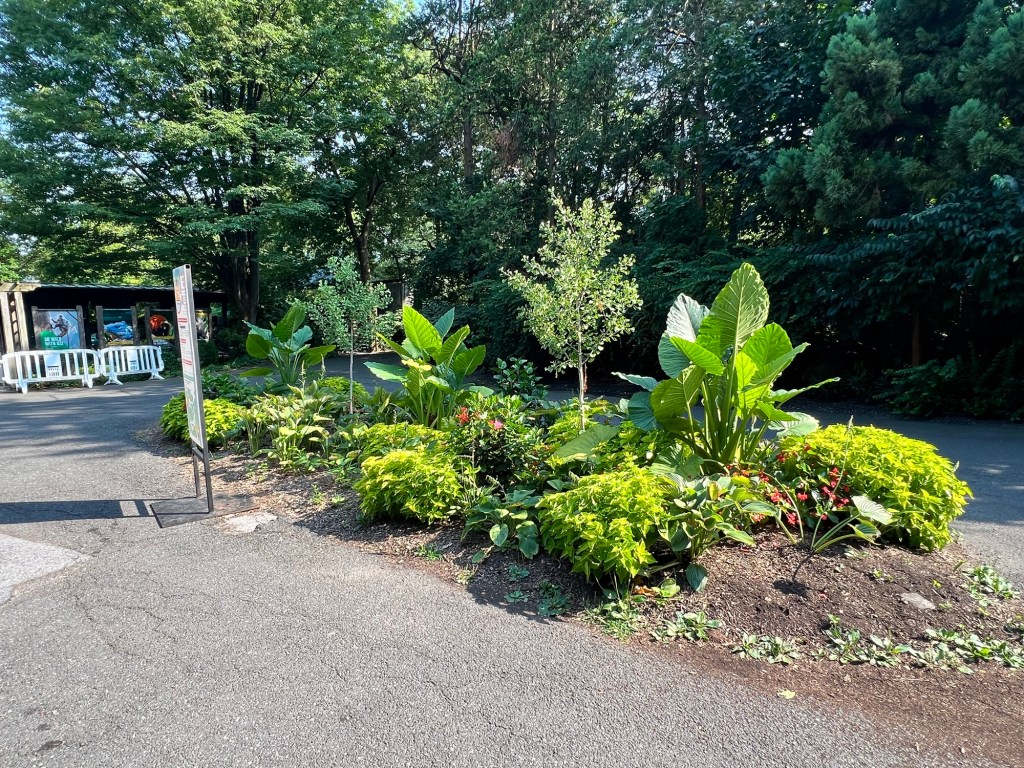
The gardens to the entrance to the zoo
I entered through the Asian Gate entrance which is closest to the subway entrance from and I was greeted by a friendly staff and colorful gardens that were reaching their Summer peak.
One of the zoo sculptures from the movie “Congo”
All the animals were outside at this time of the day and most were eating their dinners all over the park. As I passed each animals home, they just went about their evening like I was not even there. Every once in a while one would stare back but for the most part, they looked like they were going about their day.
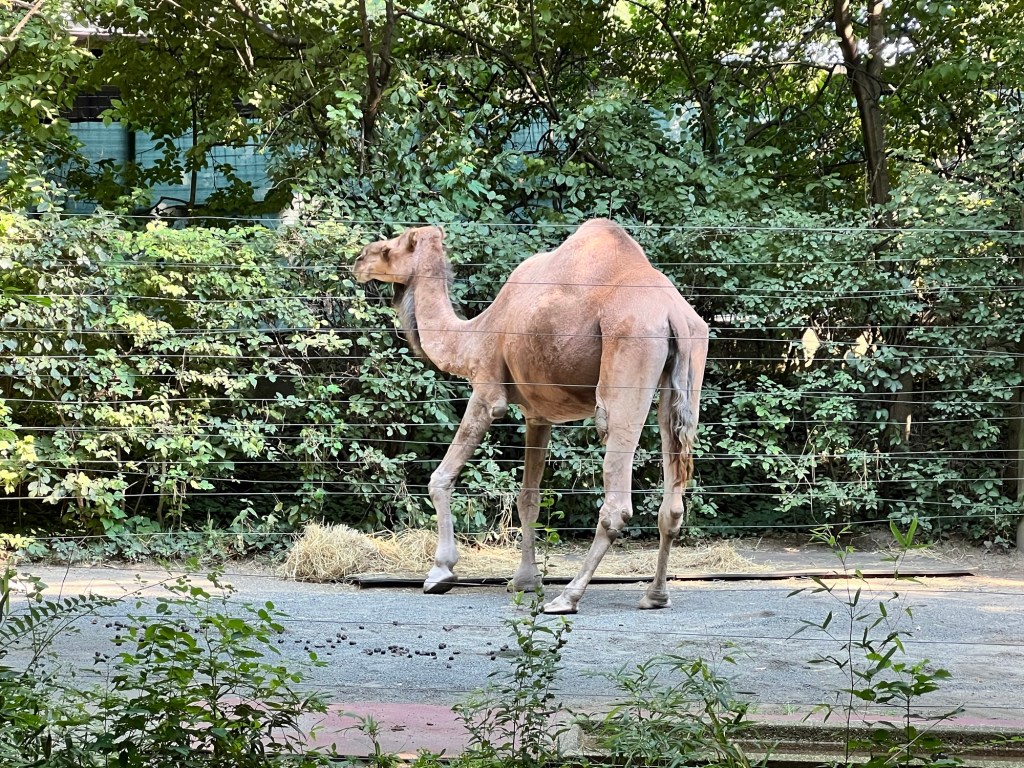
The camels were being fed when we entered the zoo
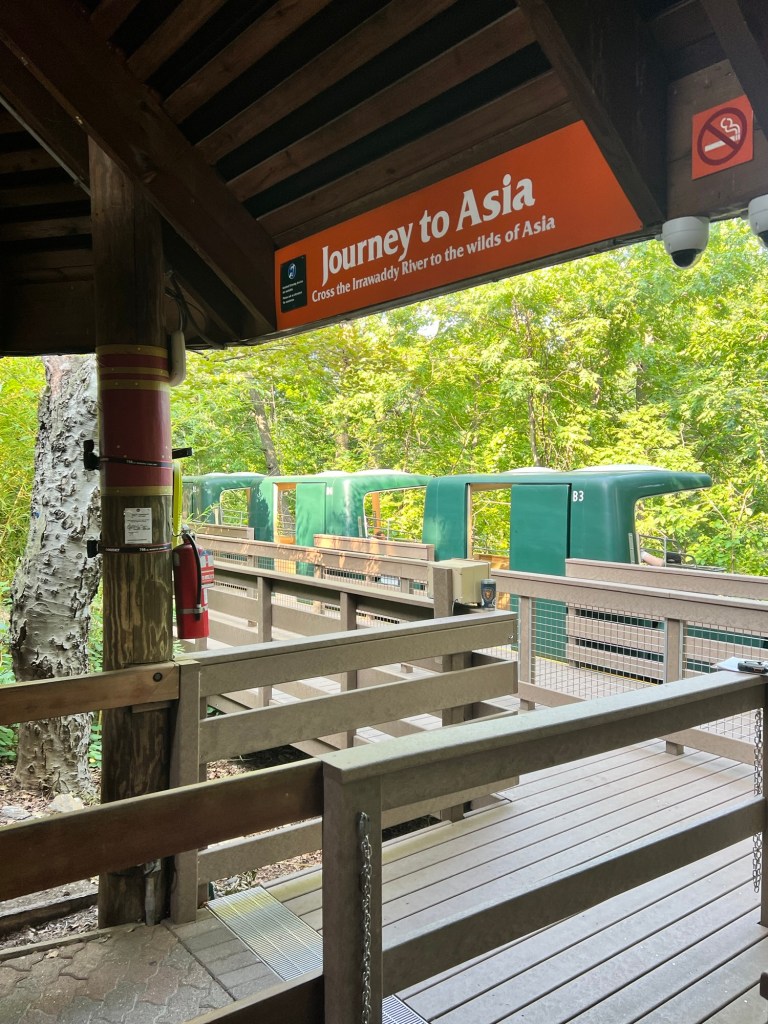
The first thing I did when I arrived for Member’s Night was ride the monorail to see the bulk of the zoo. I had not been on this for years. What is nice about coming to Member’s Night is that all the rides and attractions are free to the members. All we had to do is show our pins. Even during regular days, there is a discount but you still have to pay a small fee to get on the rides.
The start of the monorail
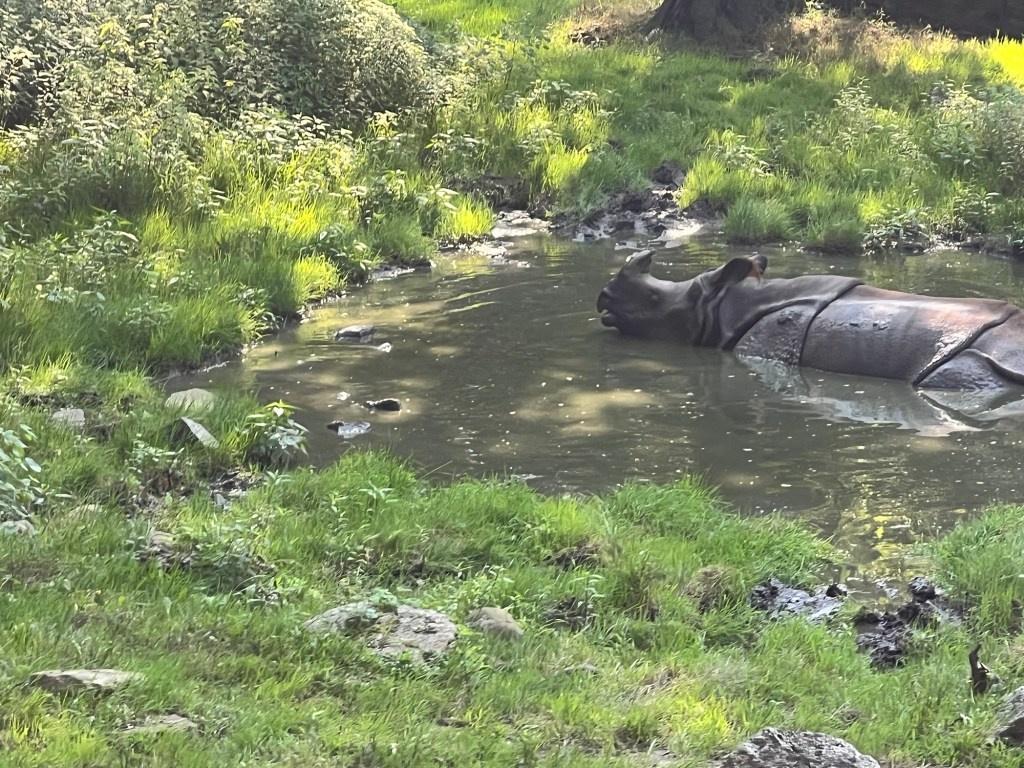
The rail conductor introduced himself and then we were off touring the zoo, moving past each area of the park at a reasonable speed so we could see the animals in their homes. Our first area that we passed was Patty, the elephant, who was relaxing and cooling herself off. Then we passed the rhinos who were doing the same. It seemed the animals were all watering themselves down from the heat.
Patty the elephant on the tour
The rhinos bathing themselves
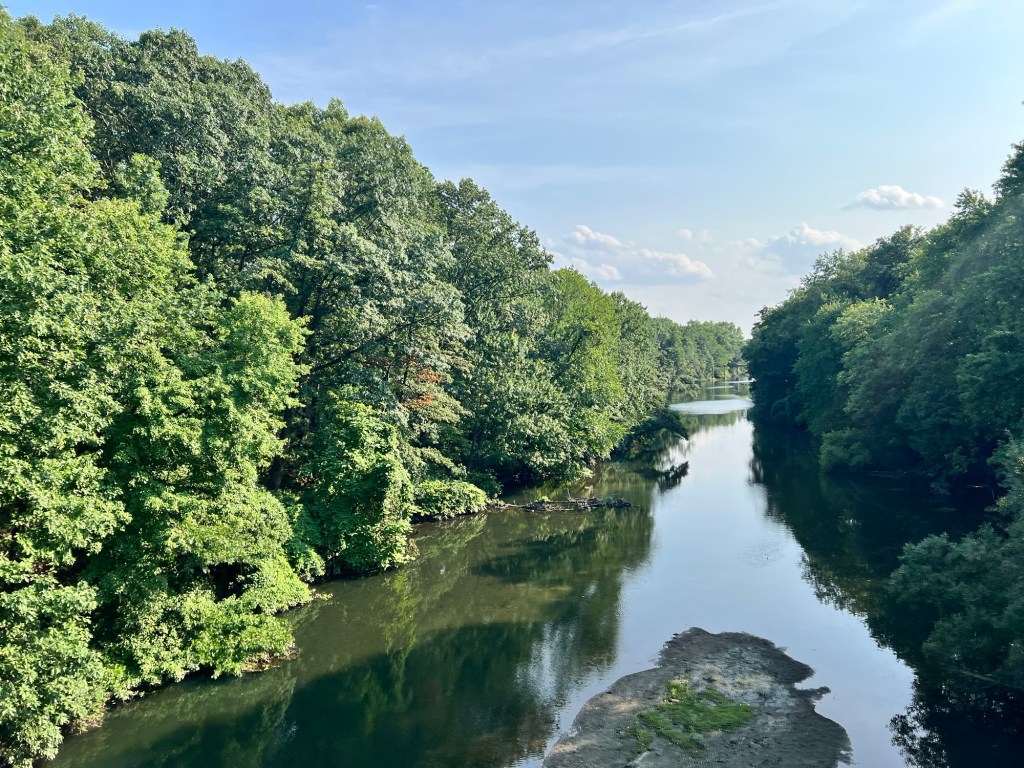
Passing the Bronx River, I felt like we were touring a foreign country. You would have never known we were in the Bronx. I had never seen the river this beautiful or natural before. The park must do a good job in maintaining it cleanliness and keeping it natural looking.
The Bronx River flows through the zoo
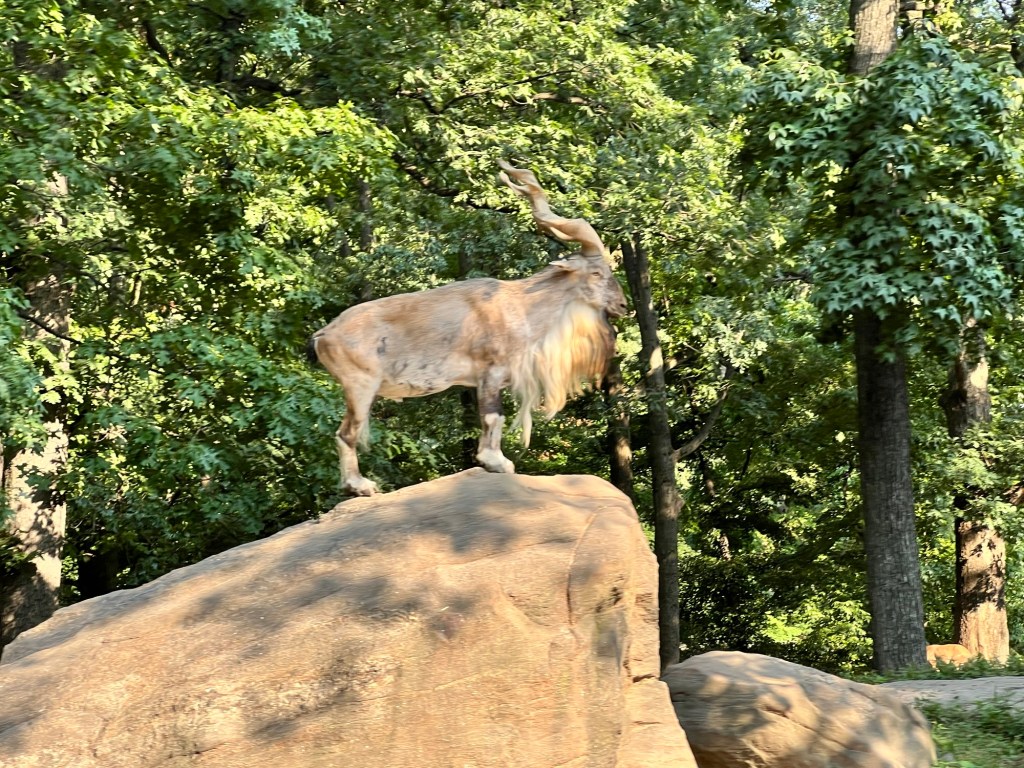
Wild goats guarding their part of the park
There were three different types of deer on the tour
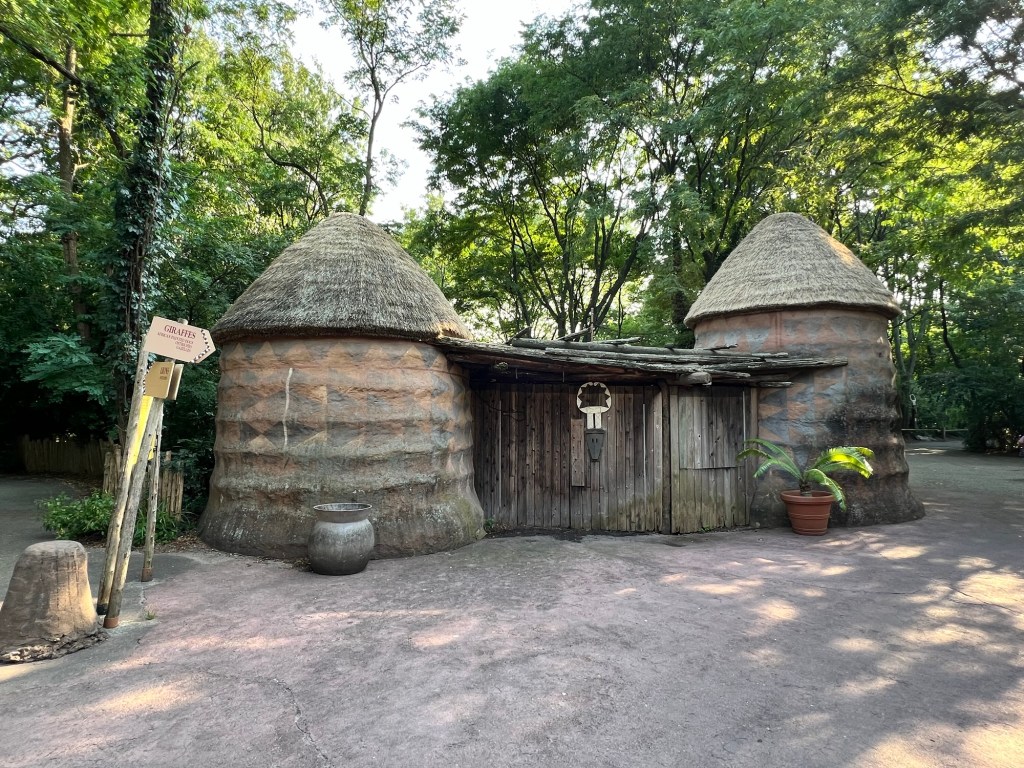
After I got off the monorail after my world tour of the zoo, I toured through Somba Village near the Congo Exhibition. This area is where all the animals native to Africa are located and the zoo does an interesting job in trying to recreate their natural habitat for a zoo based in the Bronx.
Sombo Village in the zoo
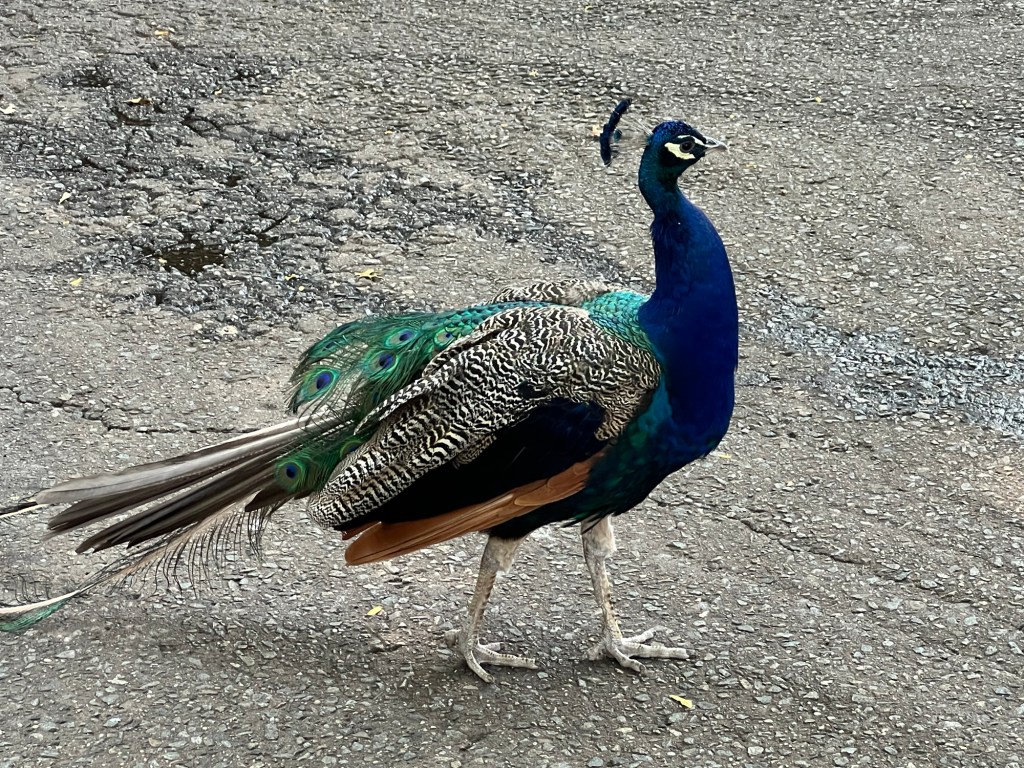
I passed a peacock while walking in this part of the park. He walked around like he owned the place. Everyone was trying to get him to open up his tail.
The peacock walking down the paths
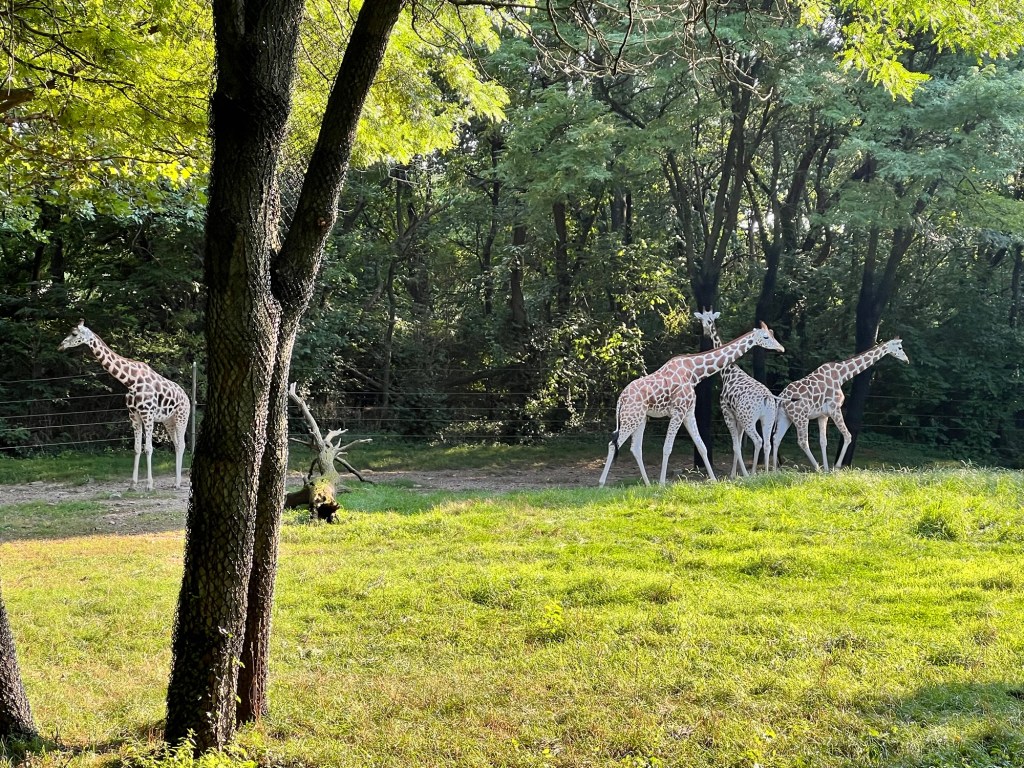
The first part of this side of the park was the Giraffe field. This was one of the first exhibitions at a zoo where these large animals had room to move and interact with plenty of space.
The Giraffe exhibition
The giraffes passing one another
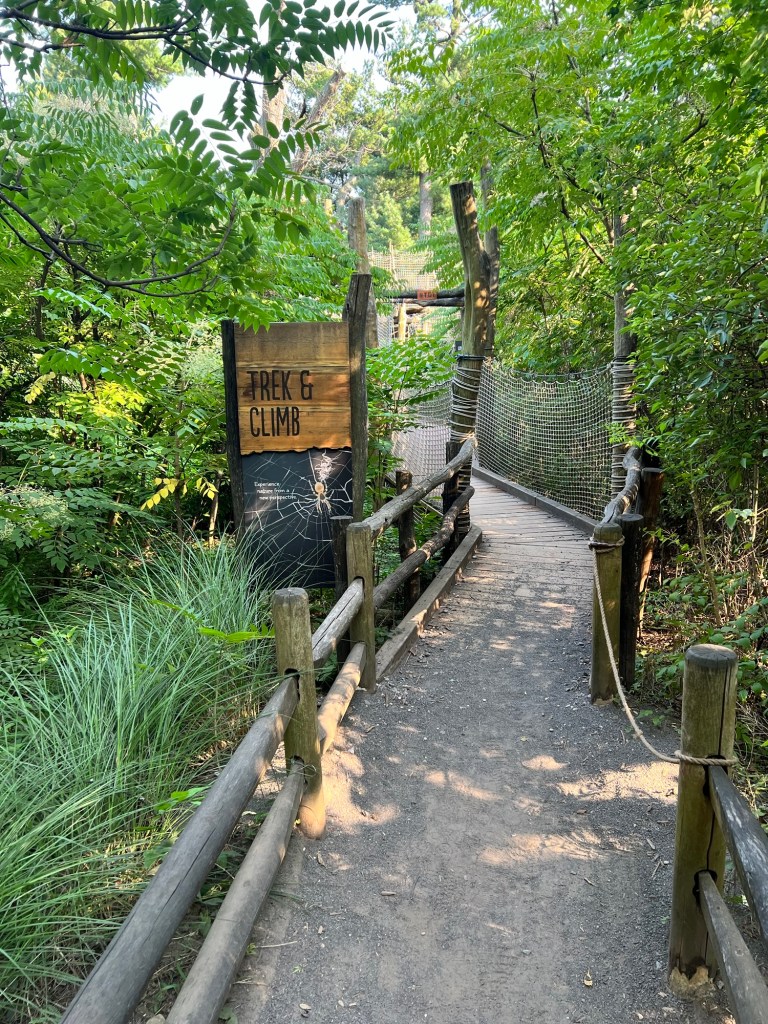
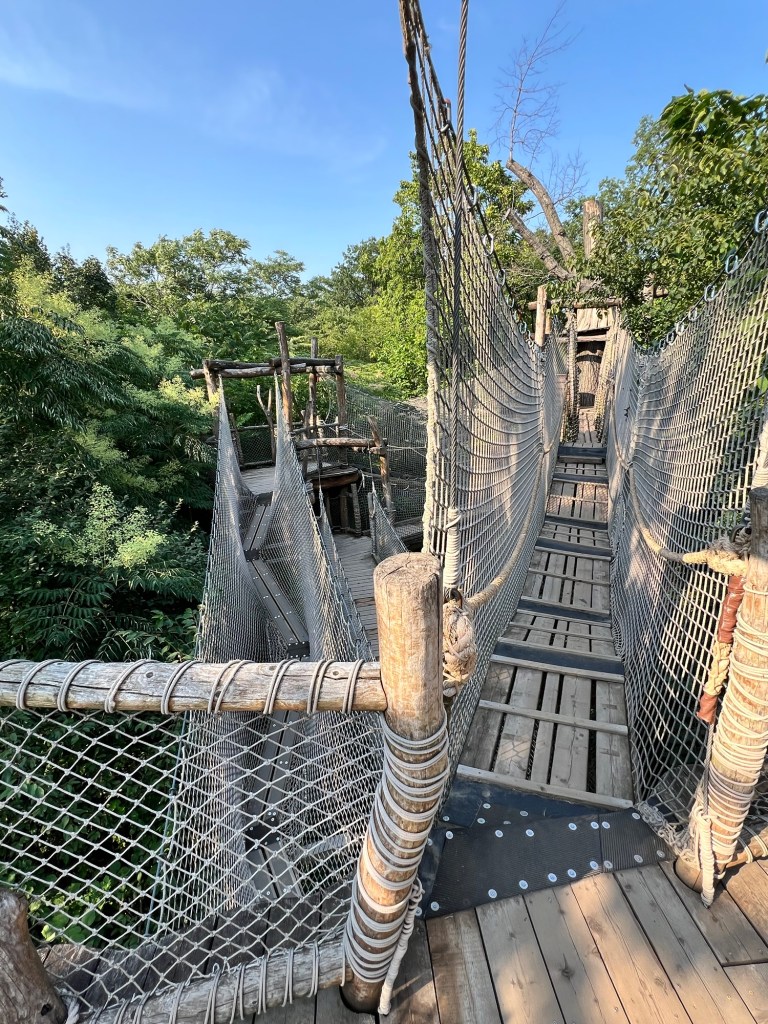
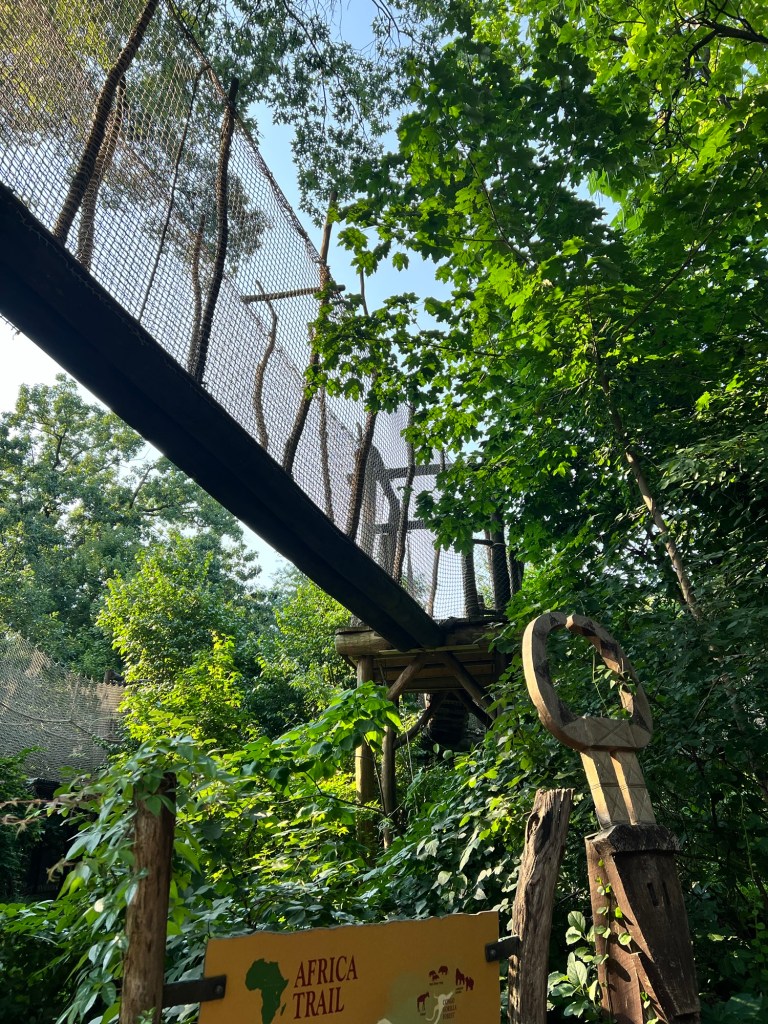
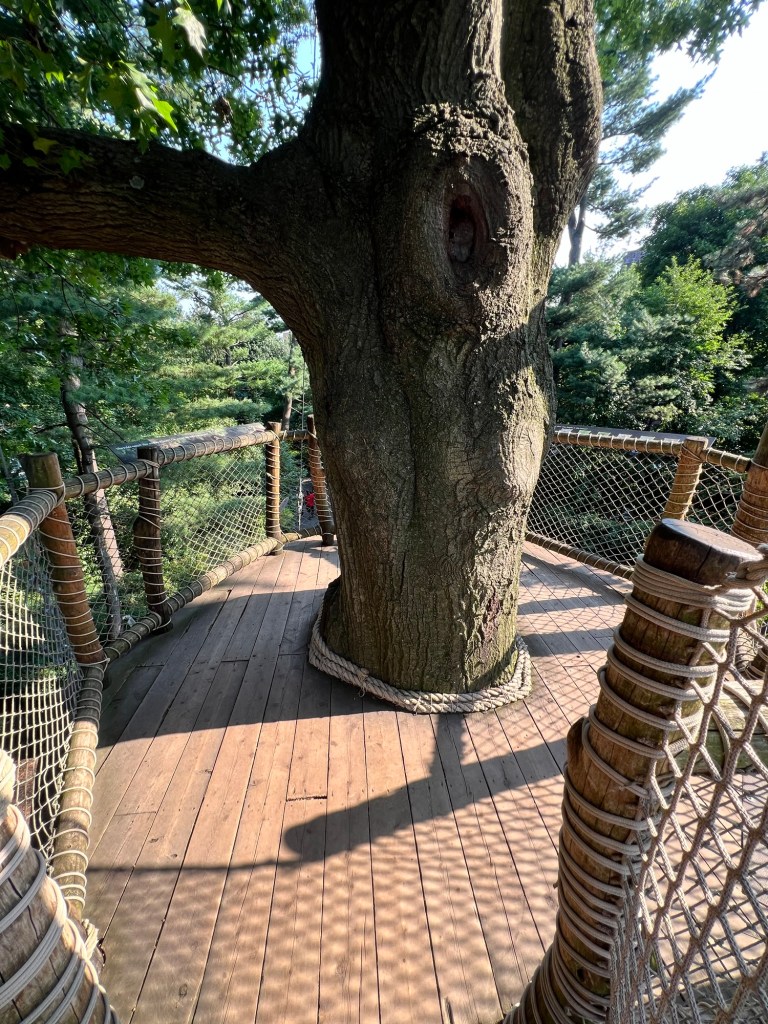
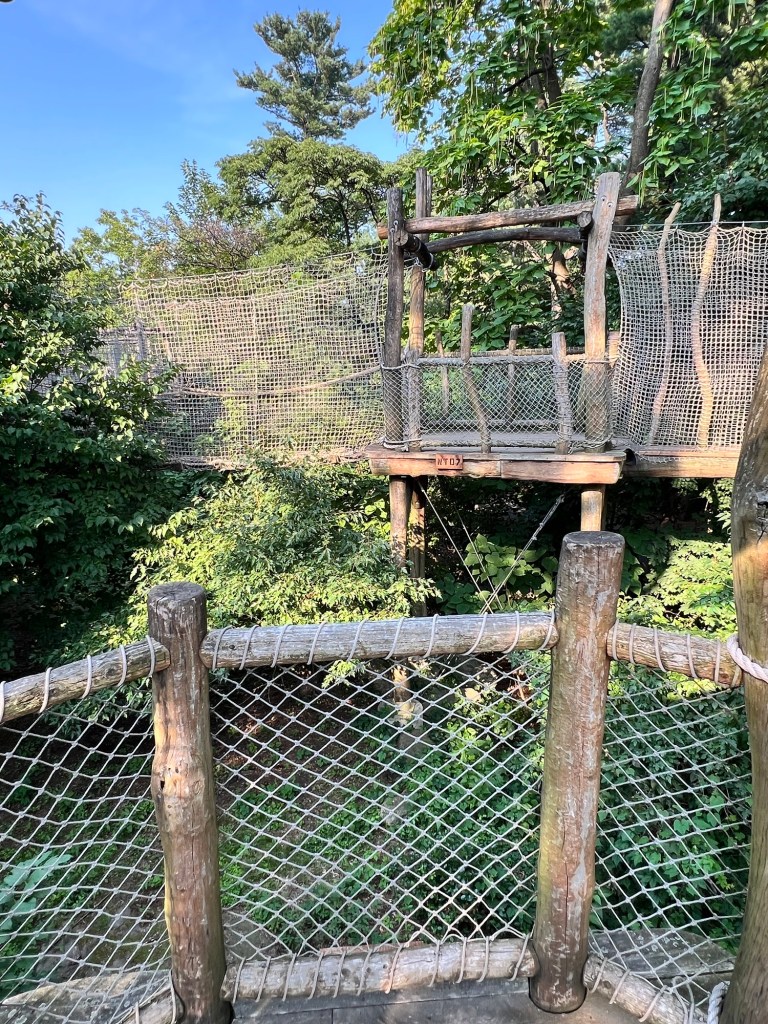
I then took the Tree Top Walk through the top of the park. I had not done this in years and you do have to be in shape to walk through all these rope bridges. You will make a lot of twists and turns and have to have balance when you walk through this maze of rope bridges and paths.
The Tree Top Path
Walking down the rope and wood bridges
Moving through the paths
The first stop on the path
Finishing through the path pretty quickly
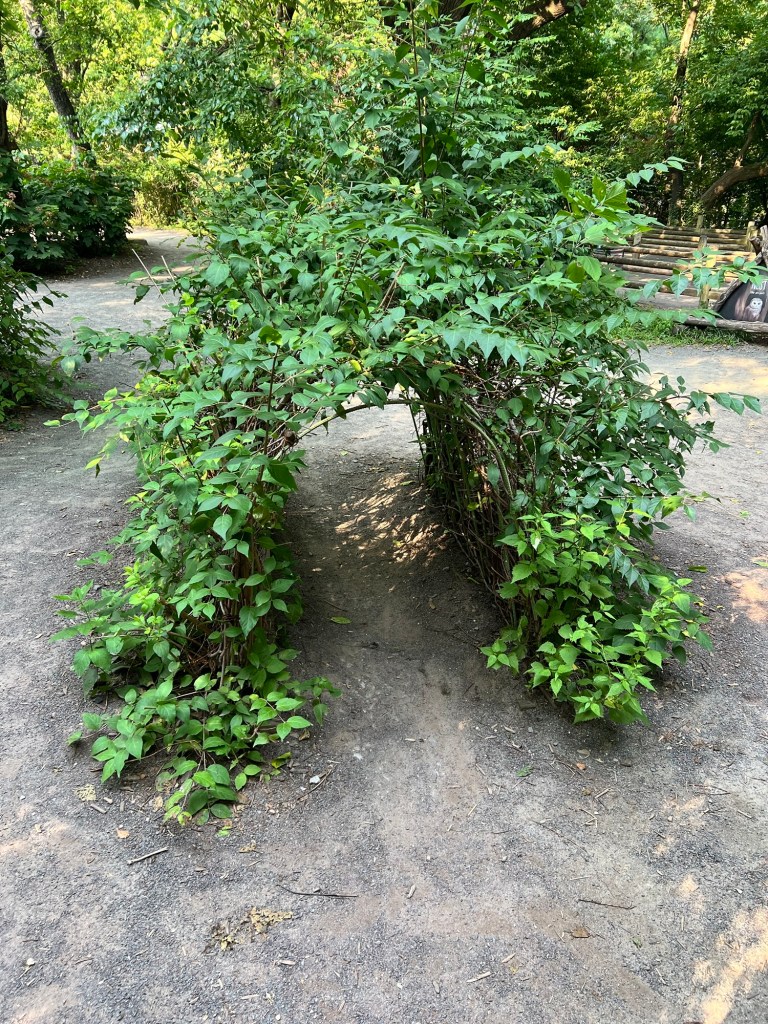
The small obstacles of the path
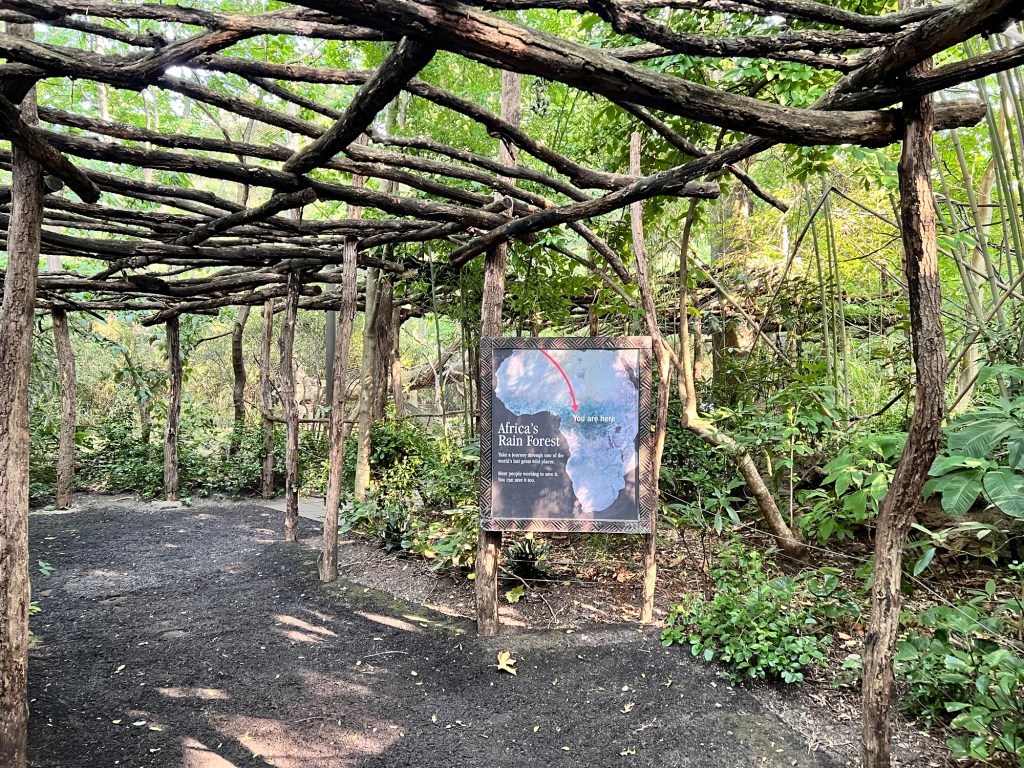
I visited the Congo Exhibition next, which was interesting because I remember coming here with my father when it first opened in the 1990’s. It really does feel like you have entered another world. Even when you enter the path to go into the exhibit, it is like entering a clearing in Africa.
The entrance to the Congo exhibition
Entering the exhibition
Entering the Congo exhibition
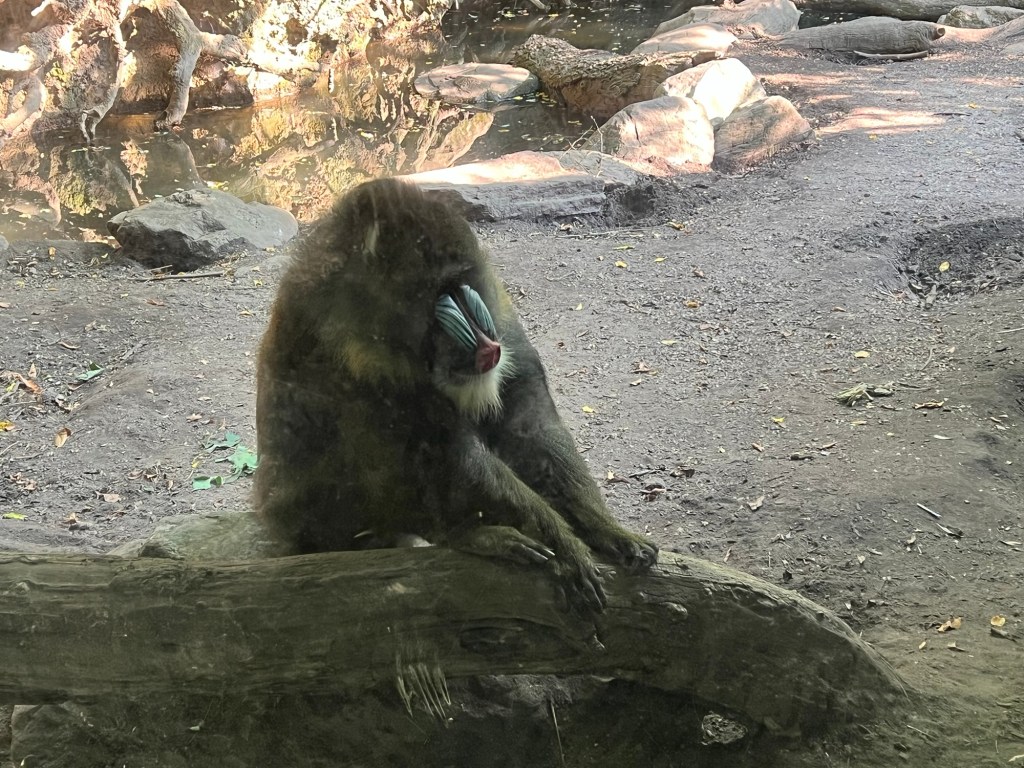
The Baboon I first saw looked tired
I then entered the heart of the exhibition where a variety of mammals lived with baboons, monkeys, gorillas and apes either staring back at us or just amused that we were watching them while watching us. I am beginning to realize there is not much difference in the reactions between us and them.
The sign for the large Congo exhibition
Walking through the entrance city a few
Watching the bamboos move around
He looked like he was praying
Then the gorilla made an appearance
He just looked at us
I left the Congo exhibition and walked to the middle of the park where the Dancing Crane Cafe was located and decided to have dinner while it was still early. I figured it would be crowded later with families and decided to eat earlier in the evening.
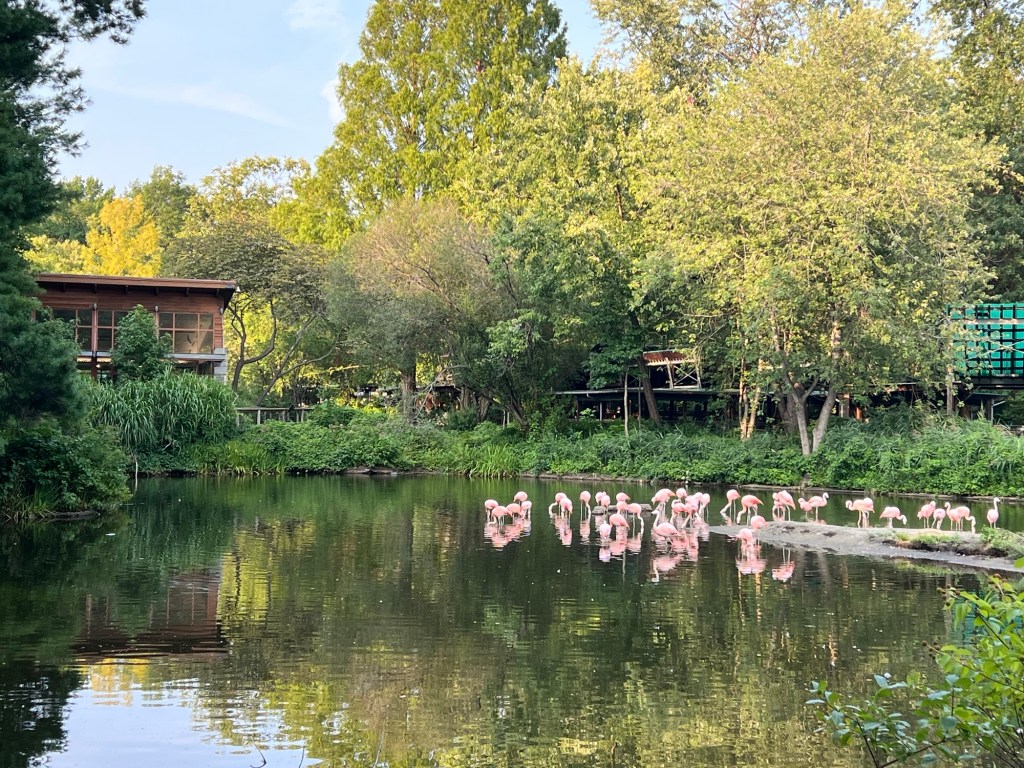
Before I got to the restaurant, I had to pass the Pink Flamingos in their pond. This is located just behind the restaurant which sits in the background to the left.
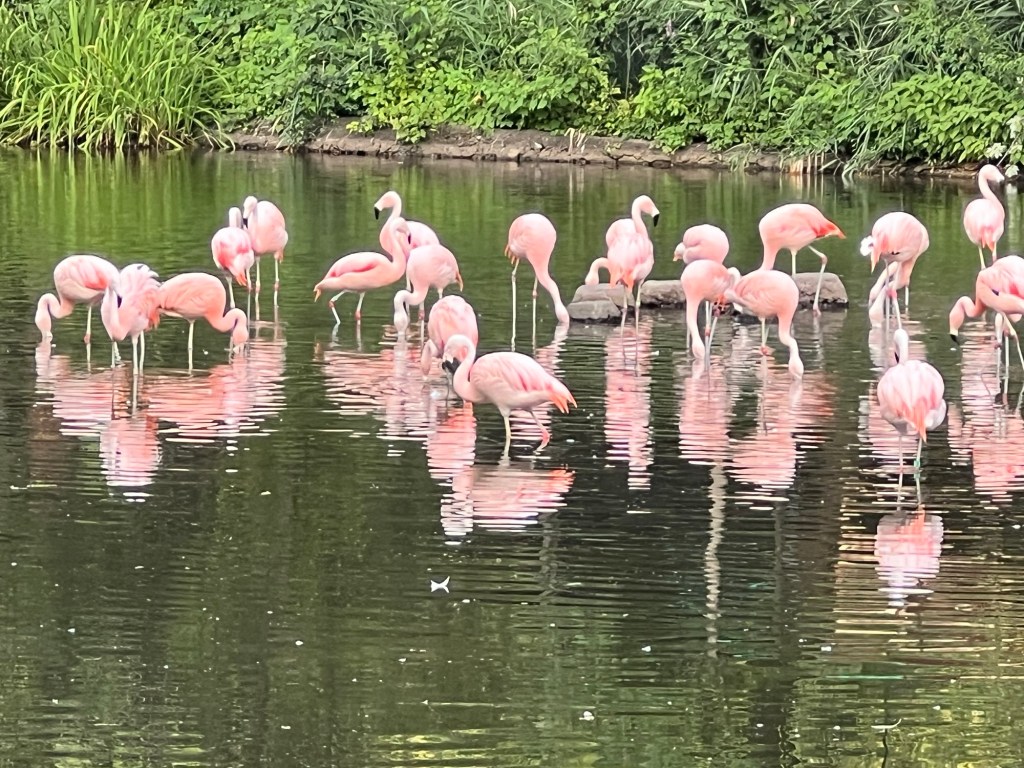
The Pink Flamingo Pond before you get to the restaurant
They were content eating and talking amongst themselves
For a zoo/park restaurant, I really like the quality and selection of the food at the Dancing Crane Cafe. In the four times I have eaten here, I have never had a bad meal. You will be surprised that for a public cultural spot, the food is very good, the portion sizes are comparable to the price and the service is always friendly and welcoming. I enjoy talking to the staff at the restaurant.
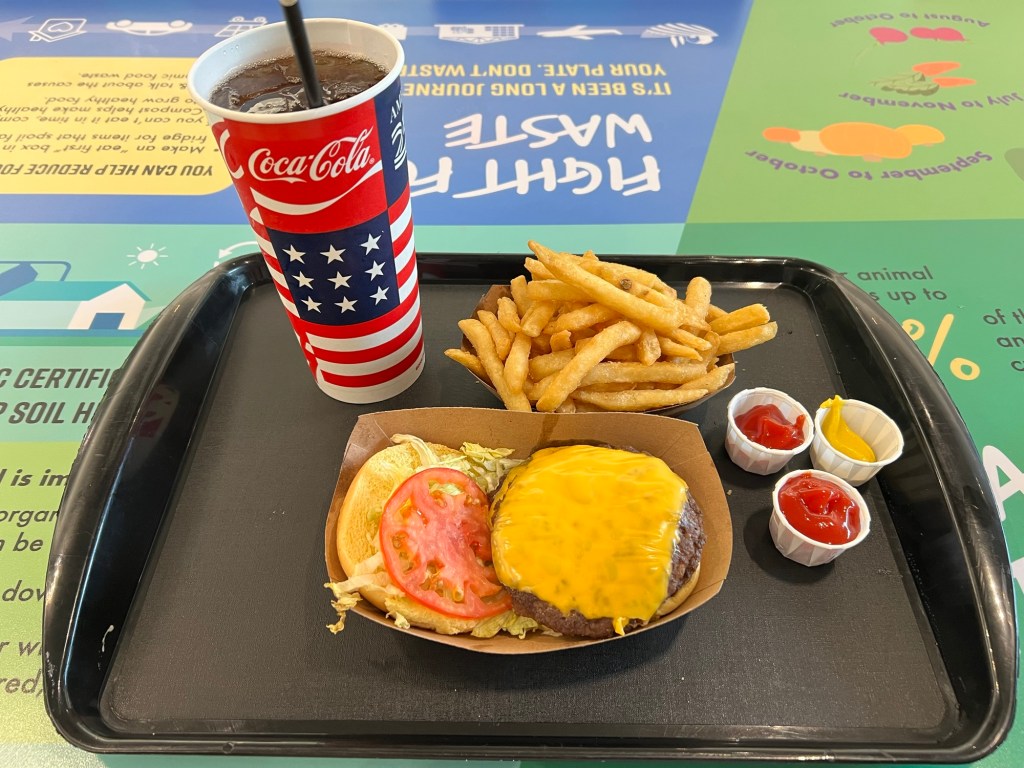
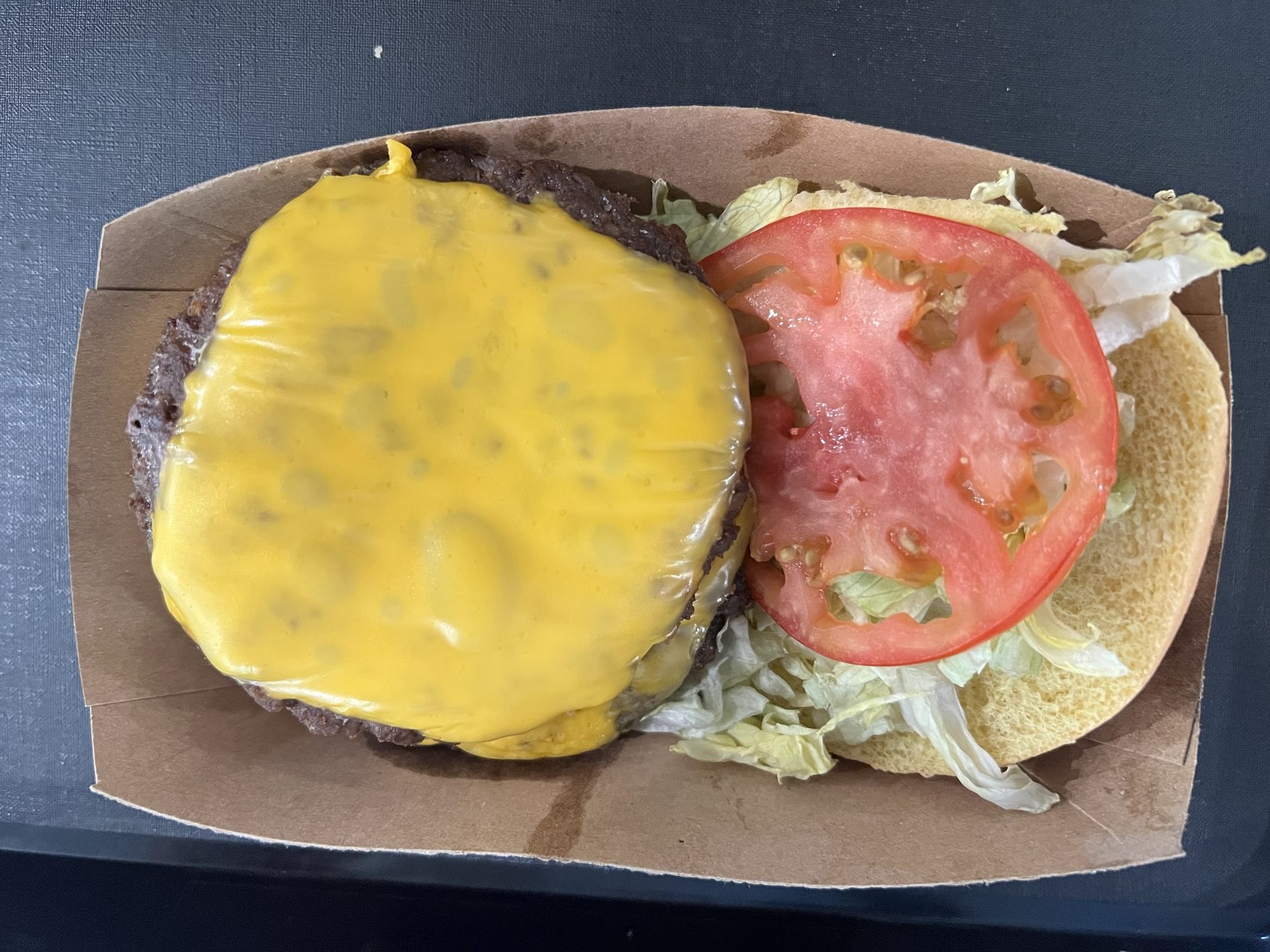
I was in the mood for a double Cheeseburger and Fries and it looked so good at the counter. I picked one up with a Coke. There is nothing better than a burger and Coke on a hot evening (See my review on TripAdvisor).
My dinner on Member’s Night was the perfect early evening meal
The Double Cheeseburgers here are so good!
So are the fries
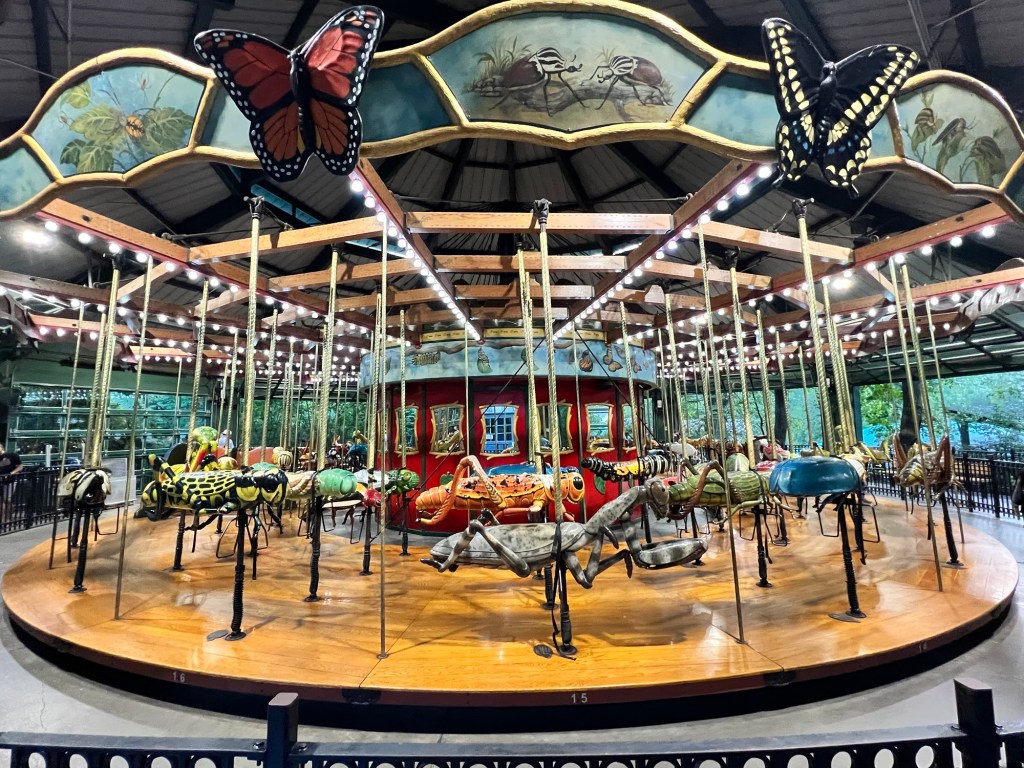
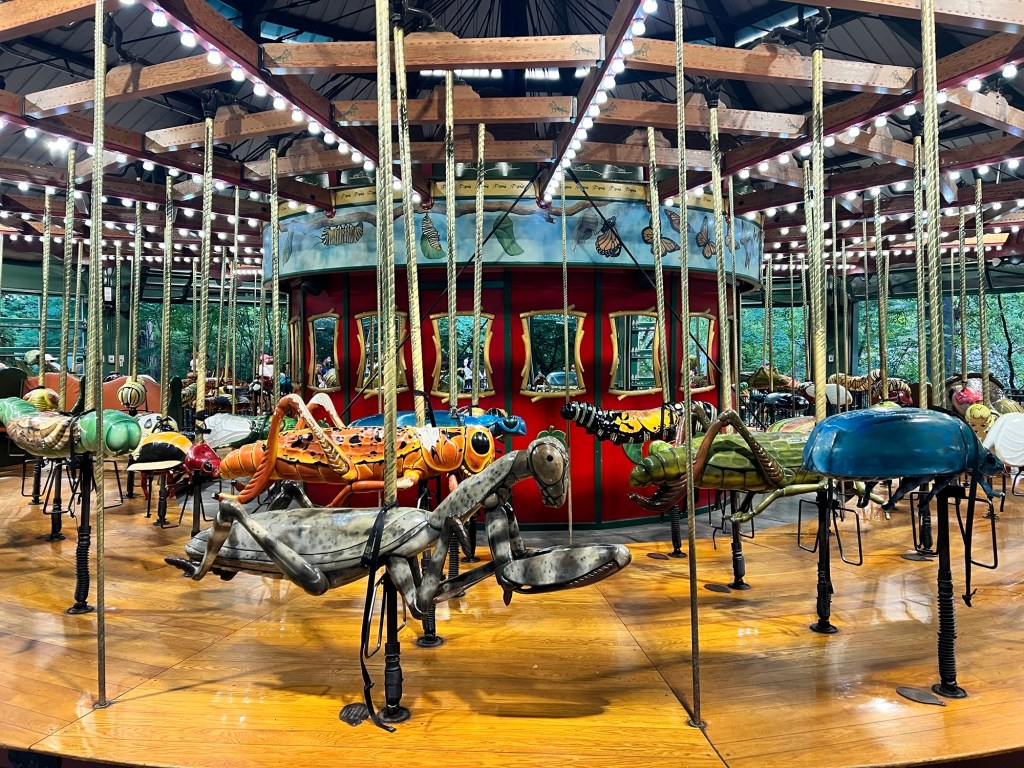
After dinner before I explored the rest of the park, I stopped to ride the Bug Carousel just around the corner from the restaurant. The line was short as everyone looked like they were heading to dinner. As I left the cafe, a lot of families were arriving for dinner.
The Bug Carousel just before we started
I hate to admit this but I love carousels. I do not care what age we are because I love the lights and sounds and just the sheer fun watching other people especially the kids (and the big kids like me) have such a good time. The music and sounds of laughter make the ride fun.
The insect riders are so beautifully designed
After the ride was over, I headed to the older part of the Zoo and walked around Astor Court. I love these old buildings with their beautifully carved stone motifs and the Victorian architecture. This part of the zoo shows how the philosophy of zoos have changed over the years. The natural habitat instead of just showcasing the animals leads to a more prosperous life for the animals in captivity.
(from the Building Conservative Associates website)
Originally known as the New York Zoological Society, the Bronx Zoo opened its doors to the public on November 8, 1899, and for more than 120 years, it has been one of New York City’s major cultural attractions. BCA has been involved in several projects at the Bronx Zoo (Bcausa.com website).
Astor Court
Astor Court, the historic center of the Zoo, consists of raised, landscaped terraces, two grand stairs leading up to the Court, and an ensemble of the Zoo’s original Beaux-Arts buildings sited around the central Sea Lion pool. Five of the limestone, brick, and terra-cotta buildings were constructed to designs by the noted architectural firm of Heins & La Farge between 1899 and 1910; the sixth building was designed by the architect Henry D. Whitfield in 1922. The formal neo-classical plan of the Court is symmetrical and longitudinal. One of the few intact examples in New York City of the City Beautiful movement to survive from the early twentieth century, Astor Court is a designated New York City historic landmark (Bcausa.com website).
This project involved the complete rehabilitation of Astor Court to restore historic elements and make modifications to bring the Court to contemporary standards. BCA was the restoration consultant, overseeing the restoration design. BCA conducted a conditions assessment, performed investigative probes and field tests, and developed construction documents for the restoration scope. BCA performed preservation design review of new elements and also provided construction administration services (Bcausa.com website).
The detailed Rhino cornerstone
The Elephant details around the entrance
My first stop was the seal tank where tired seals lounged on the rocks, most were sleeping and ignoring us staring at them.
The seals were relaxing that evening
They just stared at us
What I like best about visiting in Astor court is the architecture and the beautiful stonework. This is the most historical section of the zoo.
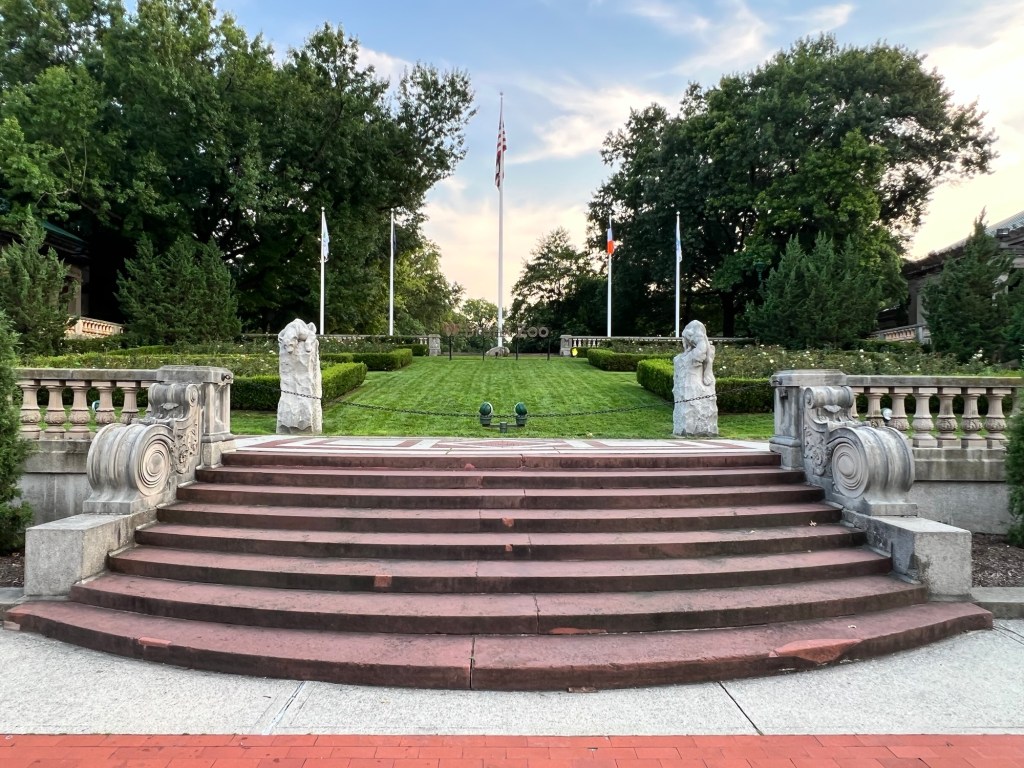
The original entrance to the zoo
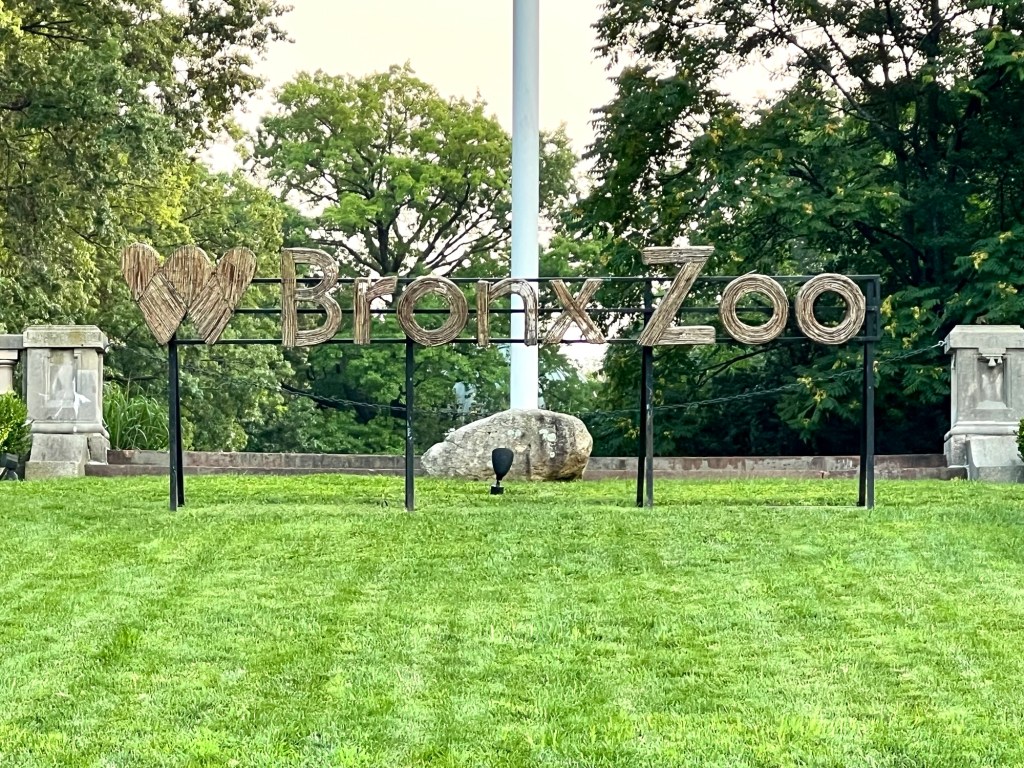
The Bronx Zoo sign
The beautiful stone entrance
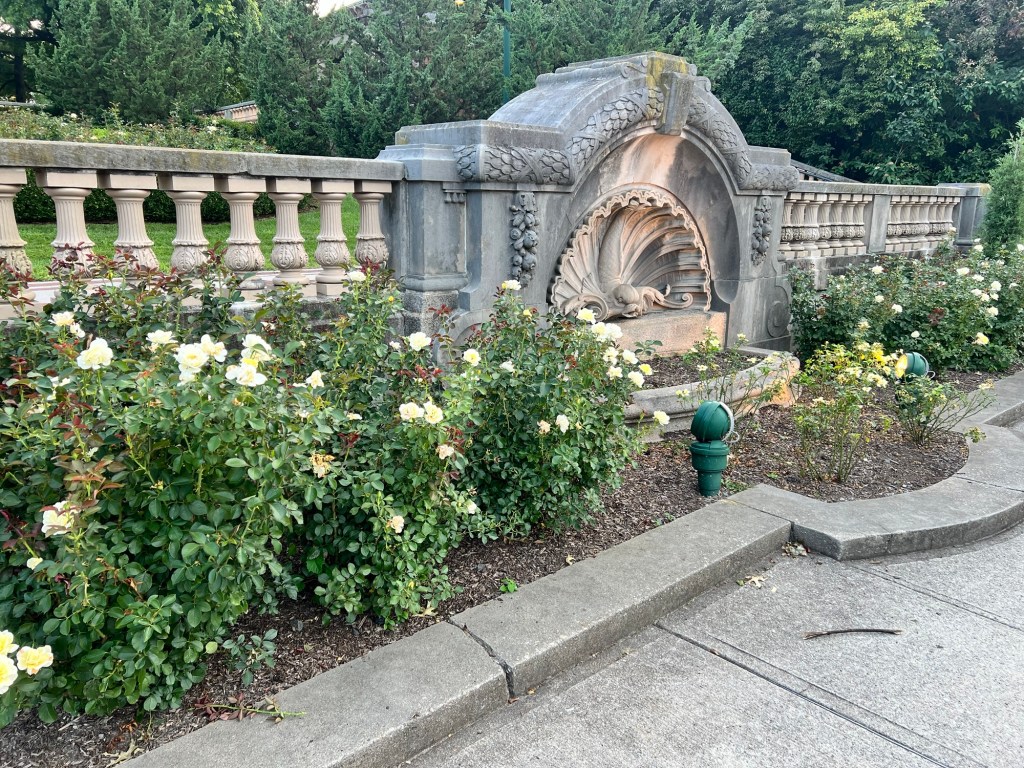
The fountains always remind me of the old Luna Park in Coney Island. They are now used as gardens.
The elegant fountain made more festive at Christmas time
The Rockefeller Fountain was designed by the Italian sculptor Biagio Catella and constructed in 1872; originally it stood in the Piazza Cavour in Lake Como, Italy. William Rockefeller bought the fountain and gave it to the Zoo, where it was installed in 1903. Today the fountain, a New York City landmark, is sited in the gardens just inside the Fordham Road Gate (Bcausa.com website).
The Lion House, located at the southwest corner of Astor Court, was designed by Heins & LaFarge and completed in 1903. Constructed of limestone, terra cotta and Roman iron spot brick with a copper roof, it is a designated New York City landmark (Bcausa.com website).
This project involved a complete rehabilitation of the exterior envelope. As the historic preservation and conservation consultant, BCA conducted archival research, performed a hands-on conditions assessment of the historic fabric, designed and oversaw probes, conducted field and laboratory materials testing, performed preservation design review, created restoration construction documents and provided construction administration services for the masonry restoration work (Bcausa.com website).
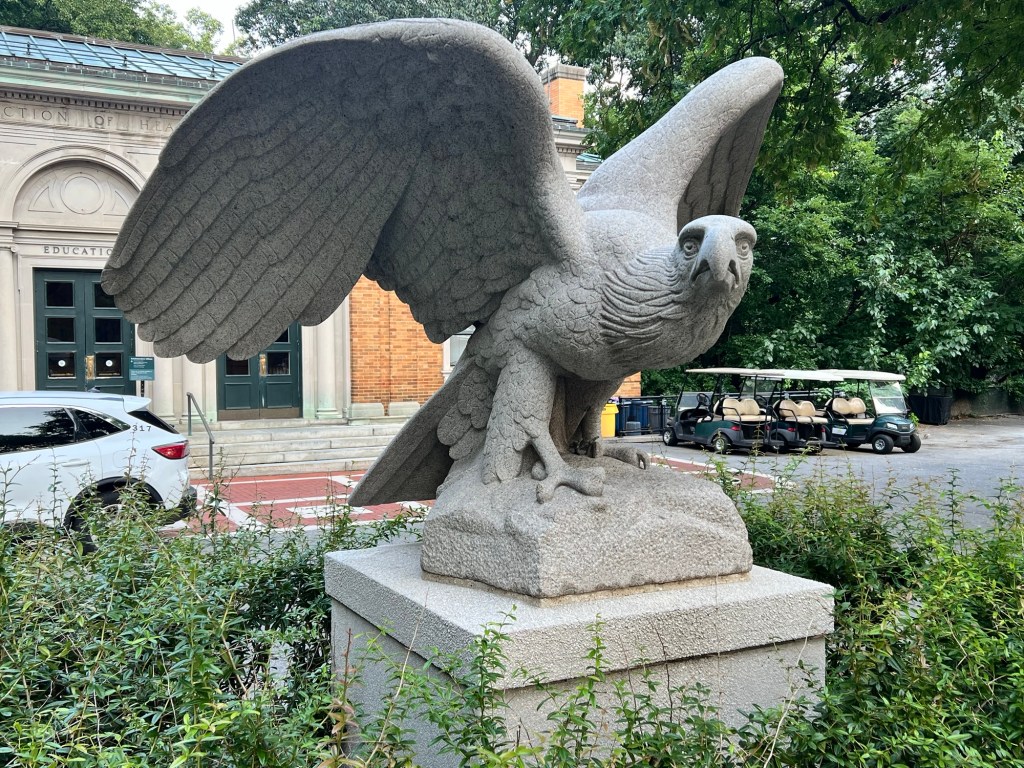
The stone eagle holding guard at the entrance of Astor Court to the complex
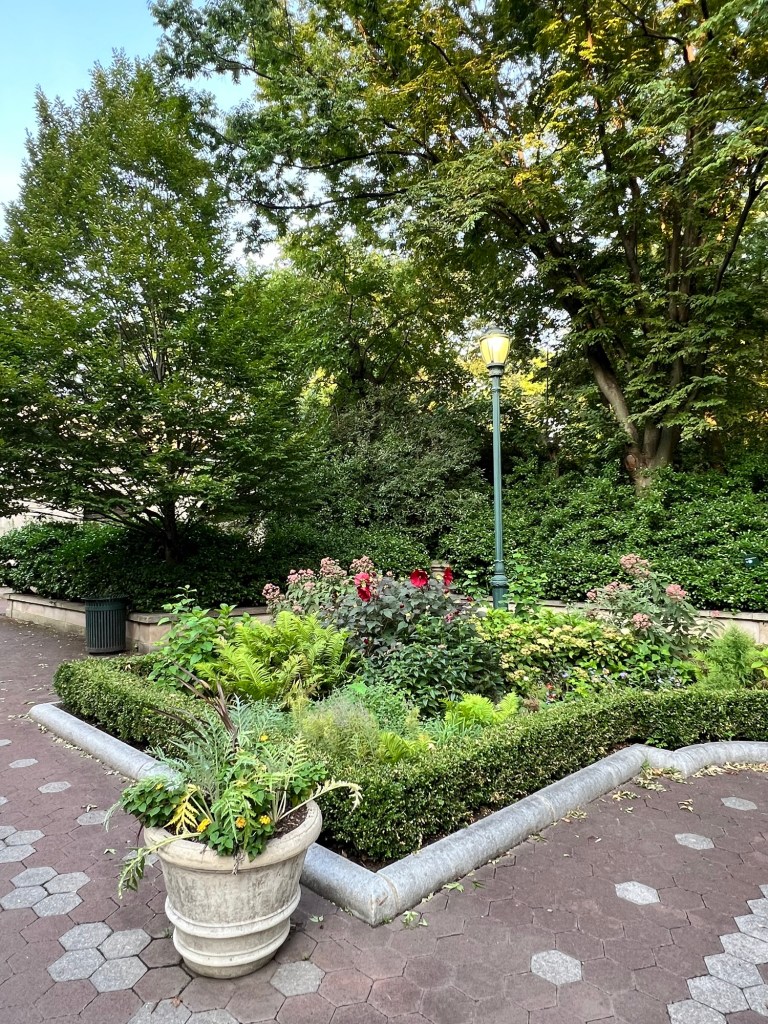
The colorful gardens as you exit this side of Astor Court
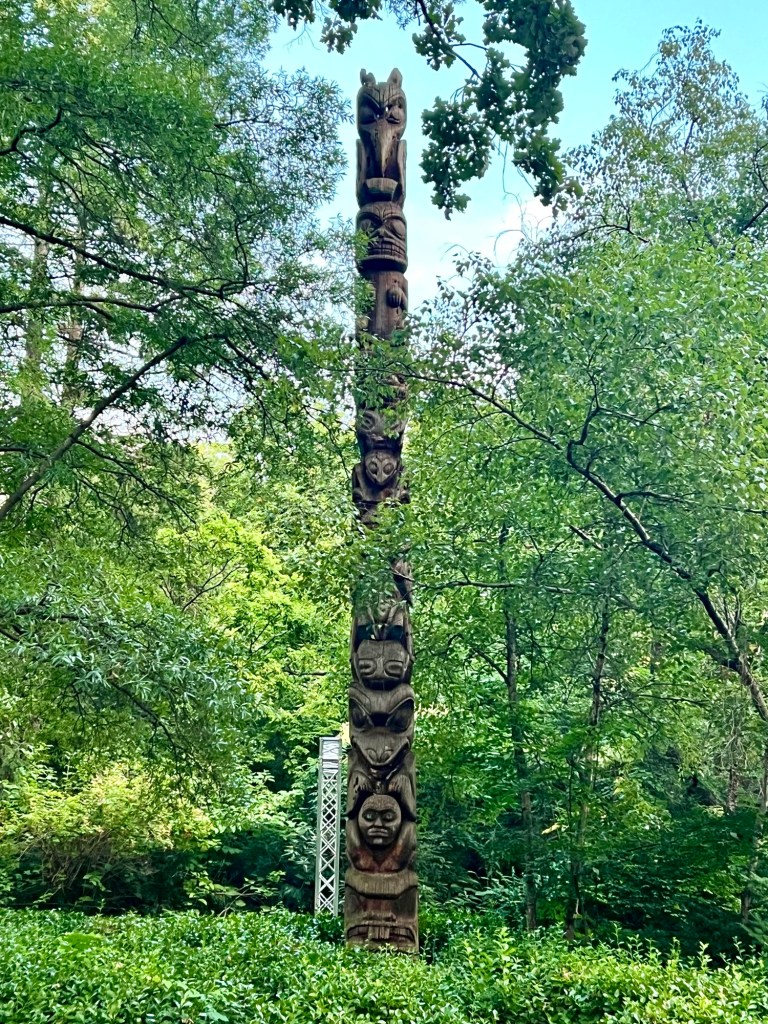
I finished my evening around 6:30pm as the zoo was closing for the evening (Members Night ending at 7:00pm). The last sculpture I saw as I exited the zoo was the totem pole at the exit of the zoo. This had been lit with festive lighting at the holidays.
The totem pole in the Asian section of the Bronx Zoo
It was another wonderful Member’s Night at the Bronx Zoo and this time I had the time to enjoy all aspects of the park. I never had the time to ride the Carosel or walk the Treetop Walk during a Members Night.
It was a fun evening. Until next Summer. I can’t wait for the Christmas Light Display.
The New Jersey Board of Public Utilities (NJBPU) has implemented a program called the Summer Termination Program to prevent discontinuation of water, sewer, and electric services from June 15th through August 31st for eligible residential customers. Services can not be disconnected during this period for eligible customers (See protected category list below).
Who is eligible?
Recipients of benefits under the Lifeline Credit Program.
Recipients of benefits under the Federal Home Energy Assistance Program (HEAP) or certified as eligible therefore under standards set by the New Jersey Department of Human Services.
Recipients of Temporary Assistance to Needy Families (TANF).
Recipients of Federal Supplemental Security Income (SSI).
Recipients of Pharmaceutical Assistance to the Aged and Disable (PAAD).
Recipients of General Assistance (GA) benefits.
Recipients of the Universal Service Fund (USF).
Applicants of any State, Local or utility program that provides assistance or discontinued rates to help eligible customers pay wastewater or water bills.
Persons unable to pay their utility bills because of circumstances beyond their control.
Eligible customers must contact the Collections Department at 1-855-862-6076 to self-certify. Customers will be required to establish either a budget plan or payment plan with a down payment.
Your service will not be discontinued if you can show the utility that you are making a good faith effort to pay. If you fall too far behind on your monthly payments during the Summer, your water service will be discontinued after August 31st or later if weather conditions require extension of the protection program. Customers who have the ability to make a good faith payment but refuse to do so shall be referred to the Board of Public Utilities (NJBPU) for a determination.
If your utility determines you are not making a good faith effort and they notify you that they will discontinue service, negotiate with them again. If you and the utility cannot agree, the utility shall refer the dispute to the Board of Public Utilities for determination. You may also contact the Board of Public Utilities at 1-609-341-9188 or toll fee (in New Jersey) 1-800-624-0241.
*Footnote: this information comes directly from a Veolia Water mailer and I give them full credit on the copyright and information on this. This is there direct mailer to customers that I want to share with everyone. I have never used the service so I have no opinion on it one way or another.
Please call the Veolia 1-800 number for more information.
Learn about genetic testing for hereditary cancer-Ambry Genetics
What is Hereditary Cancer?
Although many people have a family history of cancer, only 10% of the cancer is hereditary. Hereditary Cancer is due to a mutation in a gene that protects your body from cancer. A mutation is like a “spelling error” in your genes. Having a mutation in certain genes can cause you to have a higher chance of getting cancer.
What is Genetic Testing?
Genetic Testing is a medical test (using blood or saliva) that carefully looks for mutations in your genes. You can think of it as a “spell check” of your genes. The results of hereditary cancer genetic testing can let you and your doctor know if you have a higher chance of getting certain types of cancer in your lifetime.
Why is Genetic Testing so Important?
Potential benefits of genetic testing for hereditary cancer include:
*Helping your doctor make the best cancer screening plan for you:
People who have a gene mutation that increases their risk for cancer may need to start cancer screening earlier than usual, have it more often or have additional screening for certain types of cancer.
*Giving you options for cancer prevention:
Surgery and medications can sometimes help lower your risk of certain cancers.
*Personalized treatment options may be available:
In some cases, genetic test results may tell your doctor if additional treatment options could be considered.
*Helping your family members:
Knowing if you have a gene mutation that increases your risk for cancer can help your family members know if they may have a higher risk for certain cancers too.
Should you have Genetic Testing?
If you answer “Yes” to any of the questions below, Hereditary Cancer Genetic Testing may be an option for you and/or your family members to consider.
*Have you/your family members been diagnosed with cancer at a young age?
*Have you/your family members been diagnosed with cancer that are usually rare, like pancreatic, ovarian or male breast cancer?
*Have you had 10 or more colon polyps?
*Have 3 or more people, on the same side of your family, had cancer?
*Are you of Ashkenazi Jewish ancestry?
*Has anyone in your family been found to have a gene mutation that increases their risk for cancer?
Talk to your doctor then if Genetic Testing is right for you. If you or your doctor decide that you should have Genetic Testing, you will need to give a blood or saliva sample.
Your doctor should receive the test results in less than 2-3 weeks.
Bloggers Note: This information was taken directly from the Ambry Genetics pamphlet and I give them full credit for the information. If you have further questions or need additional information on the company, please reach out to them from the phone numbers and links above. They can provide more information.
NaturalVue Enhanced Multifocal 1 Day Contact lenses use Neurofocus Optics technology that helps keep peripheral images inside the retina which may reduce the risk of peripheral hyperopia.
Today more kids are being diagnosed with myopia. This is also called nearsightedness, myopia causes blurry distance vision. It means more than just stronger thicker glasses. Myopia can get worse as kids grow. This increases the risk of serious eye diseases. It’s a global eye health issue.
*Myopia happens when the normal eye grows too long from front to back.
*Light rays have trouble reaching the right spot on the back of the eye (the retina) to achieve clear distance vision.
What causes myopia?
*Myopic parents: there’s a 50% chance your child will develop myopia if both parents are myopic. 25% if one parent is myopic.
*Increased virtual learning. During the COVID 19 lockdown, myopia prevalence increased 3x in young children.
*Increased screen time: children spending 7+ hours a week on digital devices face 3X the risk of developing myopia.
*Traditional vision correction: regular single vision glasses do not slow down the progression of myopia. In fact, they may contribute to increased myopia.
There are no safe levels of myopia.
Myopia can negatively impact performance in school, athletics and other activities. The younger your child develops myopia, the greater the risk of serious eye conditions like retinal detachment, glaucoma, cataracts and even blindness.
Each 1.00 diopter decrease in final magnitude of myopia:
*Reduces the risk of retinal detachment by 20%.
*Reduces the risk of cataract and open angle glaucoma by 20%.
*Reduces the risk of myopic maculopathy by 40%.
Help reduce the risks of unwanted eye growth.
An unfortunate by-product of traditional myopia correction may be the induction of more peripheral hyperopia.
Peripheral hyperopia occurs when routine correction moves images behind the retina which may signal eye growth.
In Uncorrected Myopia, the central light rays fall short of the retina. Peripheral light rays fall beyond the retina.
The traditional correction to this is traditional single vision lenses do correct myopia by moving central light rays to the retina but do not address peripheral images that fall behind the retina and may even intensify the situation.
In Unwanted Eye Growth, the peripheral light rays focus beyond the retina may establish a growth signal and may lead to the excessive lengthening of the eye.
The Optimal correction rather than using single vision lenses, multifocal or specialty designed lenses should be used to bring the peripheral light rays inside the retina.
Today there are evidence-based management options, like specially designed contact lenses for the correction and management of your child’s myopia.
Tips to help manage myopia:
*Increase outdoor time-at least 90 minutes a day.
*Limit screen time-cut the number of hours your child spends on digital devices.
*Follow the 20-20-20 rule-every 20 minutes have your child take a 20 second break to view something 20 feet away.
Disclaimer: This information was taken directly from the NaturalVue pamphlet and I give them full credit for the information. I have never used the product so I do not have an option on the product. Please call the company or contact your local eye doctor for information on the product.
Unlike the power lines you see next to your local roads, transmission lines are typically constructed on large metal poles or towers located within the Rights-of-Way (ROW) on PSE&G easements and company owned land. The ROW is divided into two zones: wire and border. As required by federal and state regulations, PSE&G proactively manages the vegetation in these zones to reduce hazards and maintain reliability.
PSE&G’s Vegetation Management Plan has been developed in compliance with applicable regulations and follows established industry standards and best management practices. New Jersey regulation N.J.A.C. 14:5-9 includes the following required vegetation management practices:
*Removing woody vegetation that can exceed a height of three feet within the wire zone.
*Clearing vegetation under transmission lines so that vegetation will not grow or fall into the transmission lines.
*Removing invasive and non-indigenous plant species posing a threat to maintenance of the ROW or a hazard to electrical transmission conductors.
*Permitting only grass vegetation to grow within three feet of any structure.
*Complying with soil erosion control requirements of the local soil conservation district, when applicable.
A list of generally compatible vegetation species is available on our website. Compatibility of vegetation within the ROW is dependent on site-specific conditions and only authorized PSE&G vegetation management personnel can make that determination. Please contact PSE&G before planting anywhere within the ROW.
*Learn more about PSE&G’s vegetation management plan.
*View the compatible vegetation species list.
*See our maintenance schedule.
*Contact the PSE&G vegetation management department.
Disclaimer: this information was taken directly from the PSE&G pamphlet sent to my home and I give the company full credit on this information. Please call PSE&G for more information on this program. Please take time to look over their websites for more information.
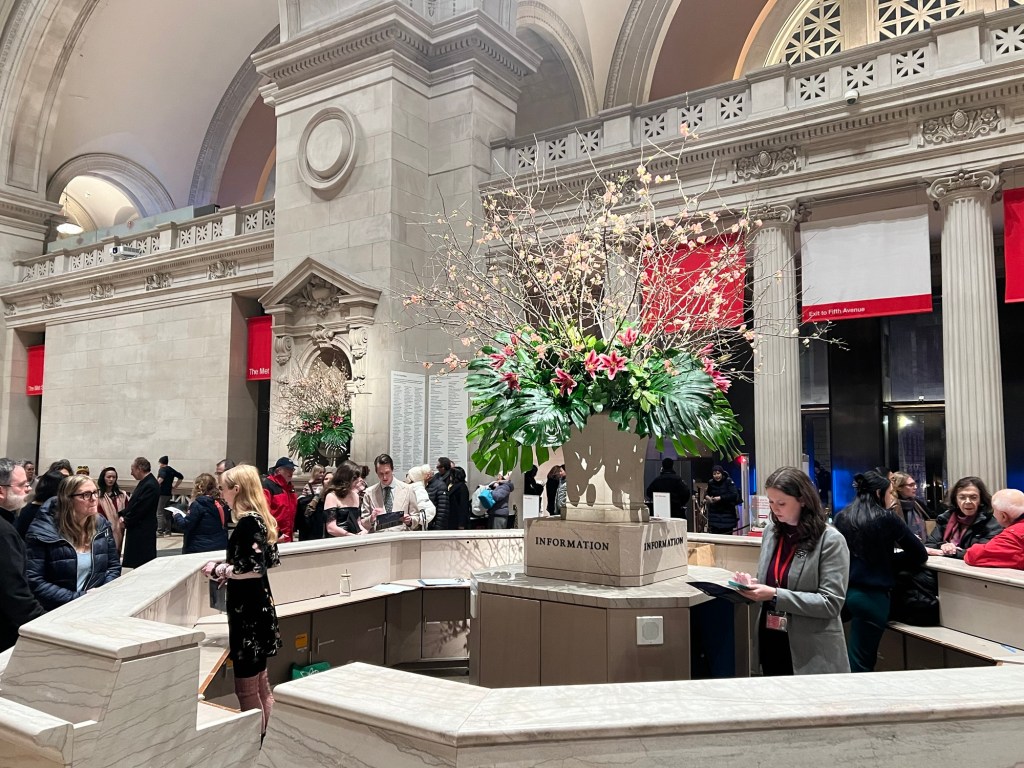
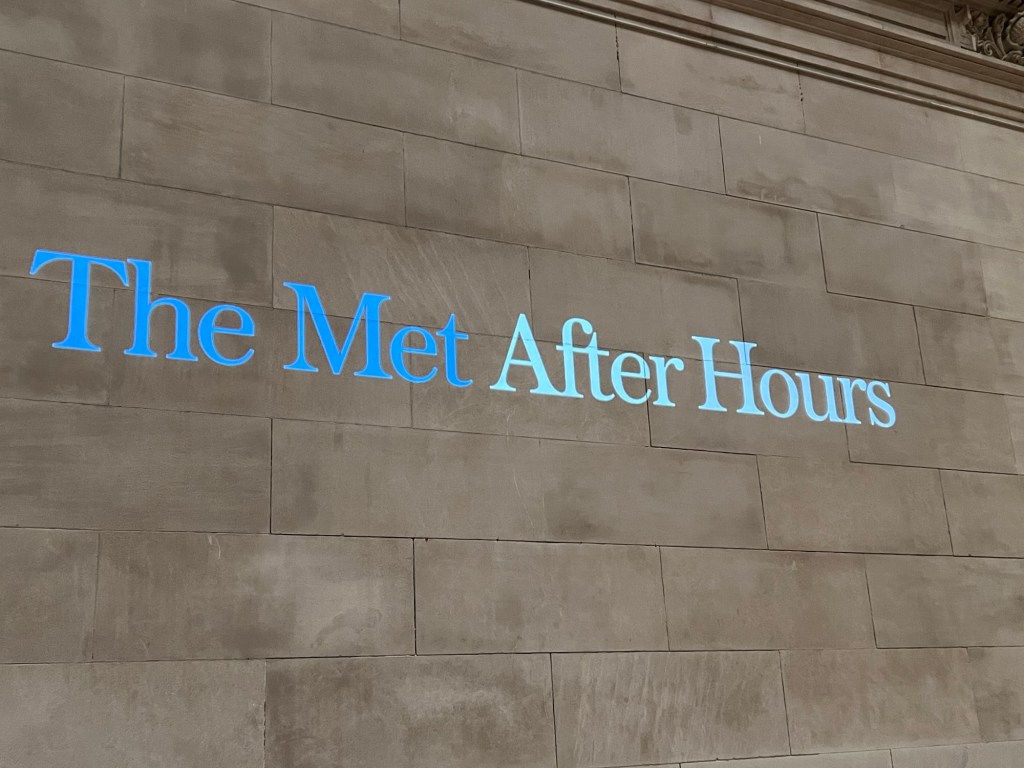
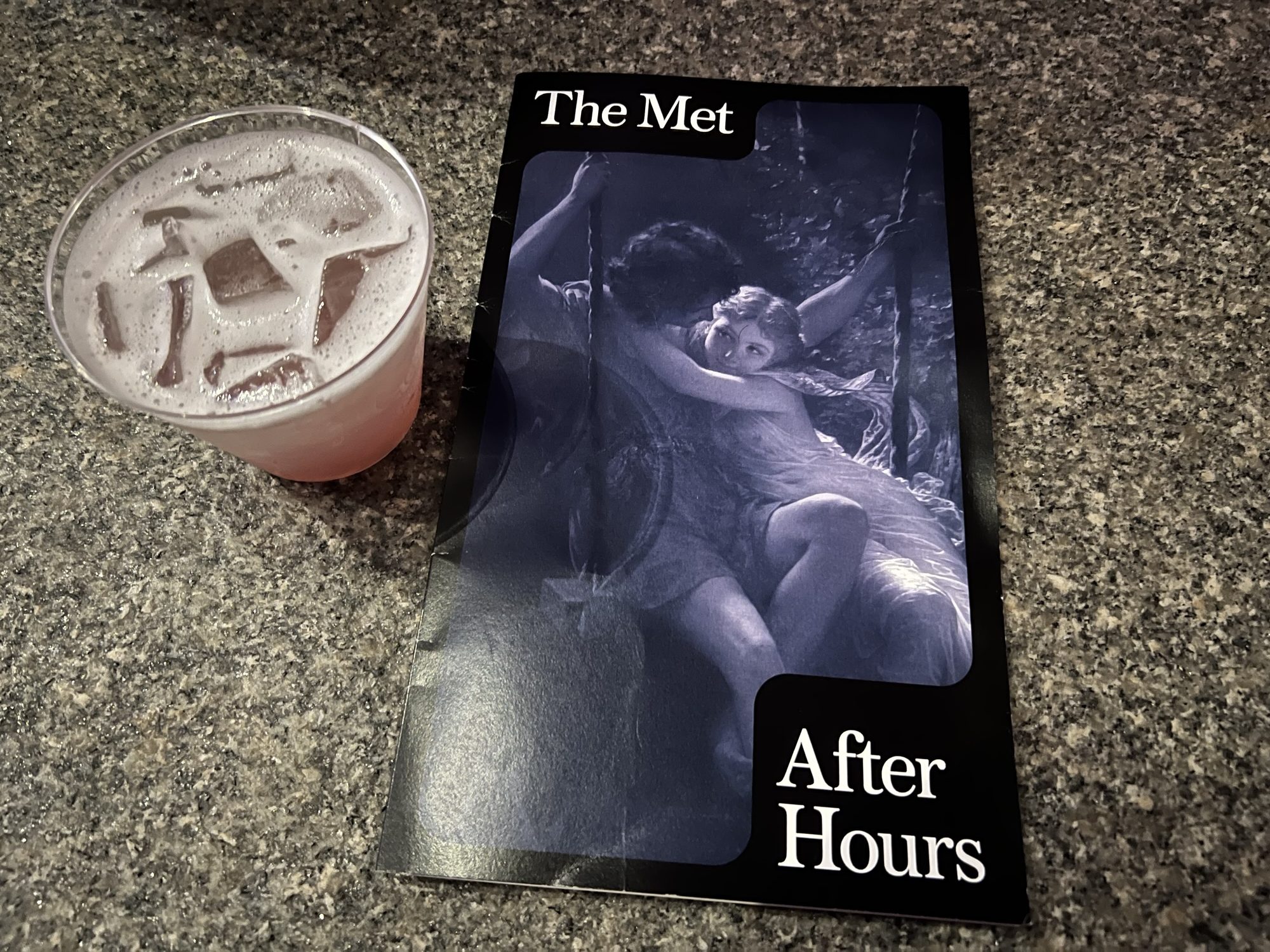
One of the things I love about being a member the Metropolitan Museum of Art is the private Member’s Night ‘Met After Hours’ they hold about four times a year. The museum is open after the closing hours and it is a night of wondering the museum galleries, great music and entertainment and wonderful tours and talks in the galleries. You really experience the museum at its best and it does shine.
The lines move very quickly to get into the museum and with traffic getting into the City that night, I arrived about twenty minutes after opening and there were no crowds to face and I got right in. There’s always a sense of excitement on these nights.
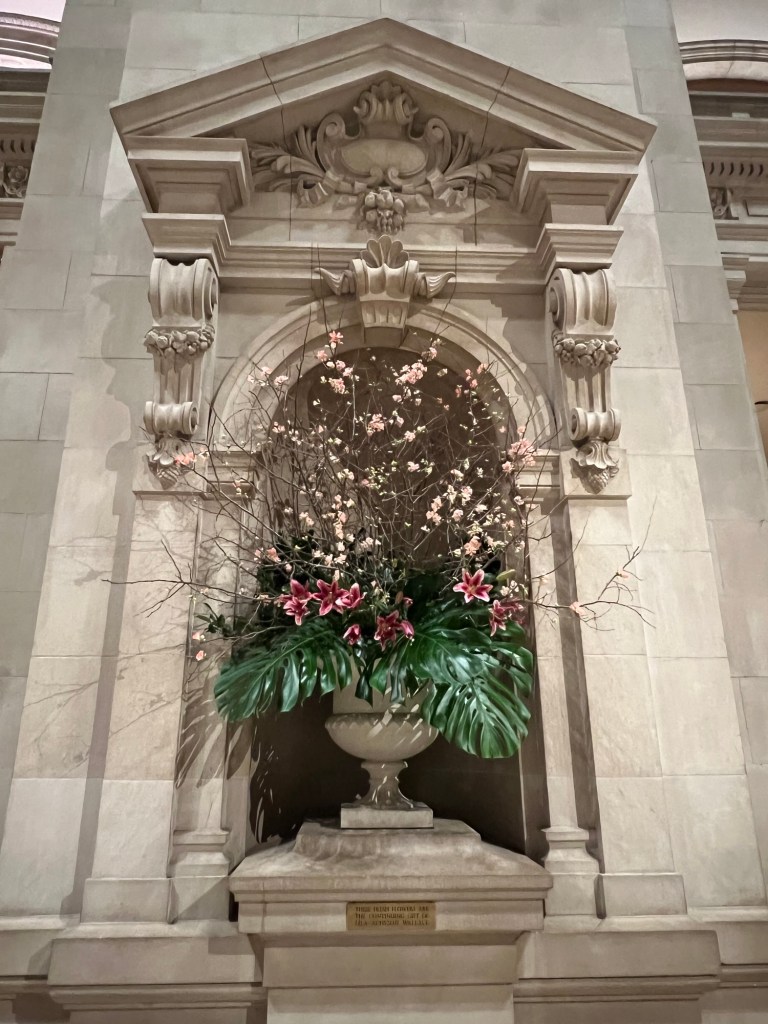
The Grand Hall in the front of the museum decorated with Spring flowers
The beautiful Spring flowers lined all the urns around the Great Hall
The museum welcoming all the members of the museum at ‘The Met After Hours’
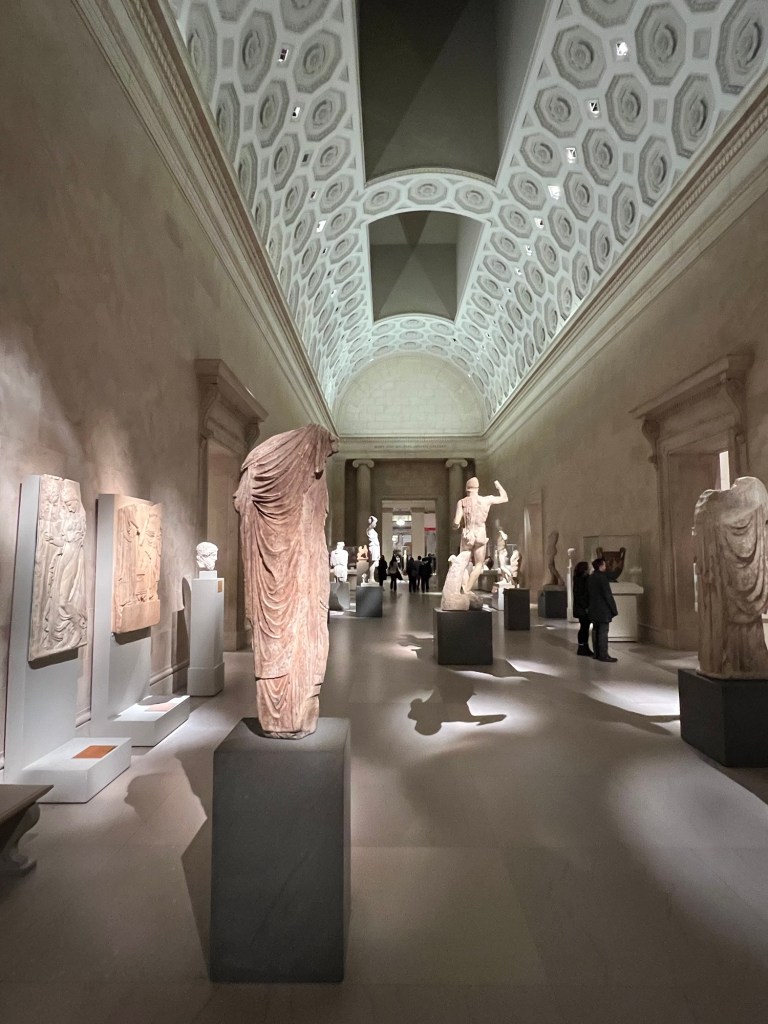
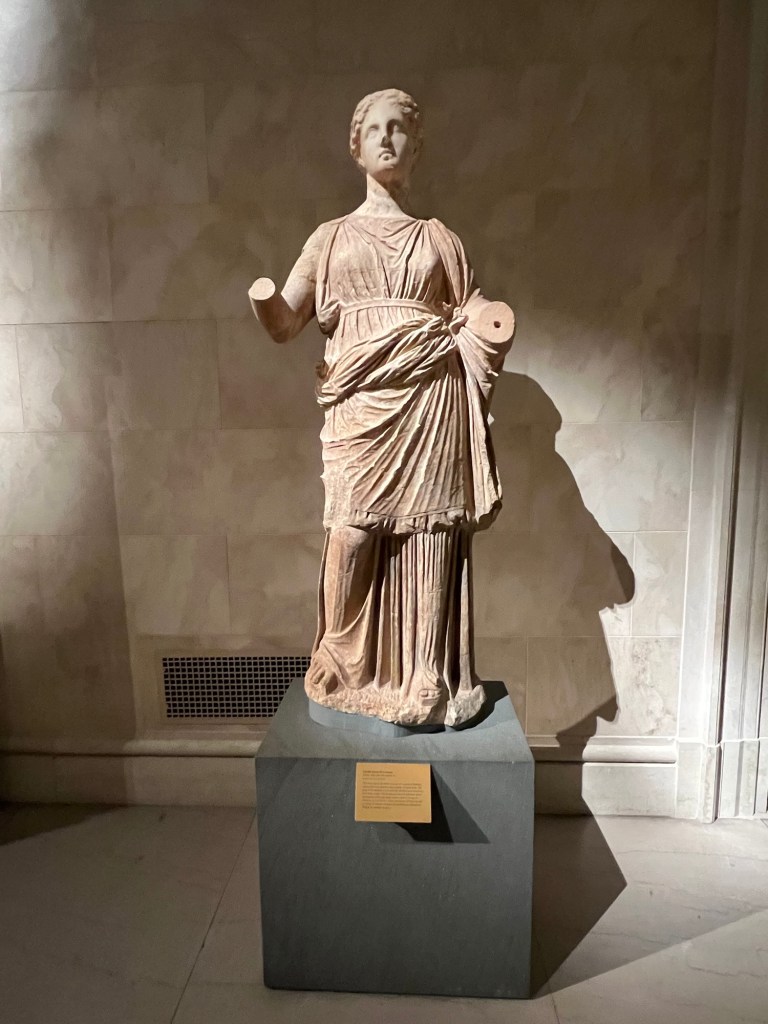
I started my walk around the galleries in the Greek Wing touring the main hallway. It still boggles my mind how old these statues are and I am looking at something almost two thousand years old.
The Museum’s collection of Greek and Roman art comprises more than thirty thousand works ranging in date from the Neolithic period (ca. 4500 BCE) to the time of the Roman emperor Constantine’s conversion to Christianity in 312 CE. It includes the art of many cultures and is among the most comprehensive in North America. The geographic regions represented are Greece and Italy, but not as delimited by modern political frontiers: Greek colonies were established around the Mediterranean basin and on the shores of the Black Sea, and Cyprus became increasingly Hellenized. For Roman art, the geographical limits coincide with the expansion of the Roman Empire. The department also exhibits the art of prehistoric Greece (Helladic, Cycladic, and Minoan) and pre-Roman art of Italic peoples, notably the Etruscans (Metropolitan Museum of Art website).
One of the statues that stood out that evening
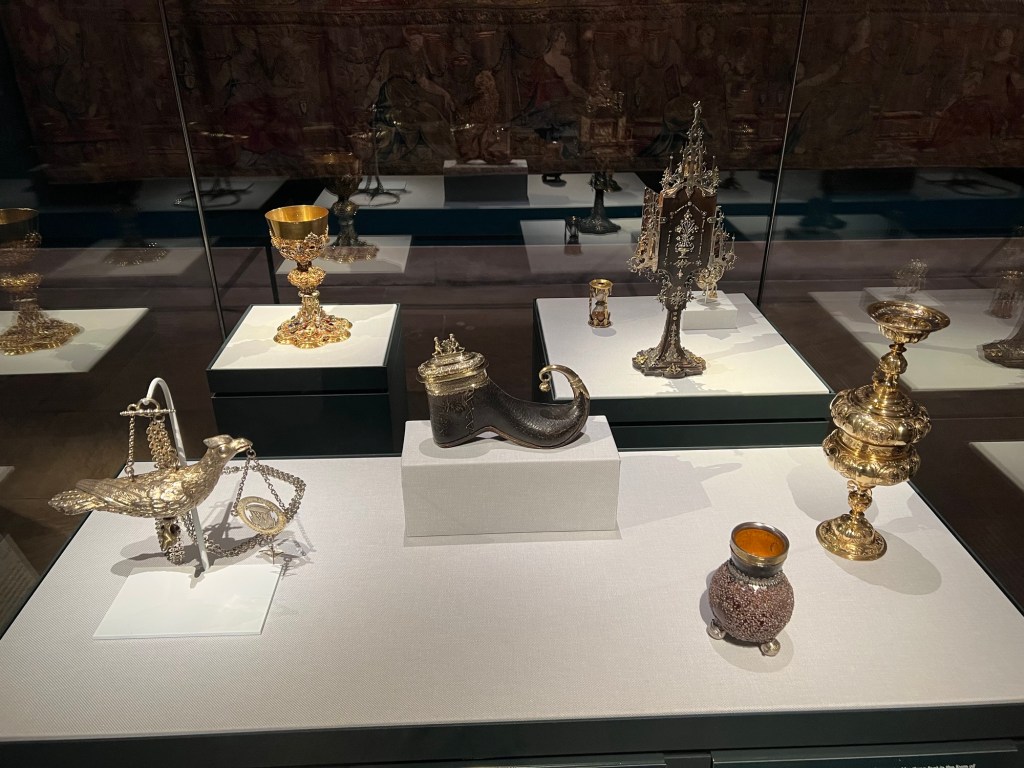
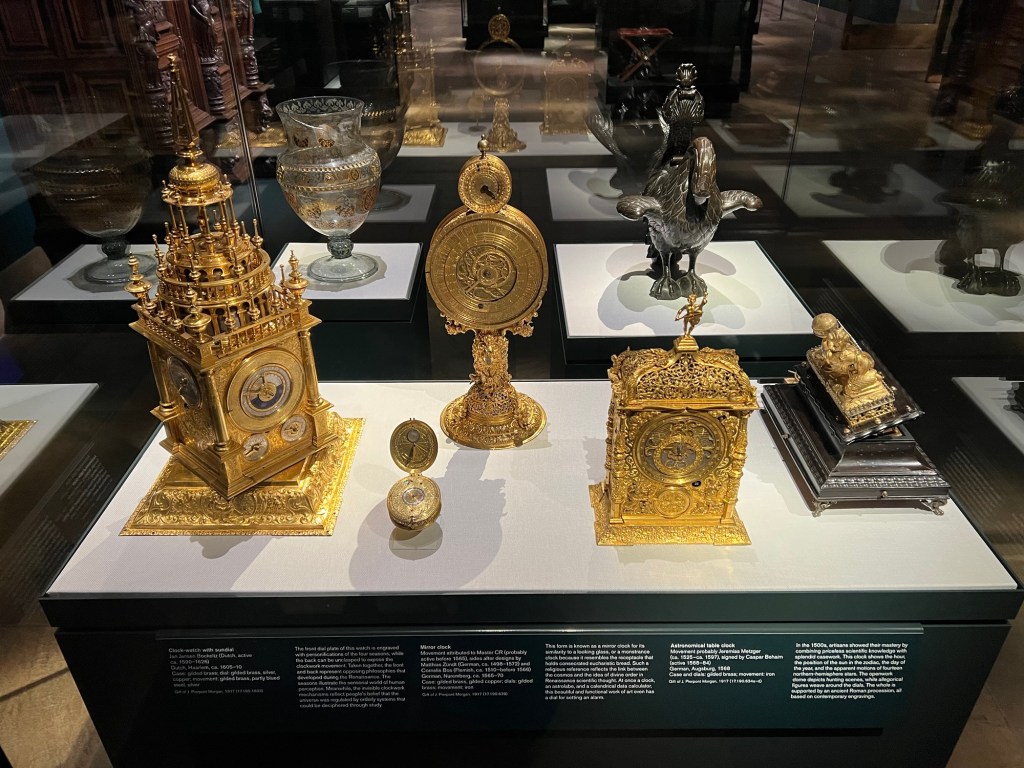
I spent some time admiring the statues and the craftsmanship of the works along the hallway. The only problem is that most of the Greek and Roman Galleries were closed for the evening so I headed off to the Renaissance Wing. I love the luxury objects in the collection of silver and gold and again their craftsmanship is still unrivaled today. To make these objects takes intensive work and talent.
The timepieces show how advanced science had become and the importance of it in not just measurements but in beauty.
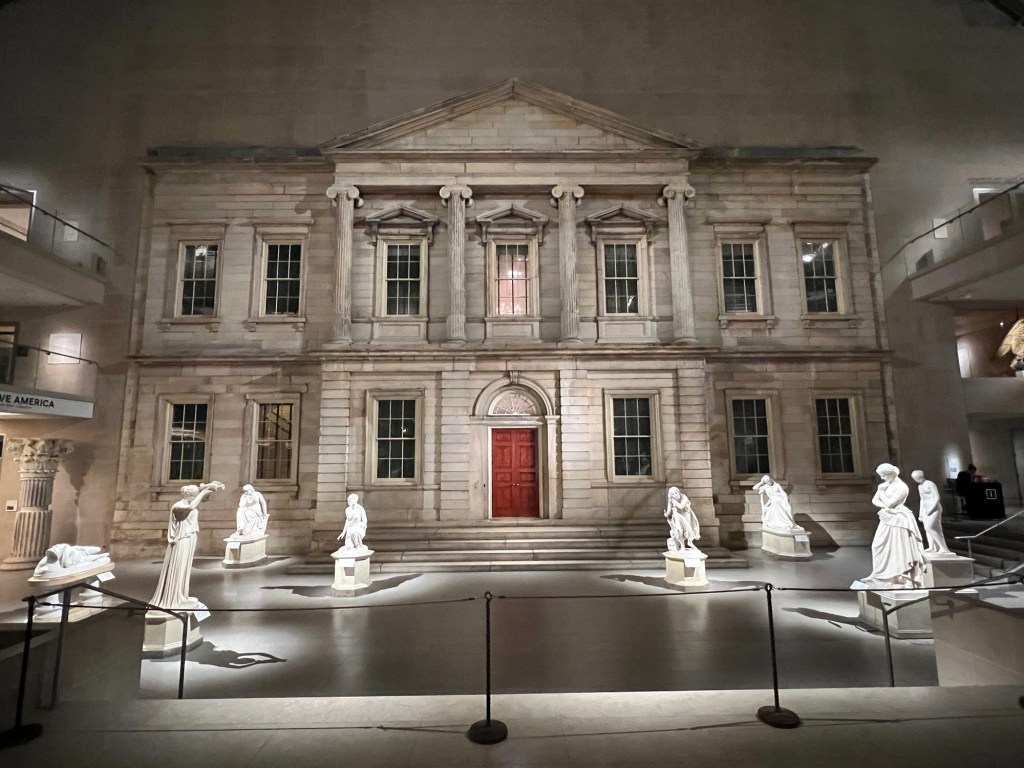
The lobby of the American Wing with the facade of what was a former bank and a Wall Street private mansion. I love the quiet elegance of this building and to think they moved it here piece by piece. The American Wing Cafe was open for the evening and the area was busy throughout the evening. It is nice to just sit and enjoy the views by the fountain. The artwork is beautiful.
Visitors to the American Wing will experience in more than 75 galleries on three floors varied art, design, and culture from the mid-seventeenth to the mid-twentieth century, with some contemporary expressions, by a diverse array of artists from across North America. Since our founding in 1924, this curatorial department has evolved its collecting to include some 20,000 artworks in many mediums by African American, Asian American, Euro-American, Latin American, and Native American makers, affirming ever more inclusive definitions of American art and identity. These dynamic holdings include painting, sculpture, drawing, furniture, textiles, regalia, ceramics, basketry, glass, silver, metalwork, jewelry, as well as historic interiors and architectural fragments, produced by highly trained and self-taught artists, both identified and unrecorded (Metropolitan Museum of Art website).
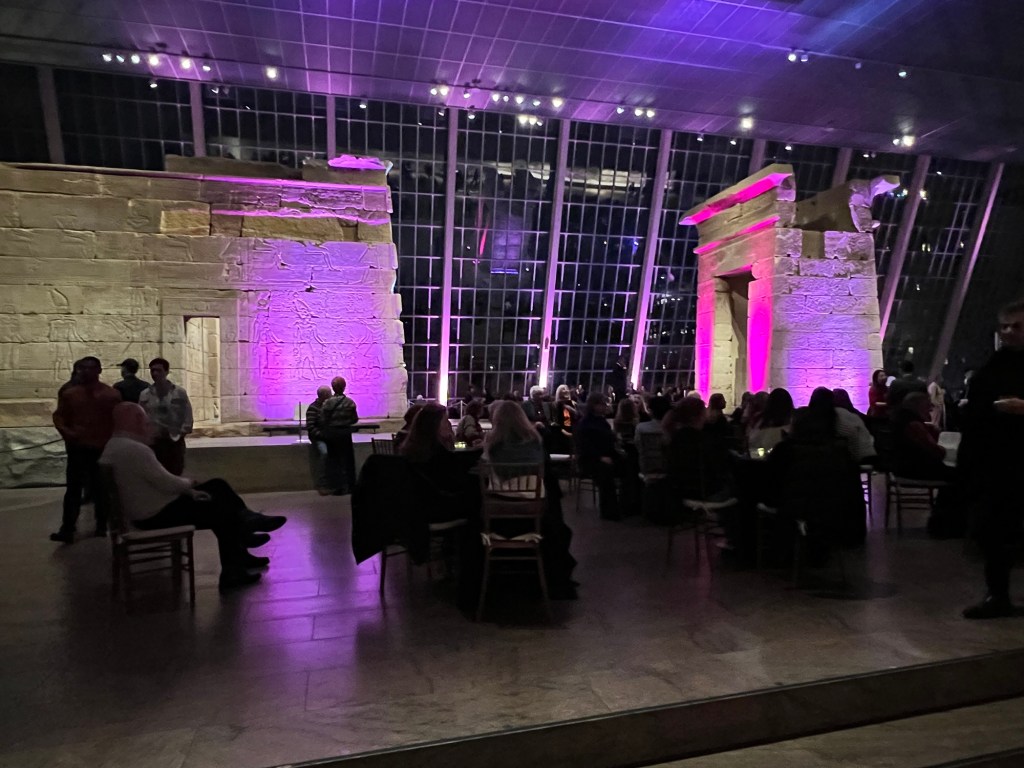
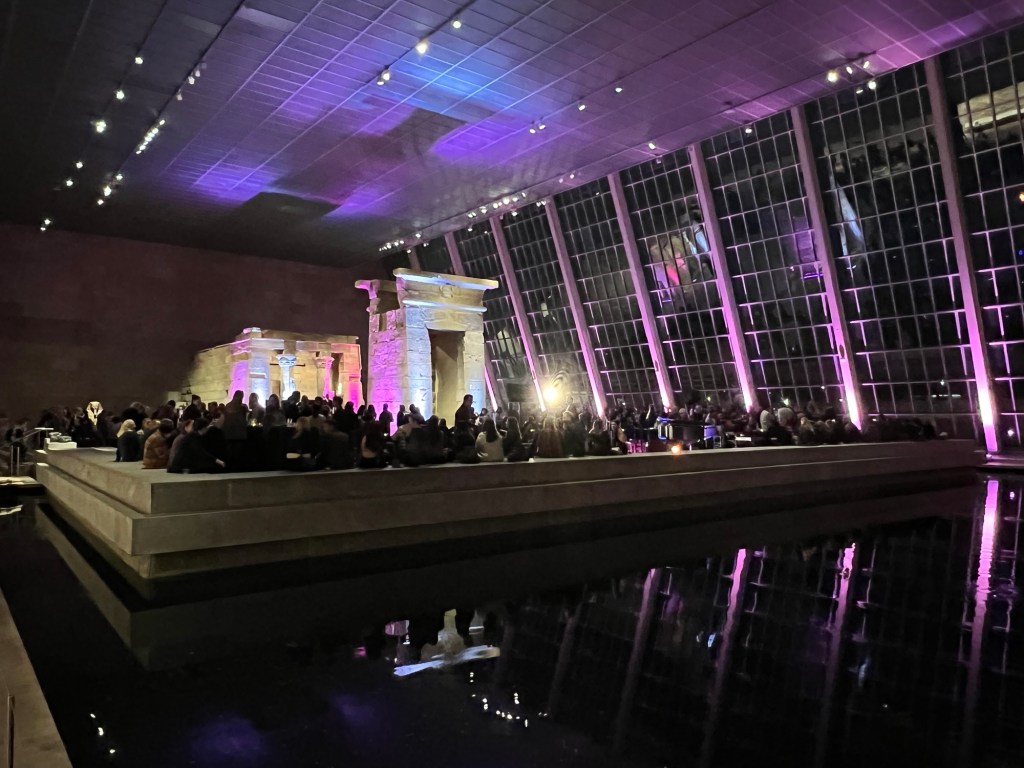
The evening then moved to the Egyptian Wing and the Temple of Dendur, where the entertainment and the cocktail bar was located.
The Temple of Dendur is the hub of activity on Members Nights
This small temple, built about 15 B.C., honored the goddess Isis and, beside her, Pedesi and Pihor, deified sons of a local Nubian ruler. On the outer walls between earth and sky are carved scenes of the king making offerings to deities who hold scepters and the ankh, the symbol of life. The figures are carved in sunk relief. In the brilliant Egyptian sunlight, shadows cast along the figures’ edges would have emphasized their outlines. Isis, Osiris, their son Horus, and the other deities are identified by their crowns and the inscriptions beside their figures (Metropolitan Museum of Art).
These scenes are repeated in two horizontal registers. The king is identified by his regalia and by his names, which appear close to his head in elongated oval shapes called cartouches; many of the cartouches simply read “pharaoh.” This king was actually Caesar Augustus of Rome, who, as ruler of Egypt, had himself depicted in the traditional regalia of the pharaoh. Augustus had many temples erected in Egyptian style, honoring Egyptian deities (Metropolitan Museum of Art).
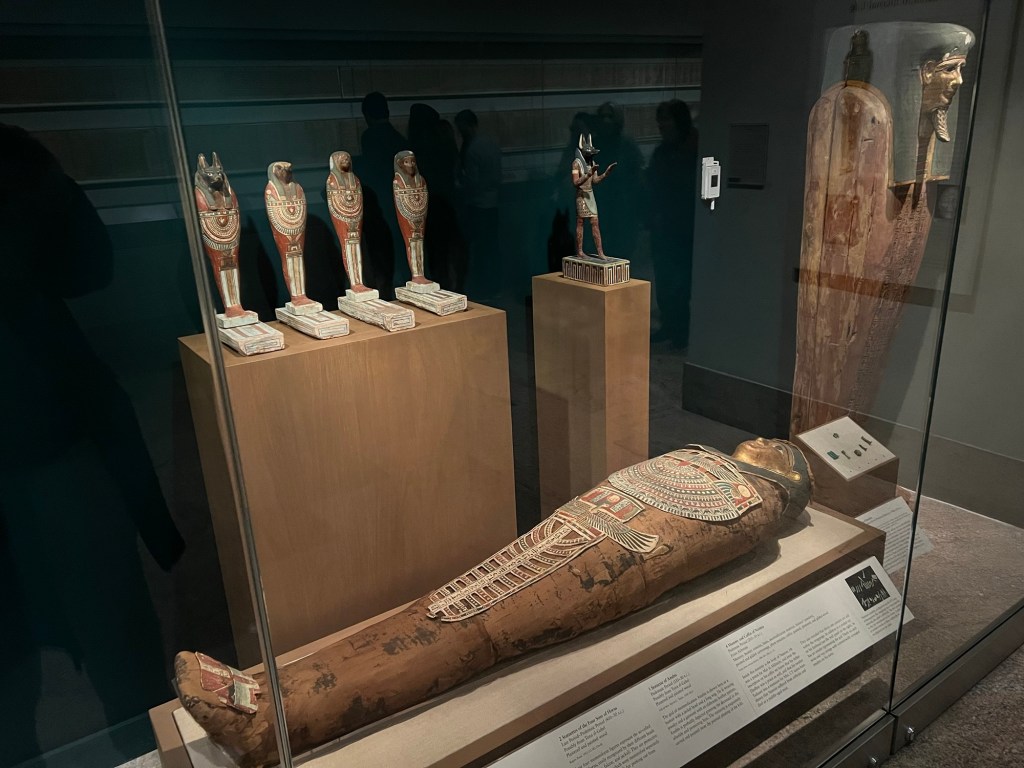
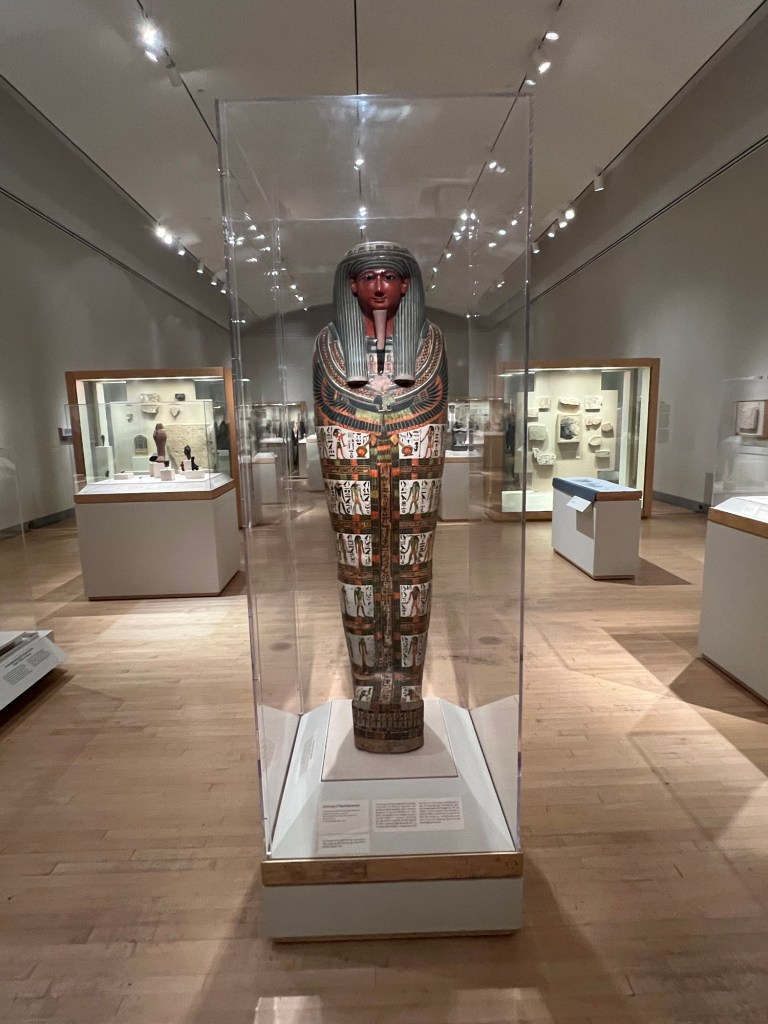
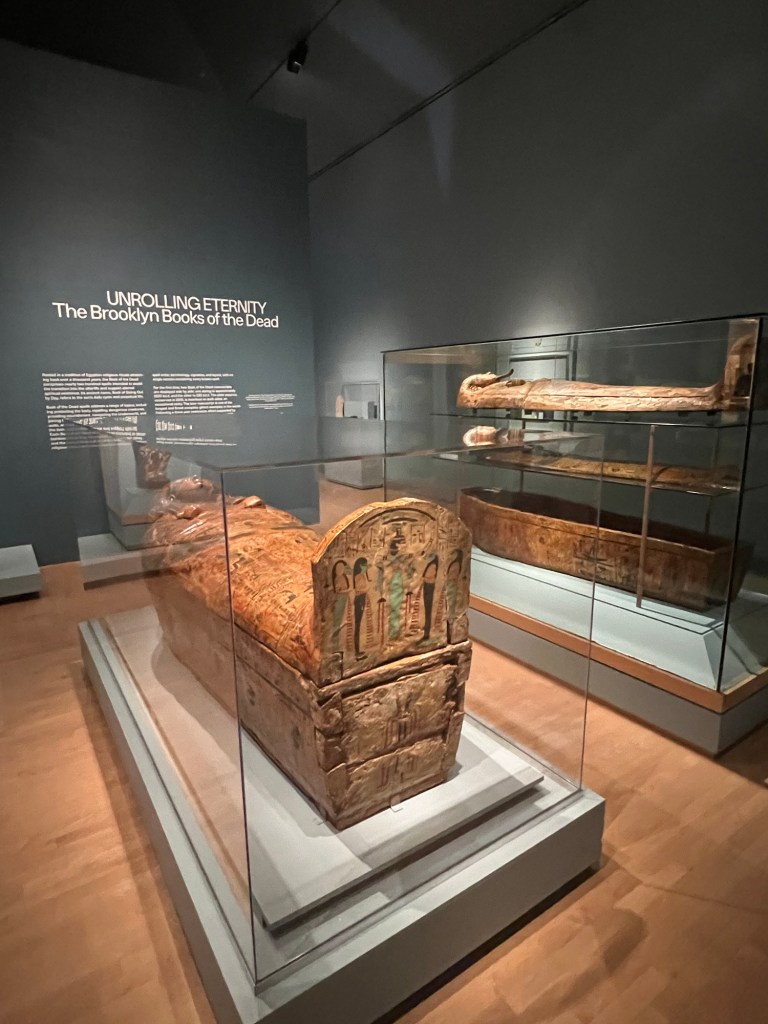
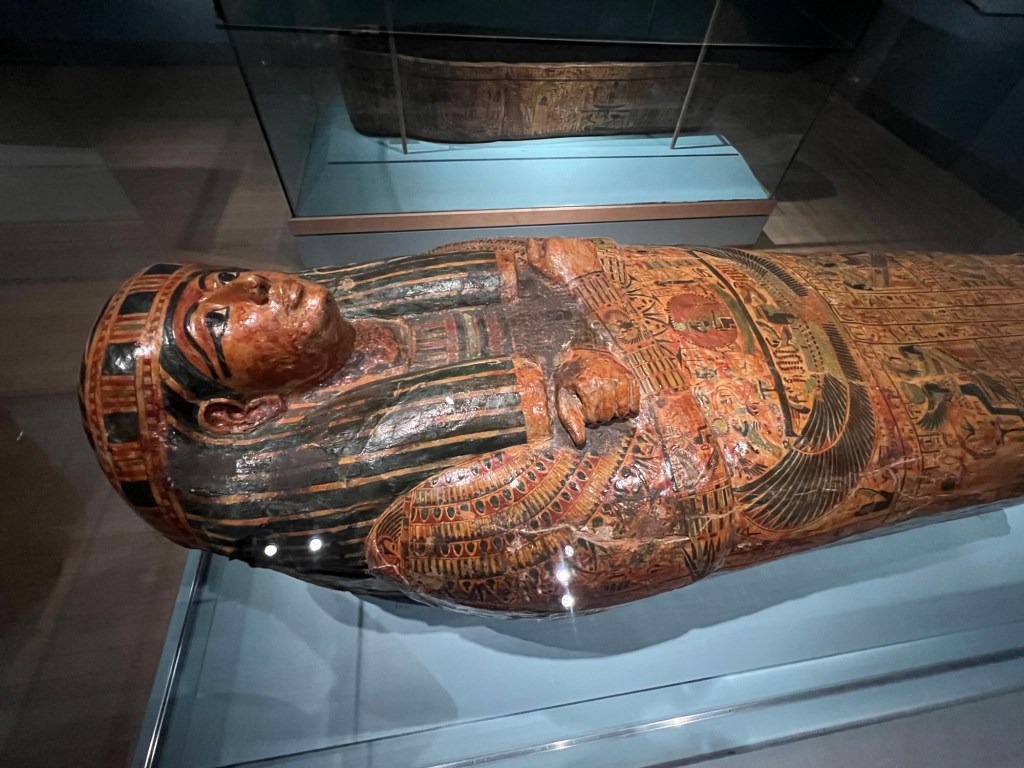
The area was packed with patrons enjoying music and talking by the bars. The crowds were so large at the beginning of the evening that I waited until after 9:00pm for the second performance of the group playing. So I headed into the section of the Egyptian Wing to look at the galleries that were open. I love walking around the Egyptian Wing of the Met. It is one of the most extensive collections outside of Egypt and the most fascinating Mummy exhibition.
Admiring one of the Mummy exhibits in the Egyptian Wing
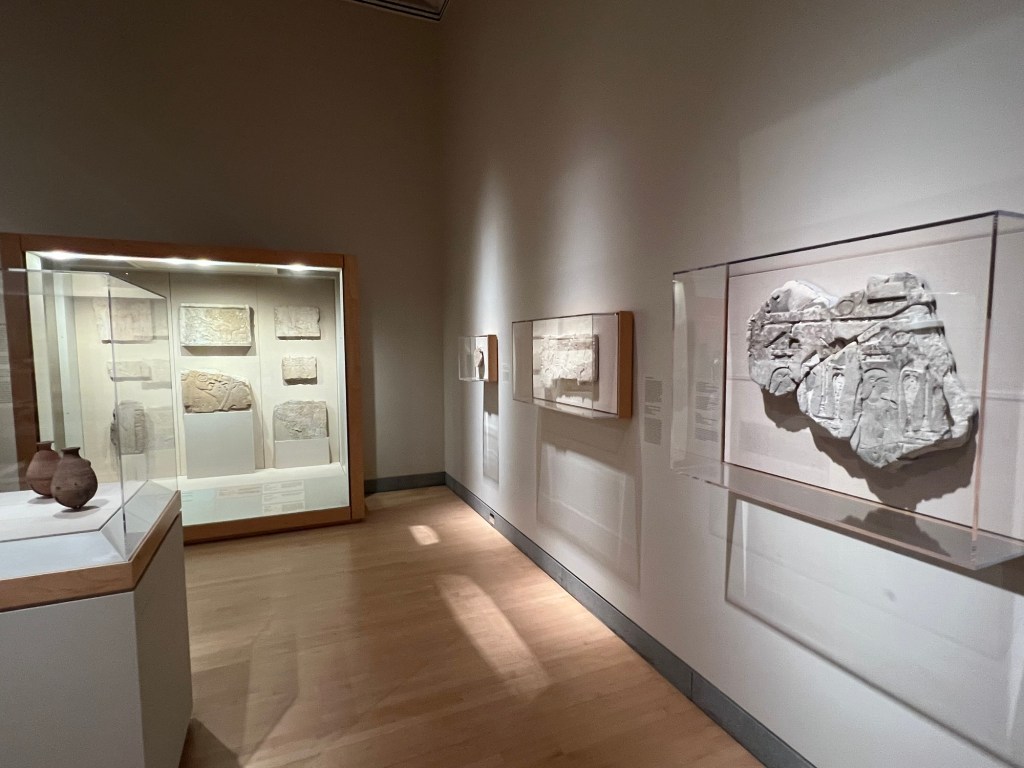
The Department of Egyptian Art was established in 1906 to oversee the Museum’s already sizable collection of art from ancient Egypt. In the same year, the Museum’s Board of Trustees voted to establish an Egyptian Expedition to conduct archaeological excavations in Egypt. Between 1906 and 1935, The Met’s Egyptian Expedition worked at a number of important sites, including Lisht in the north and Thebes in the south, and the objects gifted to The Met by the Egyptian antiquities service form the core of our collection. Over the years, the Department of Egyptian Art has also been able to acquire, through purchase and bequest, several important private collections (Metropolitan Museum of Art website).
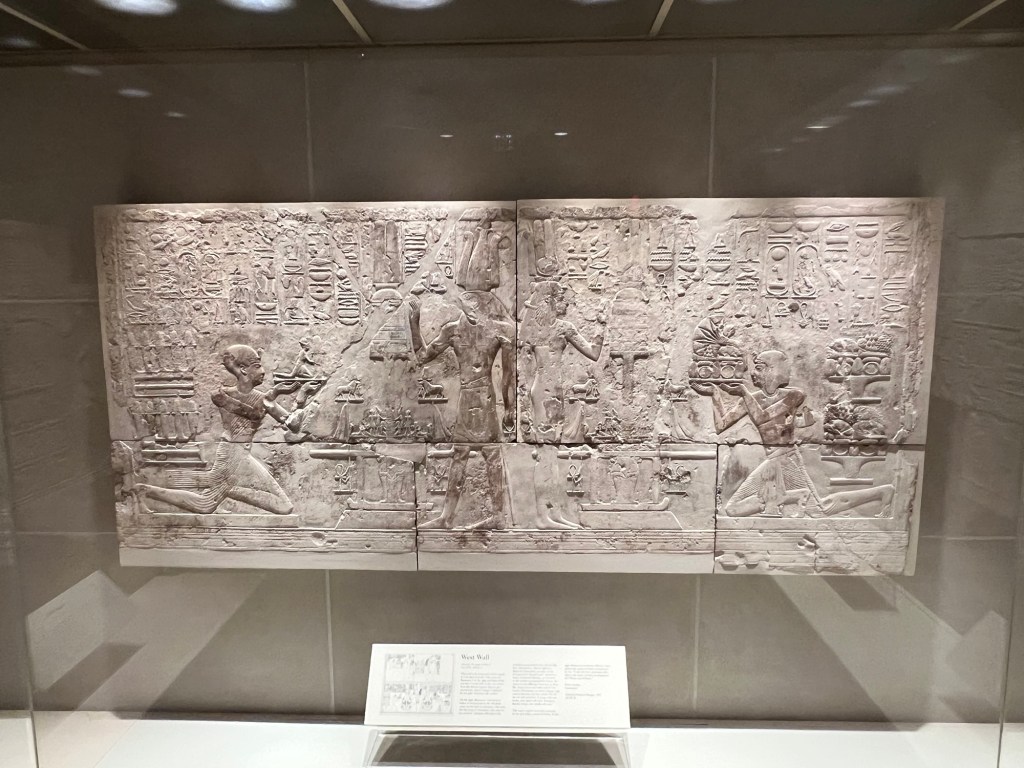
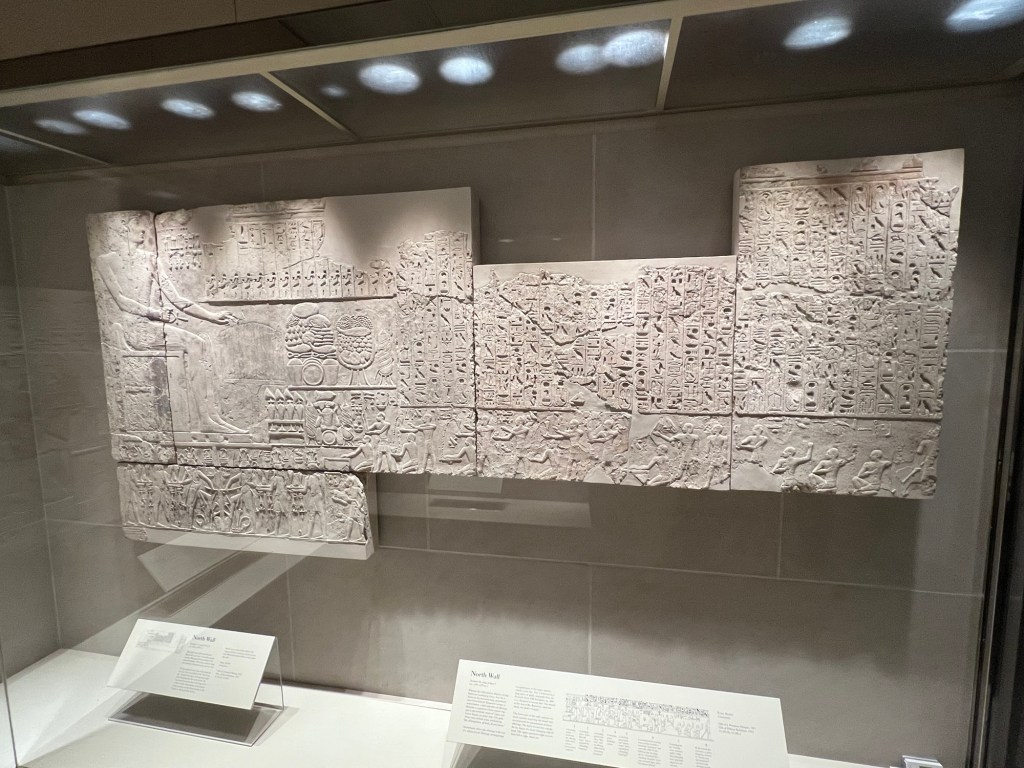
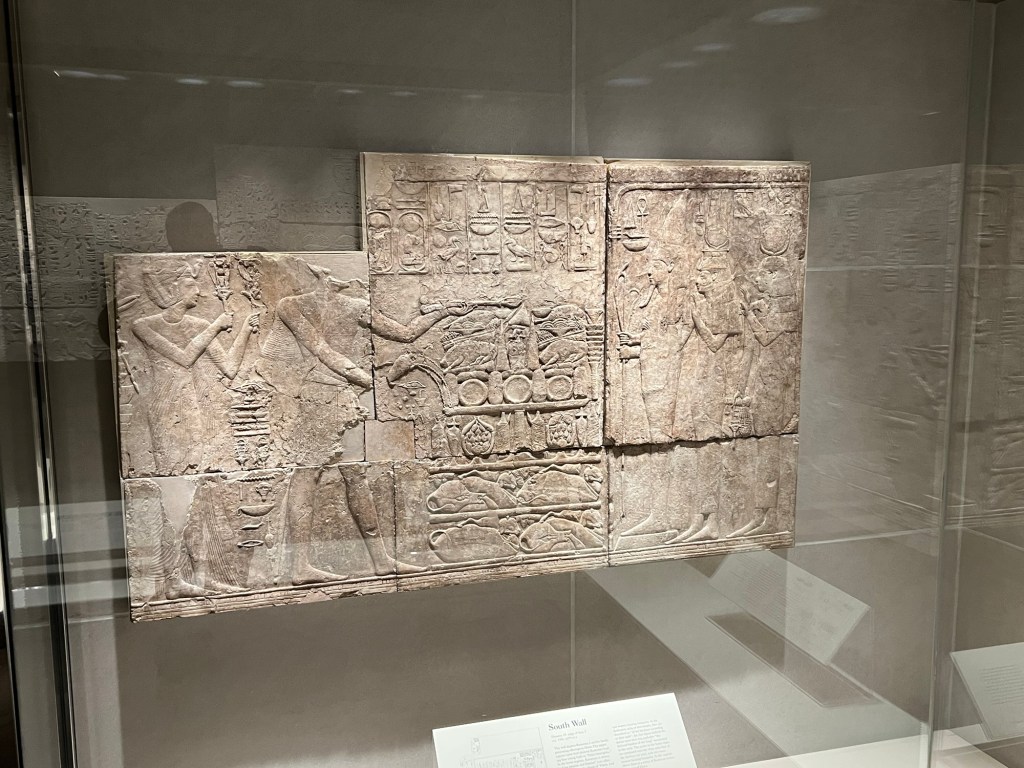
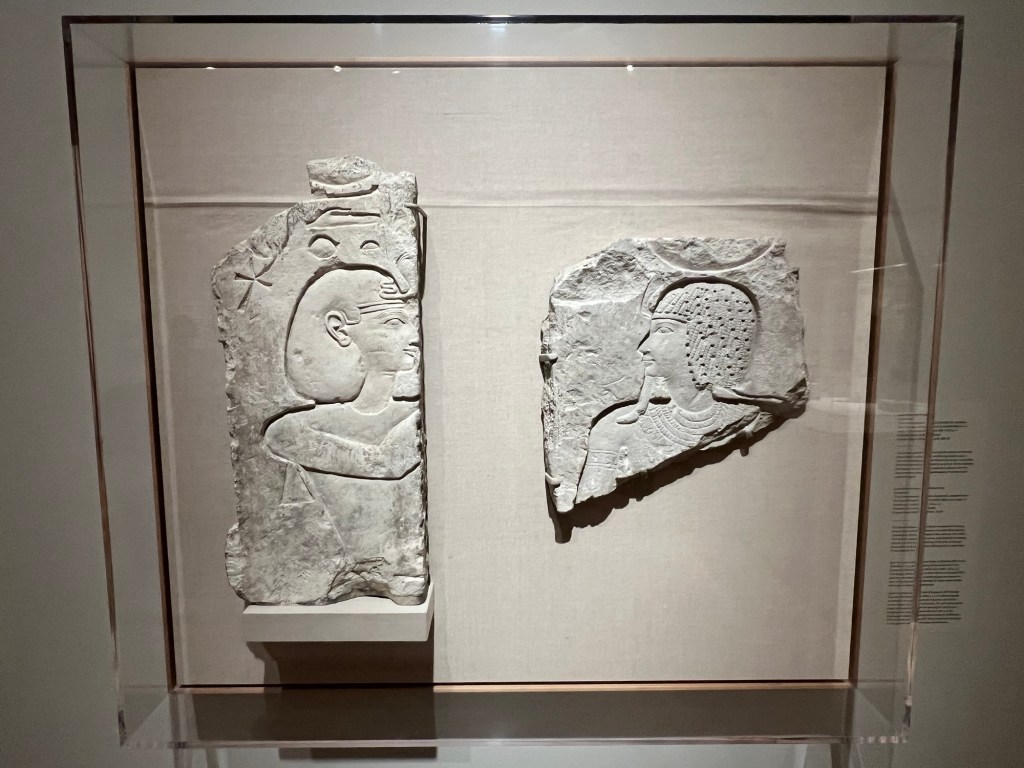
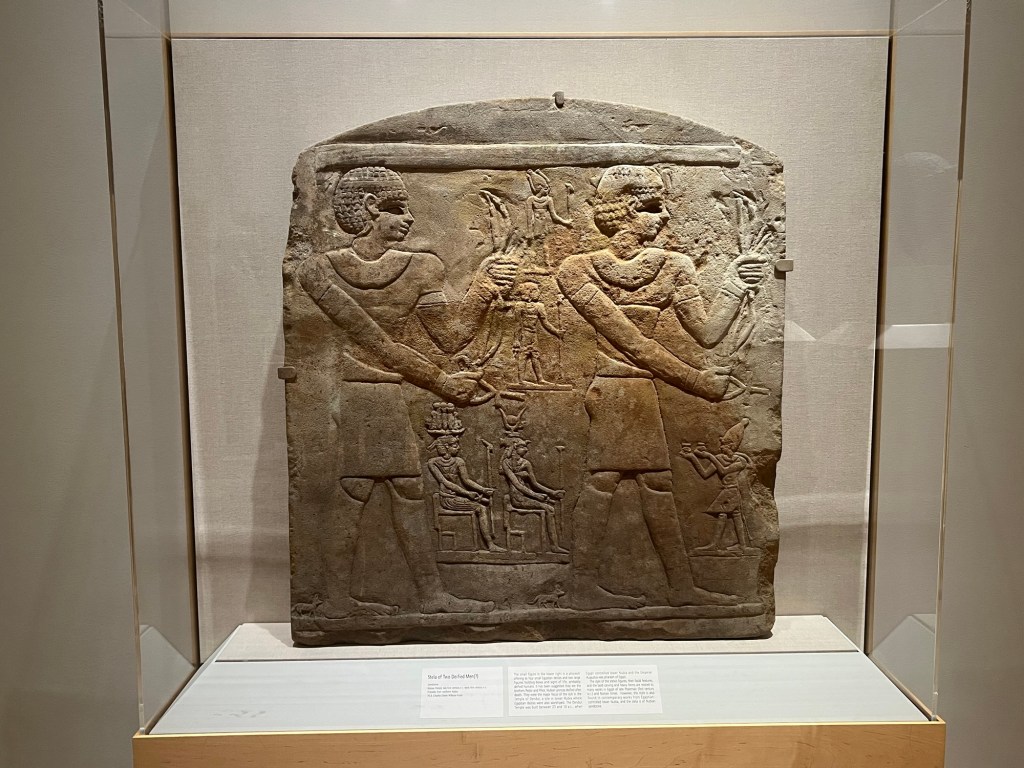
The ancient tablets outside of the Mummy Exhibition
The Egyptian artwork outside the Mummy Room
The tablets outside the Mummy Room
When the whole gallery is open, it is a treasure trove of objects and information from each Dynasty. I have been mind-boggled by these galleries since I first visited the museum in the third grade for a class field trip. I remember sketching artifacts for a class project and am still fascinated about how old some of these objects are and condition they are still in after thousands of years. It is my favorite part of the museum.
By 9:00pm, the entertainment was starting again, so I joined other members for a cocktail and enjoyed the music in the Temple of Dendur Gallery.
The Temple of Dendur fully lit for the evening before the start of the entertainment
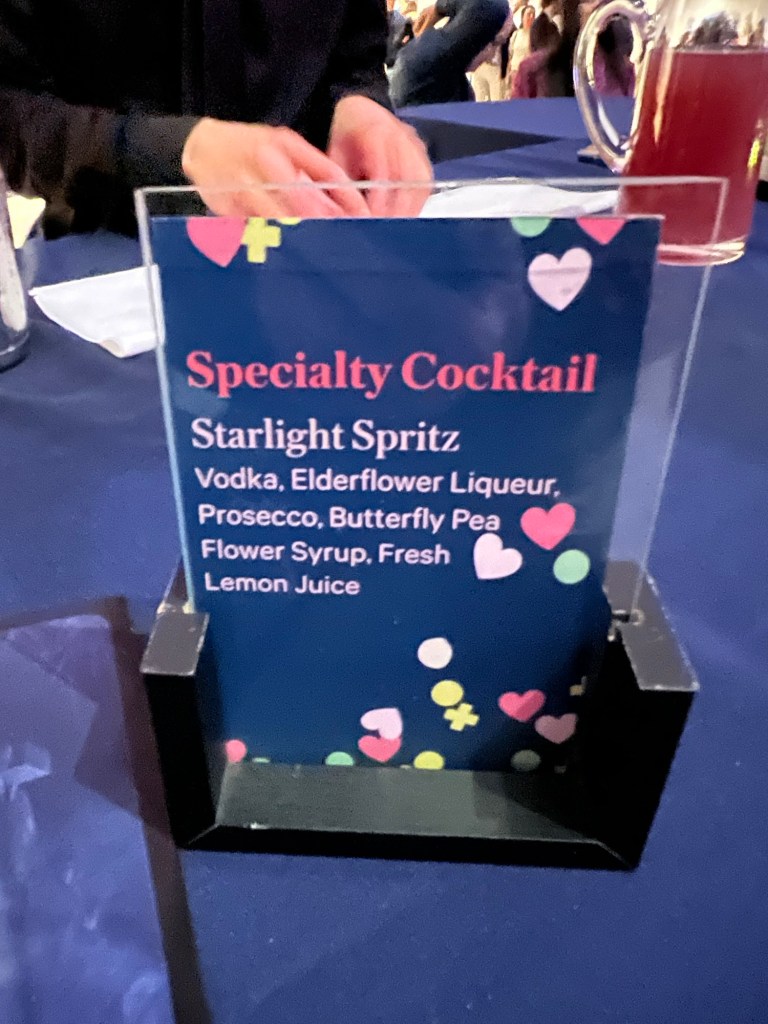
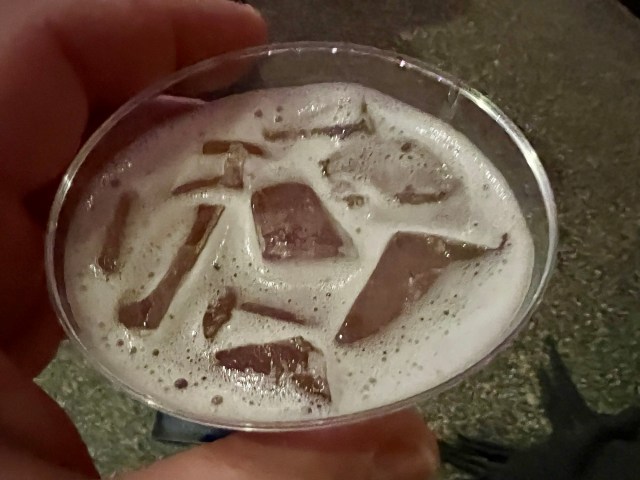
The signature cocktail of the evening, the Starlight Spritz
Enjoying a Starlight Spritz while listening to the music
The bartenders can mix a drink
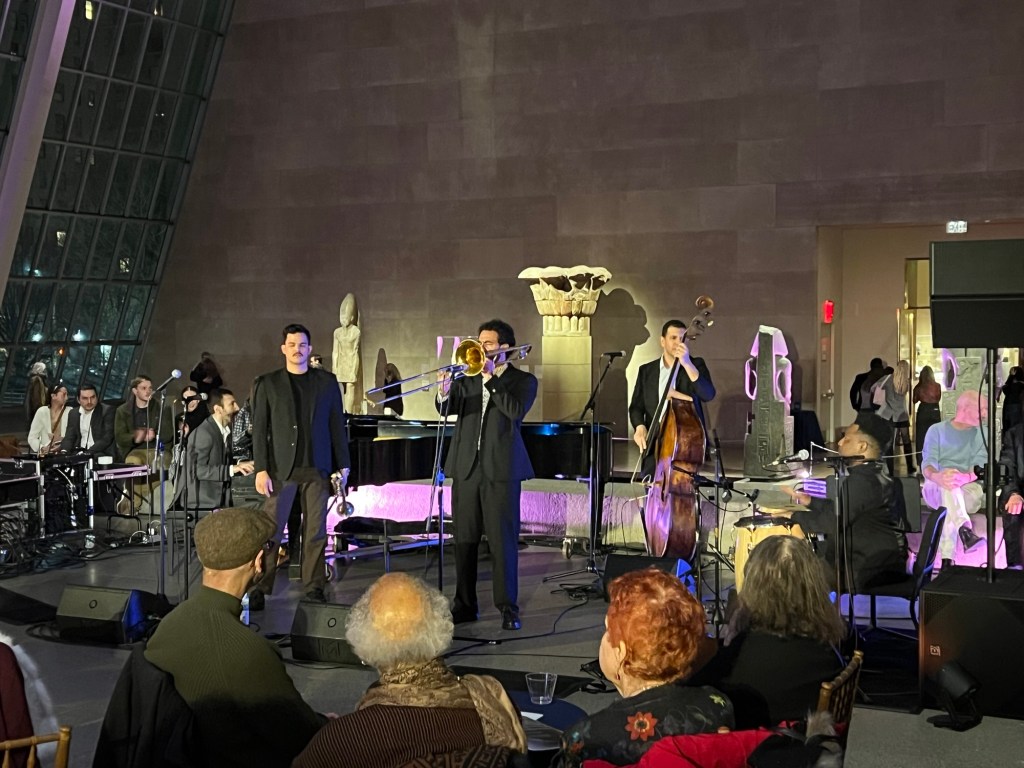
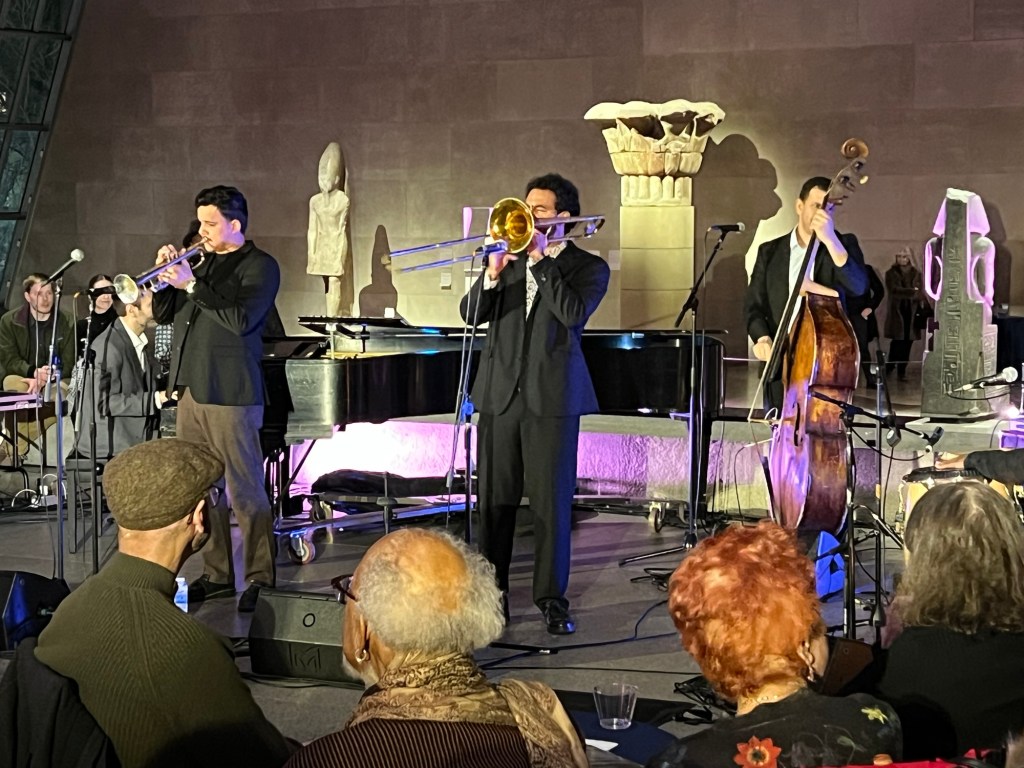
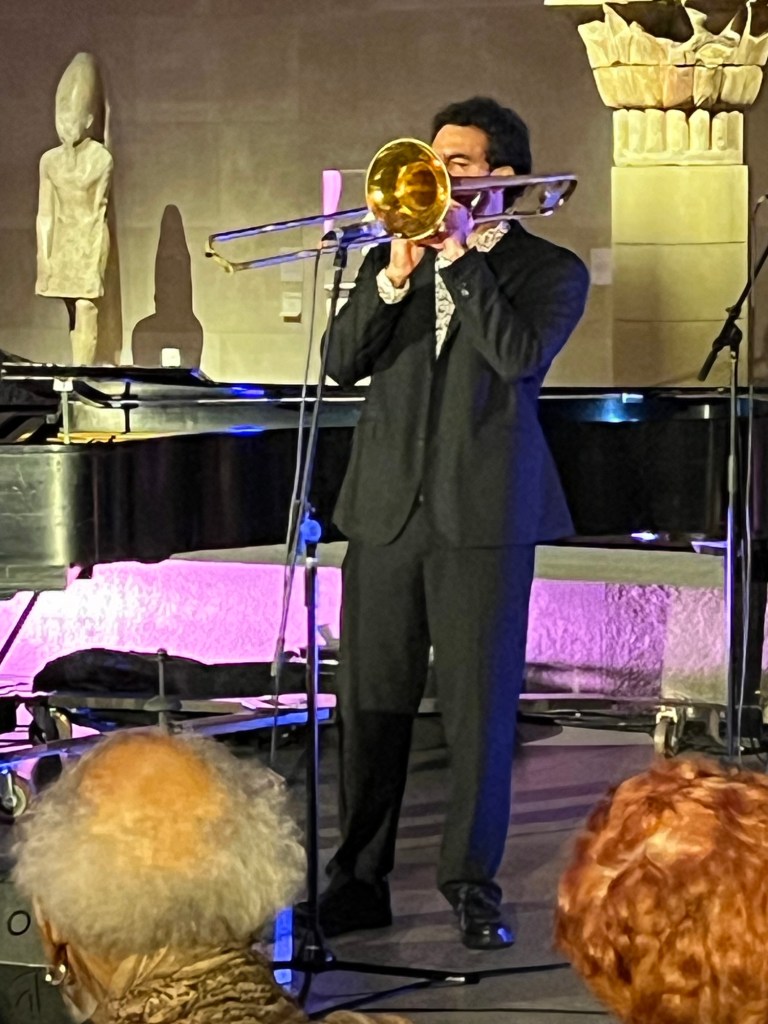
After a long week at work, it was nice to relax and enjoy the music. The music that night was performed by artist Jasim Perales and Friends, an Afro-Latin Jazz performance. The music was relaxing and soulful and the crowd had a wonderful time.
The start of the music again at 9:00pm
The trio performing
A clip from the entertainment that night
The Master of Ceremonies that night, Jasim Perales
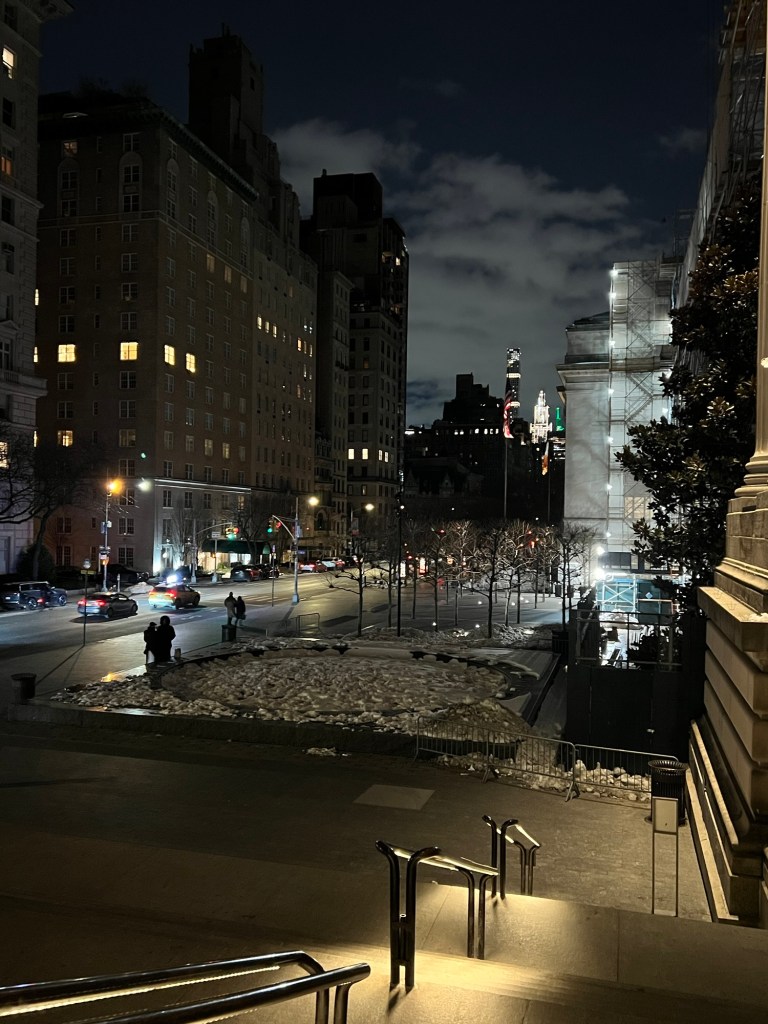
All good things come to an end and it was time leave. The night was dark and the winter air was crisp creating the perfect Winter evening to set out into for the walk back to Port Authority. The Upper East is so beautiful at night.
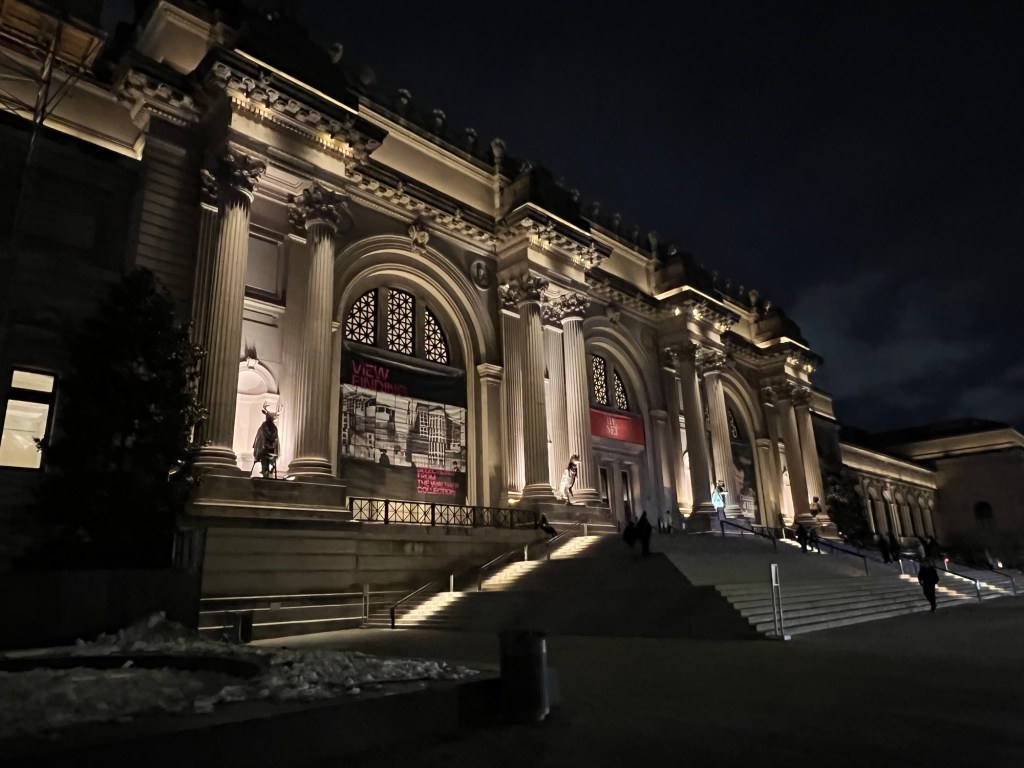
The front of the Met that night
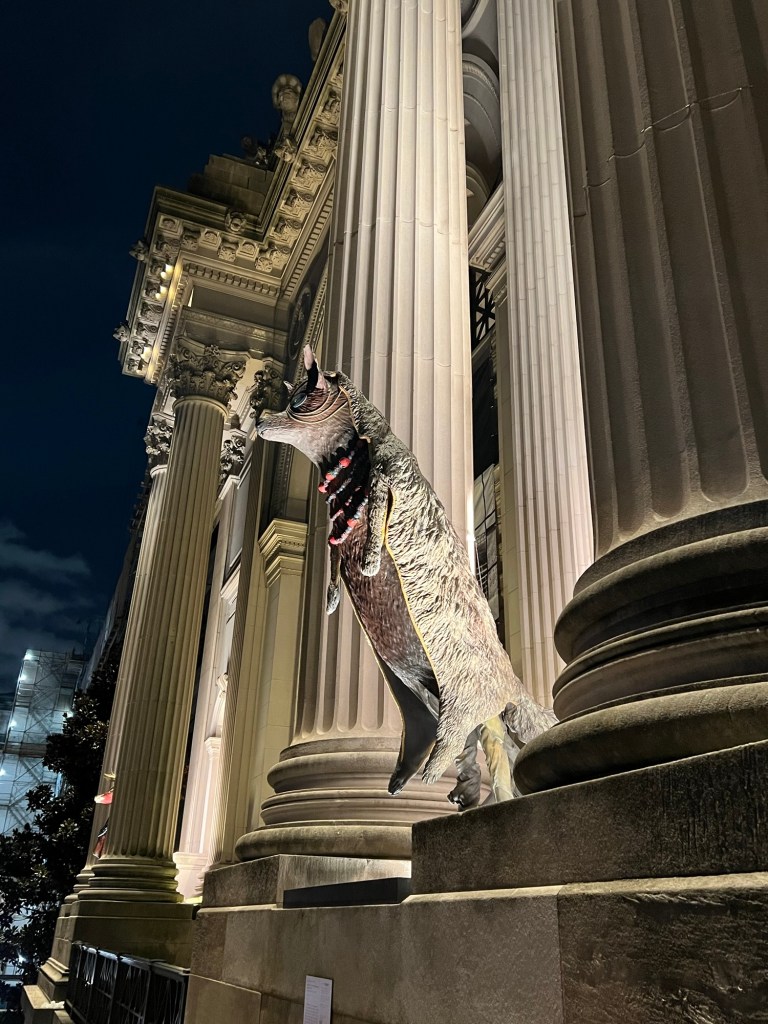
The artwork is always so impressive outside the Met
It was in the low 40’s that evening and the perfect night for a walk around the Upper East Side and Midtown. It still surprises me after all these years of walking around Manhattan how beautiful the City really is at night.
It was another spectacular evening at the Metropolitan Museum of Art. Thank you to the Membership and Special Events Departments for hosting another wonderful evening.
Who says there’s nothing to do in the cold months? It all depends on how much you want to bundle up and enjoy the outdoors. Sometimes you need a break from it all and this is the perfect place to clear your head and relax.
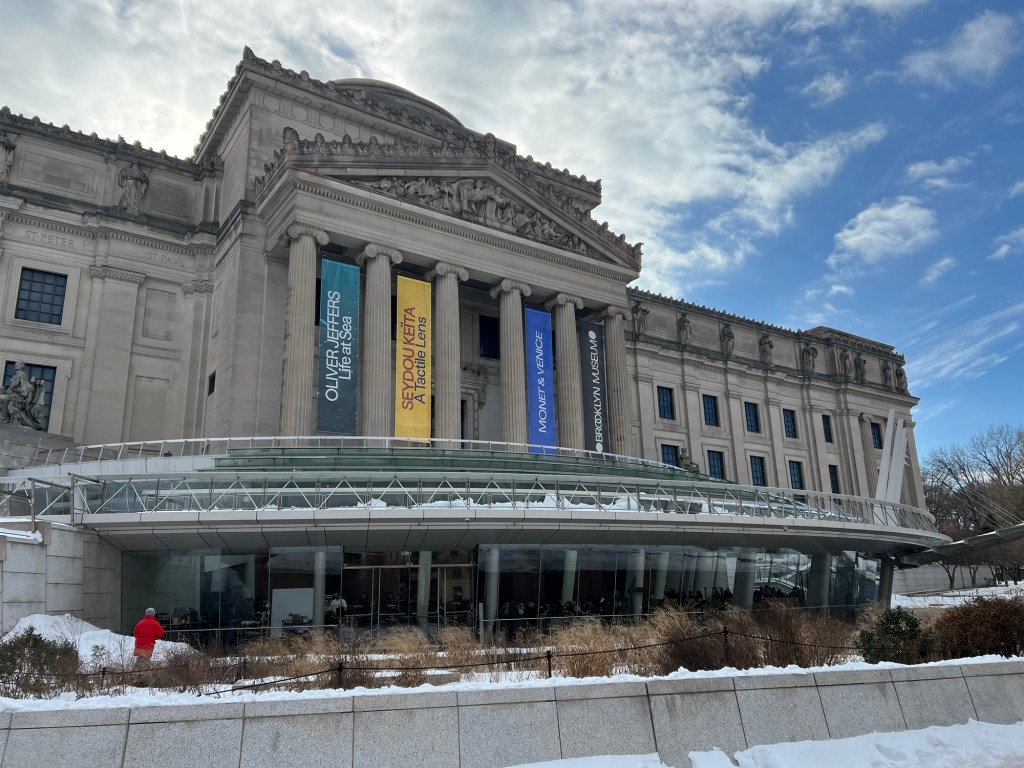
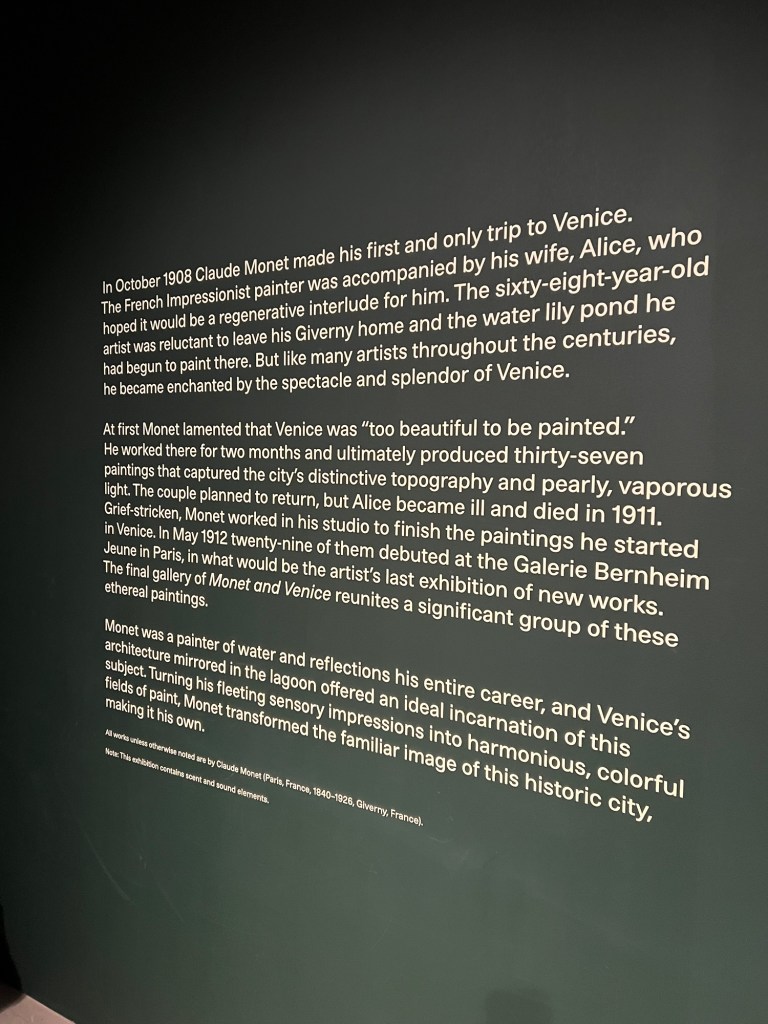
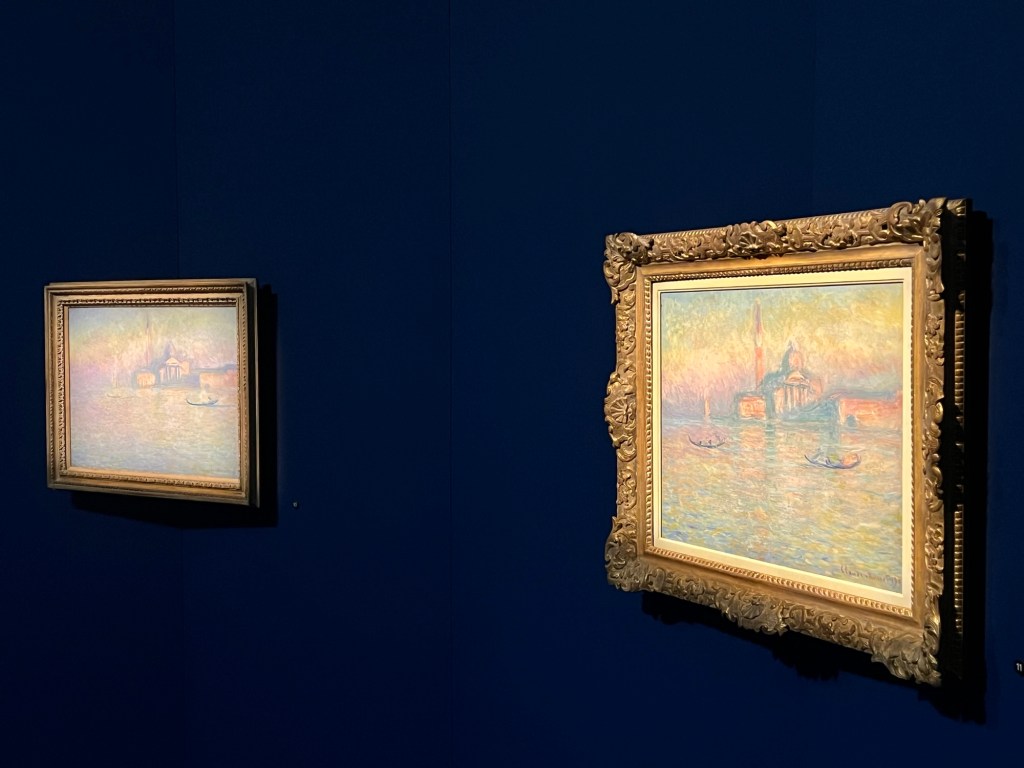
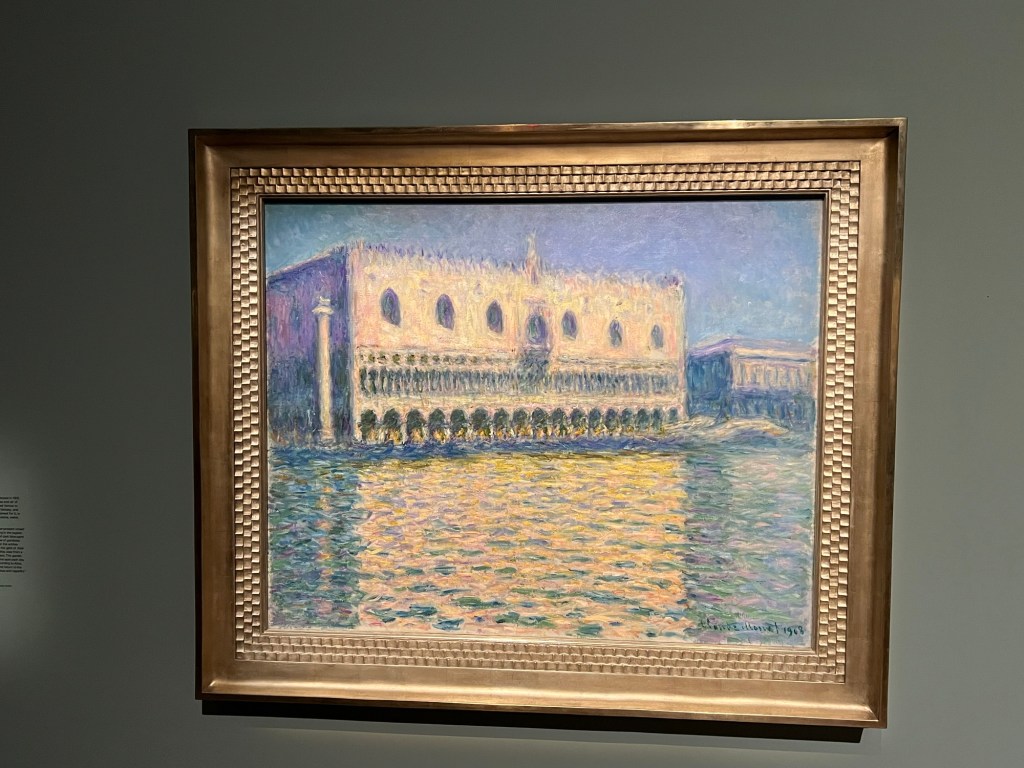
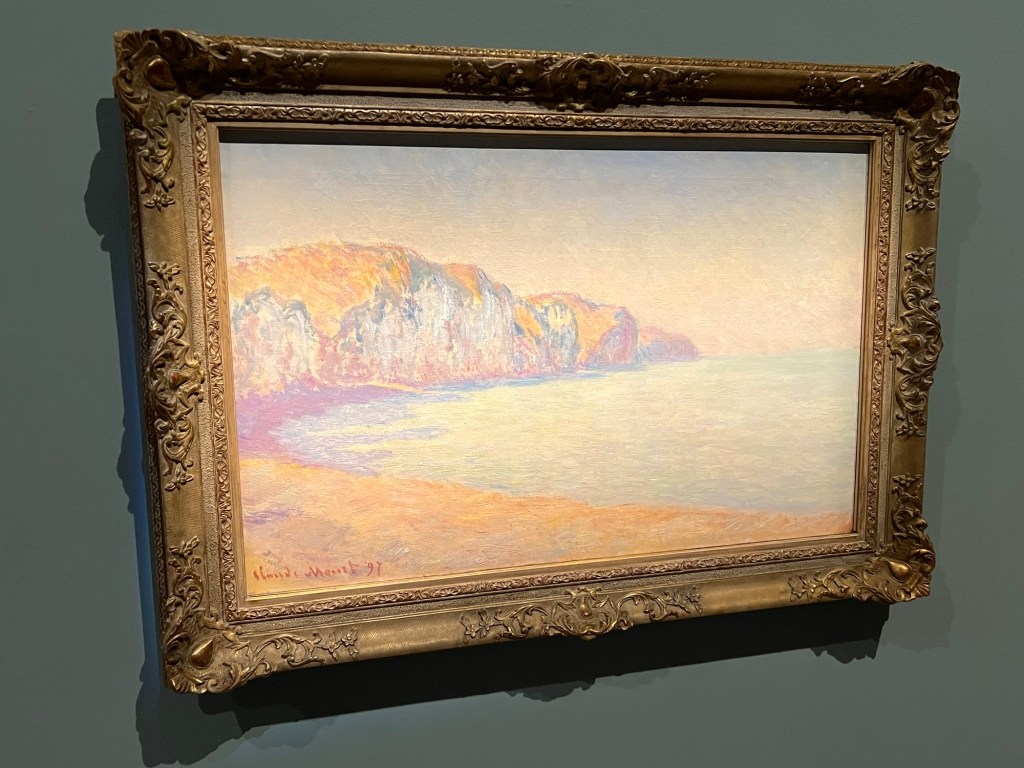
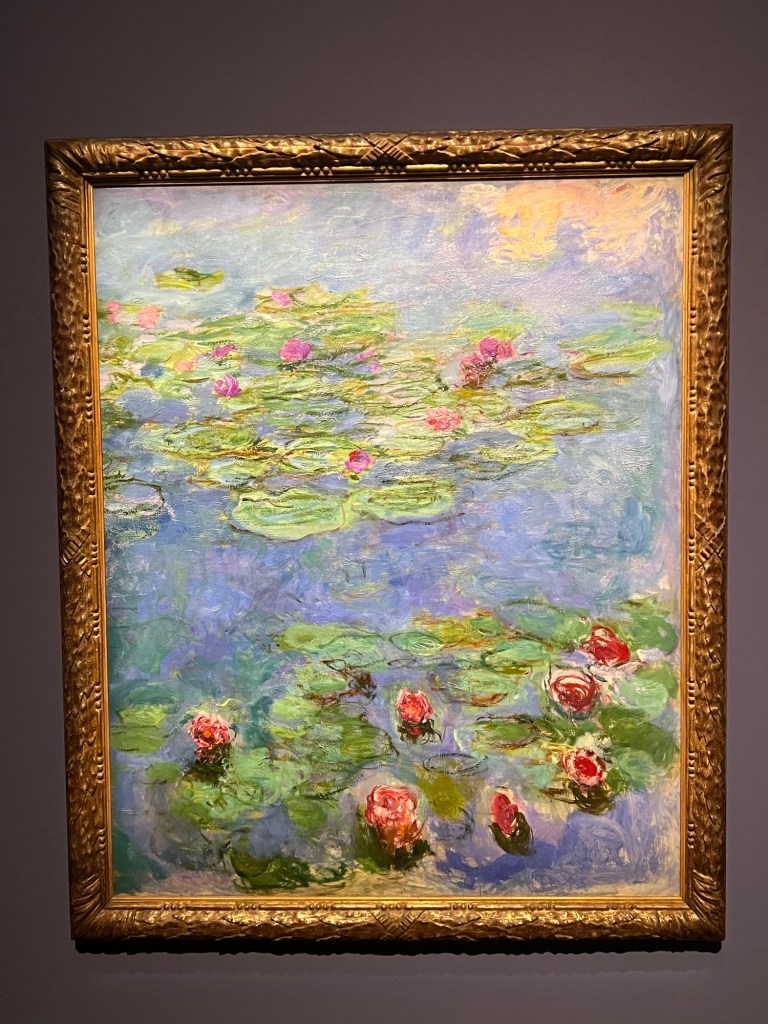
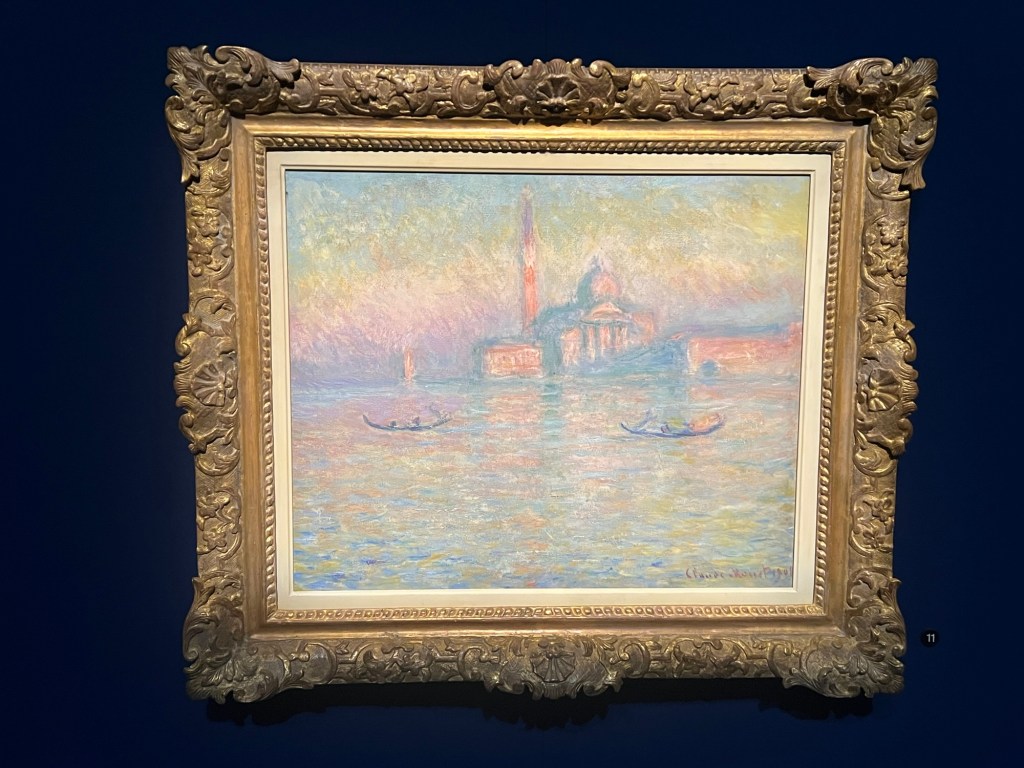
The last weekend of the ‘Monet & Venice’ showing at the Brooklyn Museum brought me out to Brooklyn on a sunny but chilly Saturday afternoon recently. I knew there would be crowds at the Brooklyn Museum as everyone was probably thinking of doing the same (at the end of the visit I found this to be true) so I got to the museum by noon and got tickets to the first slot open at 2:30pm.
Since I had a couple of hours until my tour of the exhibit, I decided to tour the Brooklyn Botanic Garden next door. There were no walking tours that day and the gardens were under a foot of snow from the recent storm. There was a quiet beauty of all the snow and the way it fell and shined in the sun all over the gardens. There were no lines or crowds (like the recent lightshow a few weeks earlier), so I had the gardens pretty much to myself.
The first stop on my walk was the Japanese Gardens, which has I had visited recently for the lightshow and experienced the fantastic musical display. The pond now sat under snow and ice and still it was impressive looking.
Walking through the Brooklyn Botanic Garden next to the Japanese Gardens
The Japanese Gardens in the early afternoon
The inside of the Japanese Gardens in the middle of winter. It was such a spectacular view of the pond.
The beauty of the snow covered pool
Another view of the Garden
I never realized how beautiful the Japanese Gardens were in the winter. The sun shines so nicely on the snow covered trees. It was just as beautiful snow covered as it is in the Spring and Summer when the garden is in full bloom.
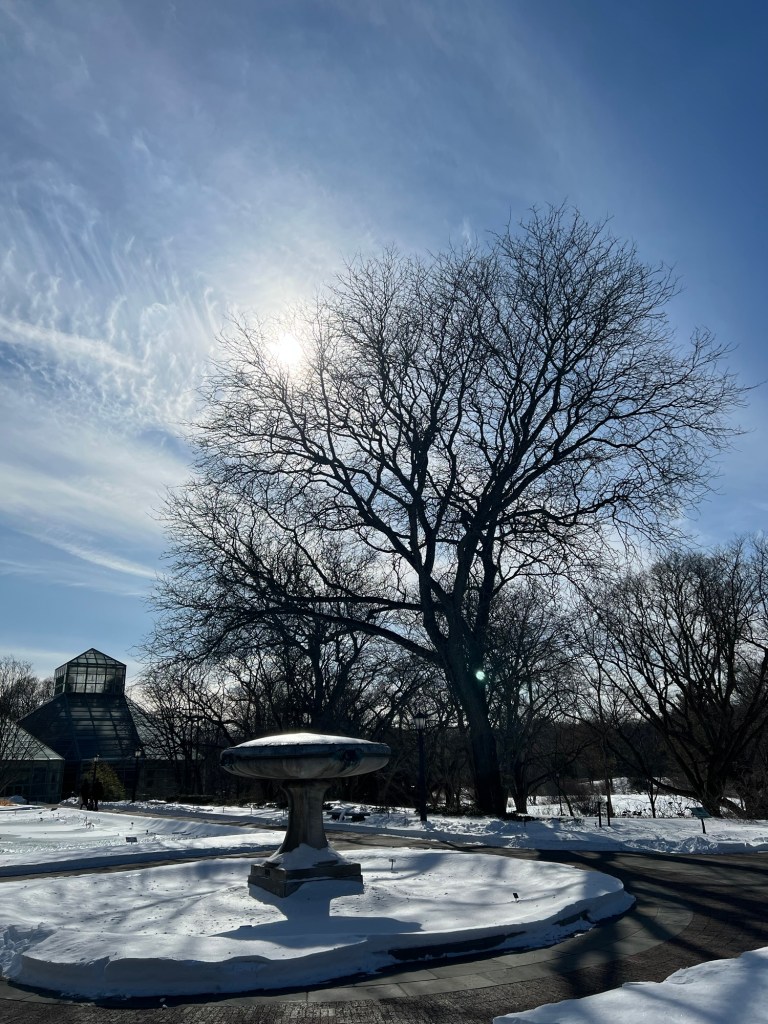
The fountain in the Shakespeare Garden
I then walked through the entire gardens stopping in various gardens to see what they looked like topped with snow. My first stop was the Shakespeare Gardens and I marveled at the elegance of the snow covered fountain I like so much in the Spring. The variety of the colors of this garden are waiting just under the snow for the warmer months.
The view of the snow covered gardens
I then walked around the paths to the back of the gardens along the watershed lawns that were under a foot of snow and still impressive.
Daffodil Hill in the winter. In two months this will be covered by hundreds of brightly colored daffodils
The Magnolia tree court and sun dial
In the Spring, this is my favorite part of the garden with the hues of pinks and whites of the Magnolia trees and the yellows of the daffodils.
My favorite fountain just off the Magnolia Court on the stairs leading to the Lotus polls
The snow covered fountains by the Lotus pools
The snow covered Lotus pools shined in the sun
I then got out of the cold weather and entered into the warmth of the Tropical Garden Collection. This series of gallery of plants is a series of greenhouses at various degrees of temperatures that display a series of themed gardens. They don’t just display plants but also keep you warm in a cold day.
The indoor tropical gardens
The Tropical Garden collection
The first room I visited wasabi the Bonsai Museum room. The temperature controlled room was perfect for a stroll.
The Bonsai museum
These beautiful tiny well pruned trees lined the tables with their elegance and been so well maintained.
The Bonsai trees lining the tables in the galleries
The beautiful bonsai
The flowering bonsai
The beautifully shaped bonsai
The Cherry blossom bonsai in the middle of the winter
The other trees in the gallery
The video tour of one side of the Bonsai Gallery:
The video tour of one side the Bonsai Gallery:
My video of the gallery tour
The Tropical Room
The tropical room
I then toured the Tropical Garden collection with its series of flowering plants and palms. It was so nice and warm inside and a break from the cool temperatures outside.
A video tour of the Tropical Gallery:
The walk is amazing
The Tropical Room
Colorful tropical flowers line the walkway in the dead of winter
The blooming Lotus
The real White Lotus
I then walked through the second tropical room in the rain forest and there were more beautiful plants to see and experience. There was a wedding garden shoot going on so I was not able to tour the complex.
The flowering tiers of plants in the Tropical room
The flowering plants in the Tropical gallery
The beautiful violets
I then began the tour of the Desert Gallery and the beauty and warmth of the room made me very happy.
The Birds of Paradise in bloom
Along the walls of the gallery, more flowering plants were placed.
Flowers in bloom in the winter
The climate controlled Desert collection was filled with cactus and other plantings the defied the weather. They have a pretty extensive collection of desert flowers and cactus in the room.
The Desert Collection gallery
The flowering cactus family
Walking back through the rainforest
Walking back through the Desert Gallery before exiting to tour the snow covered gardens
Video tour of the Desert Gallery:
There was still a foot of snow on the ground when I visited the gardens that day, which did not make it popular with people wanting to visit the gardens but I found a quiet elegance in just walking the paths and admiring the snow covered plantings. It was like they were waiting to awake again in the near future.
I walked through the gardens which while under a blanket of snow still offered the most beautiful views. I was one of the few people walking through the gardens that afternoon so it was quiet and you could just enjoy watching nature.
Walking past the Children’s Garden in the Winter
Walking over the bridge in the Watershed lawn
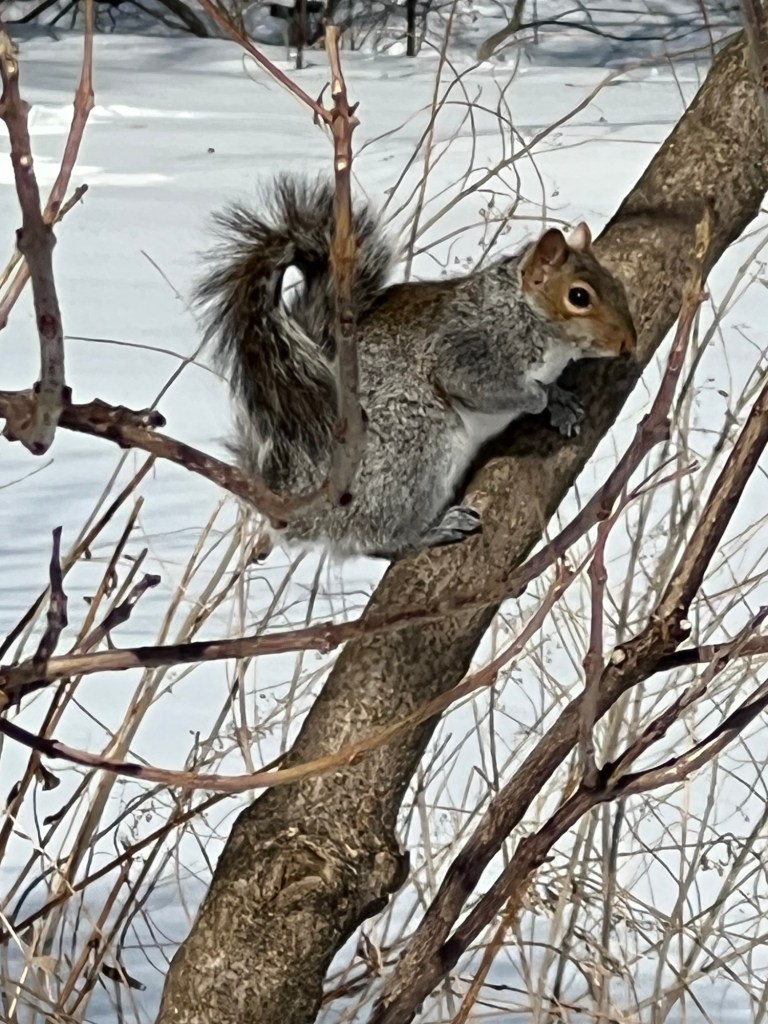
I saw this little squirrel holding on to the tree looking cold
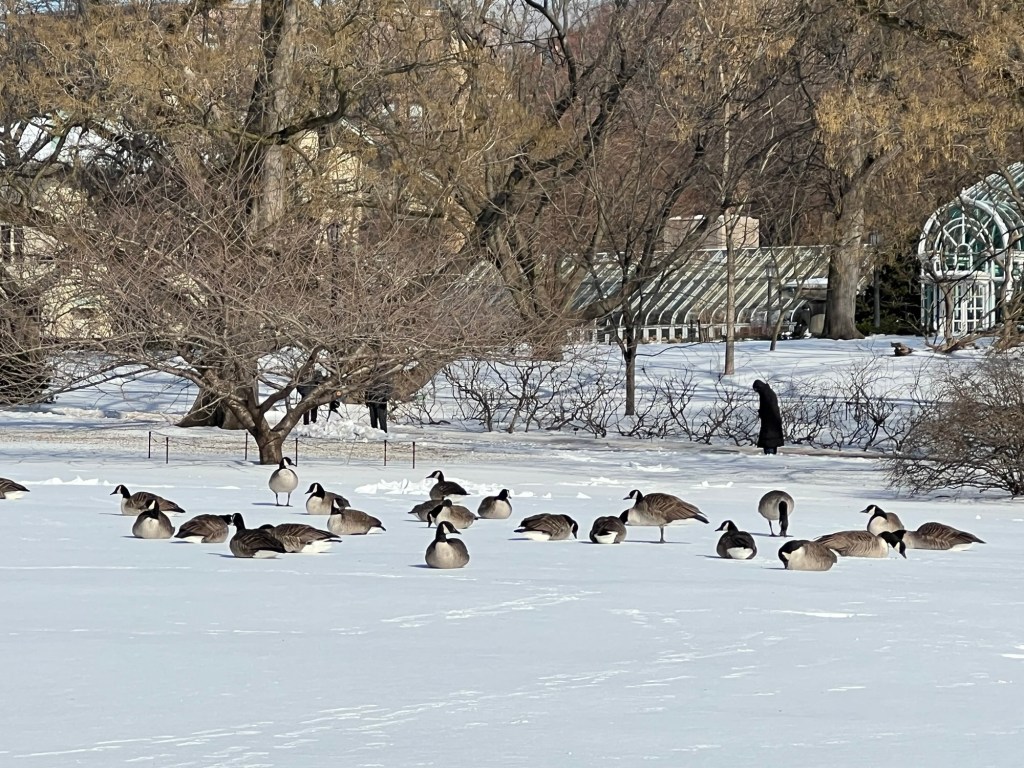
The geese feeding on the Watershed lawn
The Cherry Blossom lawn in the winter
The Rose Garden Fountain in the winter
Walking through the Cherry Blossom lawn
Walking back through the Magnolia garden
Taking one last walk around the Lotus Pools
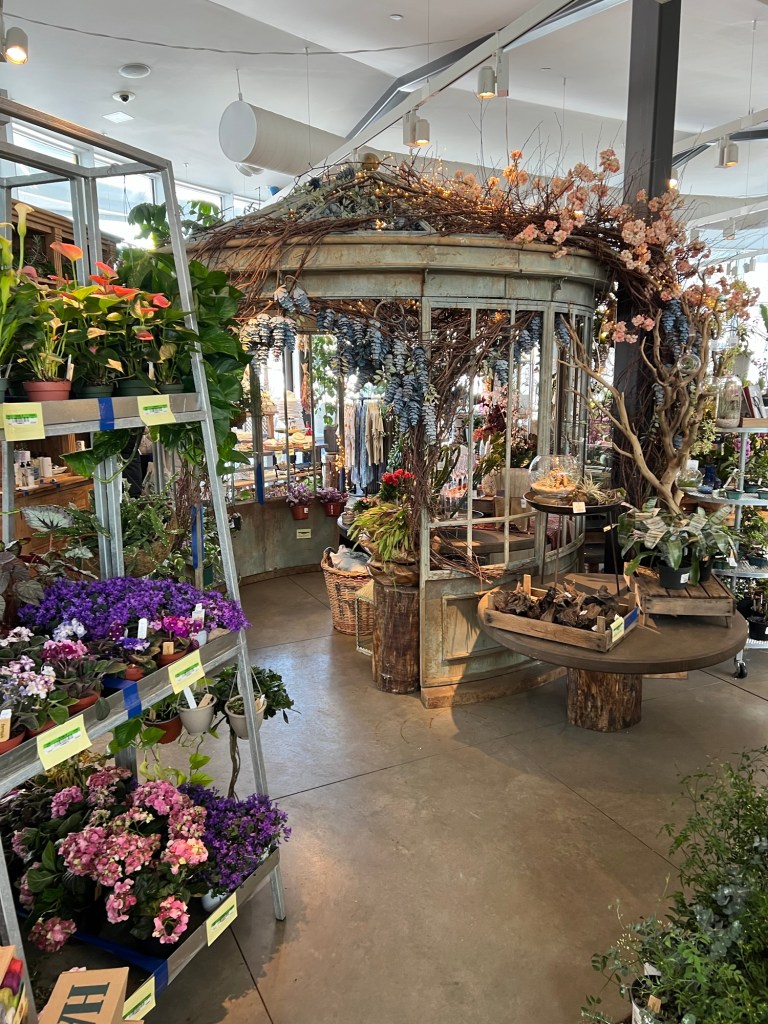
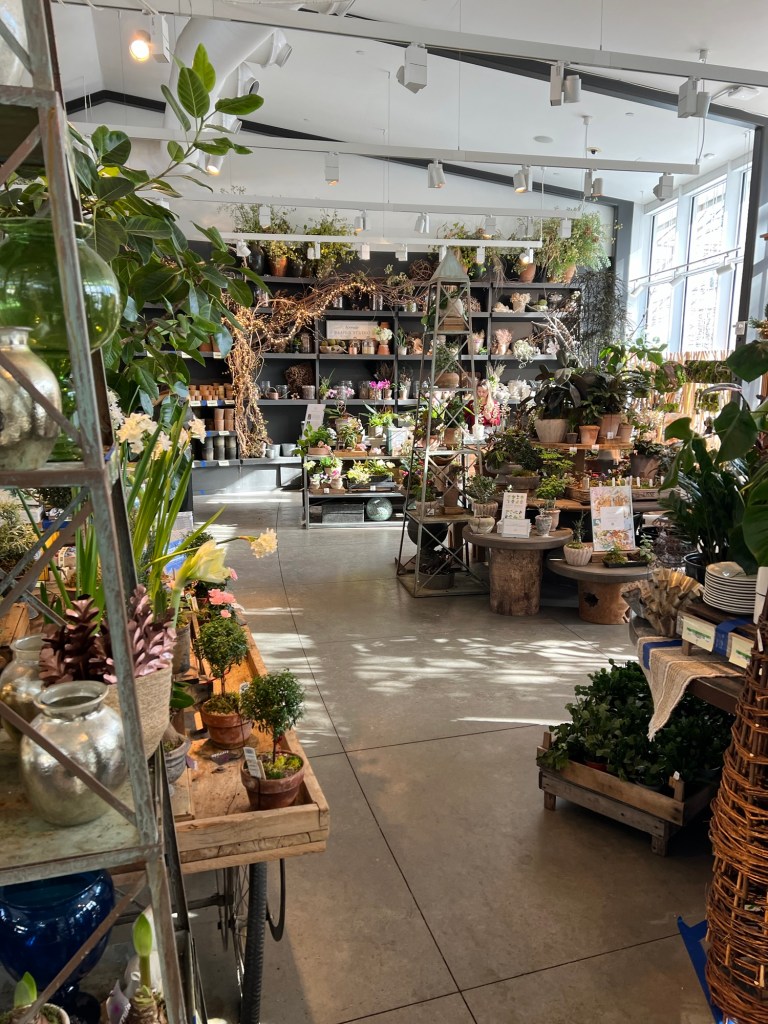
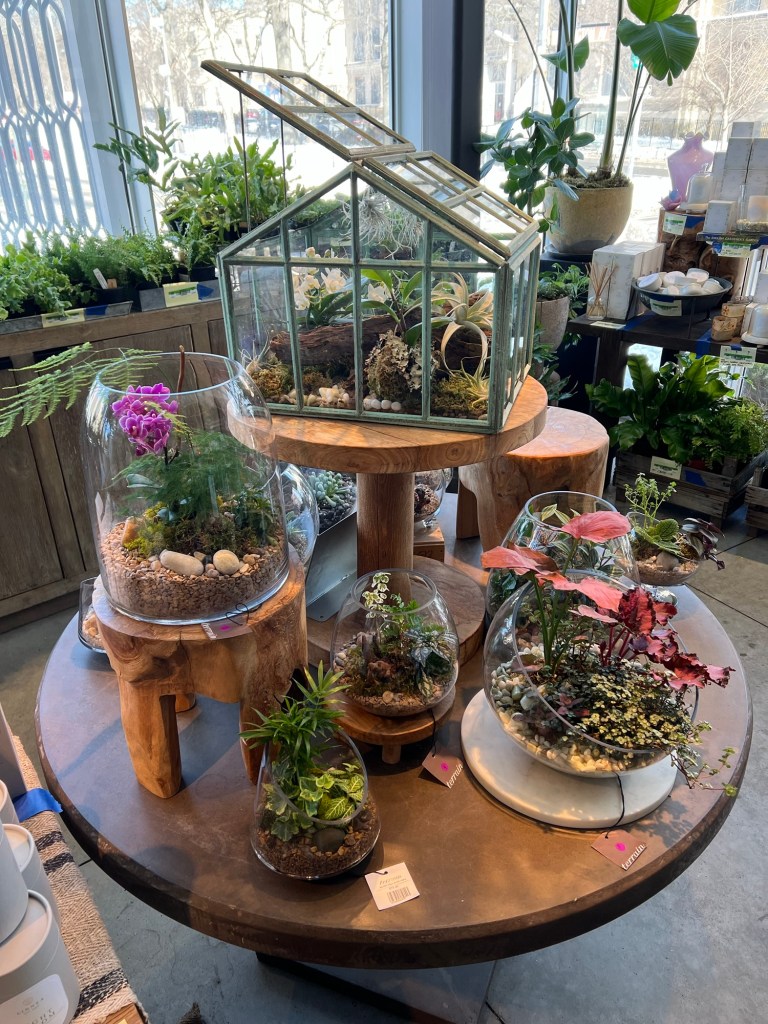
Before I left the gardens that afternoon, I stopped in the Gift Shop for some warmth and see the items they were carrying. They have such beautiful selection of flowers and gifts and the perfect place to warm up on a cold day. Everything is so colorfully displayed.
The Gift Shop at the Brooklyn Botanic Garden
Everything was in full bloom and really colorful
Everything was so beautifully displayed here
Before I left for the Brooklyn Museum to start my 2:30 pm tour, I stopped at one of my favorite sandwich shops down the road from the museum, Bahn Mai Place at 824b Washington Avenue for lunch. I love their sandwiches and drinks.
I ordinarily try a restaurant a few times before I recommend it for my dining website, DiningonaShoeStringinNYC@Wordpress.com, but I had the most amazing sandwich for dinner a few years ago and I had to share this place with the world.
There are also all sorts of rice dishes on the menu, Pho (soups) and salads on the menu as well most priced around $10.00. On the Beverage menu, there is a selection of Hot, Iced and Milk drinks to choose from as well as a selection of Bubble teas and smoothies.
One sandwich I can recommend on a cold day is the Grilled Chicken Banh Mai. I had the sandwich with a mild hot sauce on a cold wintery day. The warm bun and crunchy fresh vegetables with the spicy sauce really warmed me up on a cold afternoon in Brooklyn.
The Grilled Chicken Bahn Mi with a mild spicy sauce
The grilled chicken with fresh veggies
The mild spicy sauce really brings out the flavor of the grilled meat. With a little plumb and chili sauces, it really brings out the flavor of the sandwich.
The chicken was spicy and moist
It was the perfect lunch
The service was very quick and very friendly. The woman who made my sandwich pushed my order ahead of someone else’s who ordered the same thing as me so I could be on my way which I thought was very nice of her.
After lunch, it was off to the Brooklyn Museum and the tour of the ‘Monet & Venice’ exhibition. I was so lucky that I got to the museum early and got the tickets. The show was completely sold out by the time I left.
The museum was seriously packed that afternoon, not just for the show but all over the museum. I have been coming here for over twenty years and I had never seen it so packed. Every floor was filled with people.
Claude Monet once claimed that Venice was “too beautiful to be painted,” a challenge he embraced by creating an extraordinary sequence of works depicting the Italian city. Monet and Venice is the first exhibition to focus on Monet’s luminous Venetian paintings—a radiant yet underexplored chapter in the artist’s late career—since their debut in 1912 (Brooklyn Museum website).
New York’s largest museum show dedicated to Monet in over 25 years, the exhibition features more than 100 artworks, books, and ephemera. Two masterpieces, the Brooklyn Museum’s own Palazzo Ducale and The Grand Canal, Venice from the Fine Arts Museums of San Francisco, are presented alongside selections from throughout Monet’s career—including 19 of his Venetian paintings (Brooklyn Museum website).
The artist’s singular vision of Venice is also set in dialogue with portrayals of the city by renowned artists such as Canaletto, Paul Signac, John Singer Sargent, and Pierre-Auguste Renoir. Where others focused on Venice’s busy streets and canals, Monet’s interpretation is hauntingly devoid of human presence. Instead, he captures the interplay of architecture with color and light, enveloping viewers in the city’s distinctive atmosphere. Sonic installations by Niles Luther, the Museum’s composer in residence, and other immersive elements will further transport you to this fabled place (Brooklyn Museum website).
Walking through the galleries admiring the art
These were some of my favorite pieces from the show. These also were a favorite of Monet himself to the City of Venice.
The paintings of the Grand Canal
The views along the coastline of Italy
One of Monet’s famous ‘Water Lilly’ collection
Views from the Grand Canal
Walking around the gallery
Another view of the Grand Canal
I could not believe how packed the exhibition got behind me as I double backed through the gallery on the way out. Not only did the crowds grow in the exhibition but the line outside the exhibition was over a hundred deep and wrapped around three galleries on the Fifth Floor. It was so busy on the floor, I decided to walk around other exhibitions.
My favorite painting in the American Wing of the Mountain House Hotel in the Catskills
Then I walked down to the Middle Eastern Wing with the Assyrian and Egyptian Art, one of personal favorites in the museum. Unlike the Met, the Egyptian Wing of the museum is not overwhelming and is easier to view as the exhibits are not as packed with artifacts.
I started first admiring the Assyrian panels of the genies gracing the walls of the famous palace. It blows my mind that these are almost over a thousand years old.
The panels of genies along the walls of the old palace
The panels of genies along the walls
The different versions of genies along the walks
I have been visiting the Egyptian Wing of the museum since I attended the opening of the renovation with my father over a decade ago. It has an iconic entrance to the wing of the museum.
The entrance to the Egyptian Wing of the Brooklyn Museum
Walking through the Egyptian Galleries
Admiring the art on the wall
Walking through the Mummy display
The details on the Mummy coffin
Finishing the tour of the Egyptian galleries
I had a nice time at both the Brooklyn Botanic Gardens and at the Brooklyn Museum. There is more than enough to see and do at both cultural locations in the heart of Brooklyn.
It was a wonderful walk around neighborhood and even with all the snow on the ground, it was easy to maneuver around the sidewalks and streets. The snow may have covered the ground but was a backdrop for the beauty that it displayed. The recent storm did not keep us inside but brought us outside to see how it looked and enjoy its beauty.